If you've ever looked at your month-end statement and wondered where those "hidden fees" came from, you aren't alone. For many SMEs, credit card processing may seem like a difficult concept to grasp.
But to scale a successful business in Hong Kong, whether it's a bustling Kowloon café or a Tsim Sha Tsui boutique, you need to understand the mechanics behind each swipe on your credit card payment terminal. This guide breaks down the basics of credit card processing in Hong Kong so you can learn how to keep more of what you earn.
What is credit card processing?
At its core, credit card processing is the series of steps that move money from your customer's bank account to your business bank account. This is a quick process we see ever so often — a customer taps his card on to the POS terminal, it beeps to signal approval for the transaction, and a receipt is printed to mark the end of the transaction. Even though it happens in seconds, it actually involves a sophisticated relay race between four main players:
- The Merchant: The business accepting the payment.
- The Customer: The cardholder initiating the purchase.
- The Issuing Bank: The bank that gives your customer their credit card and accompanying line of credit(e.g., HSBC, Bank of China, Hang Seng Bank). Issuing banks often serve as the bridge between the customer and the credit card networks through contracts with cardholders for the terms of the repayment of transactions.
- The Acquirer: This role acts as the manager working in the shadows for your business.
What is an acquirer?
An Acquirer, often called a "Merchant Acquirer" or "Payment Processor", is the financial institution that maintains your merchant account. They are responsible for:
- Capturing the payment data from your POS terminal.
- Communicating with the card networks (Visa/Mastercard) to get authorization.
- Depositing the final funds into your bank account.
The processs starts at the Merchant’s terminal when the Customer taps their card, triggering a data relay to be handed off to the Acquirer. The Acquirer instantly routes this data through global card networks (like Visa or Mastercard) to reach the Issuing Bank. This bank acts as the gatekeeper, quickly verifying if the customer has sufficient funds and checking for fraud before approving the transaction. This data then races all the way back through the network and the Acquirer to your terminal, ending the race with a successful "beep" and a printed receipt. While the customer walks away with their purchase, the Acquirer stays on the track to ensure the actual funds are settled and deposited into your business account.
What is a merchant services provider?
A merchant services provider like KPay helps to simplify and optimise processes for the merchant by enabling businesses to process digital payments such as payments made by credit card, debit card, and NFC mobile wallet. This is done through established relationships with issuing and acquiring banks.
How to accept credit card payments
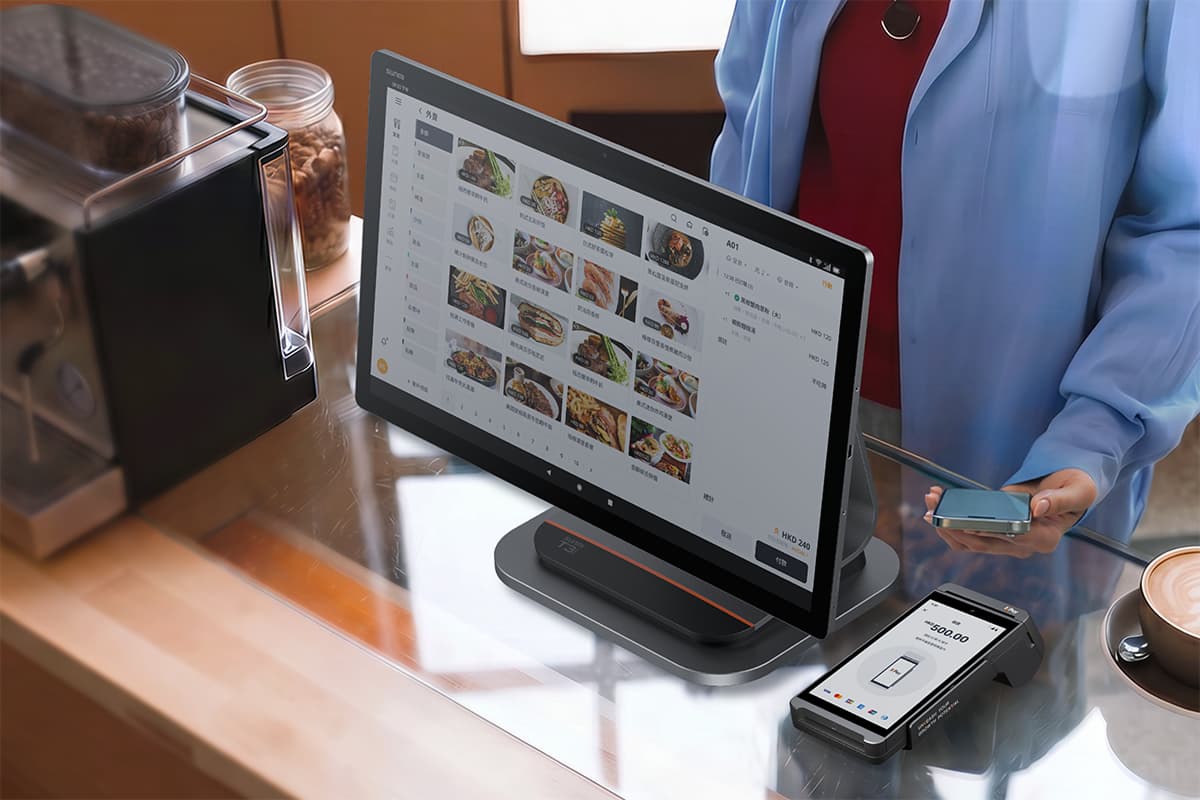
At the heart of every modern storefront is the credit card payment terminal, often referred to as a POS terminal.
More than just a credit card machine, this essential device acts as the secure gateway for electronic fund transfers. While traditional models focused on physical card swipes, today's advanced systems are built for a contactless world—seamlessly accepting mobile NFC payments like Apple Pay and Google Pay to keep your checkout lines moving at the speed of your customers.
KPay's modern, unified solution for your business success
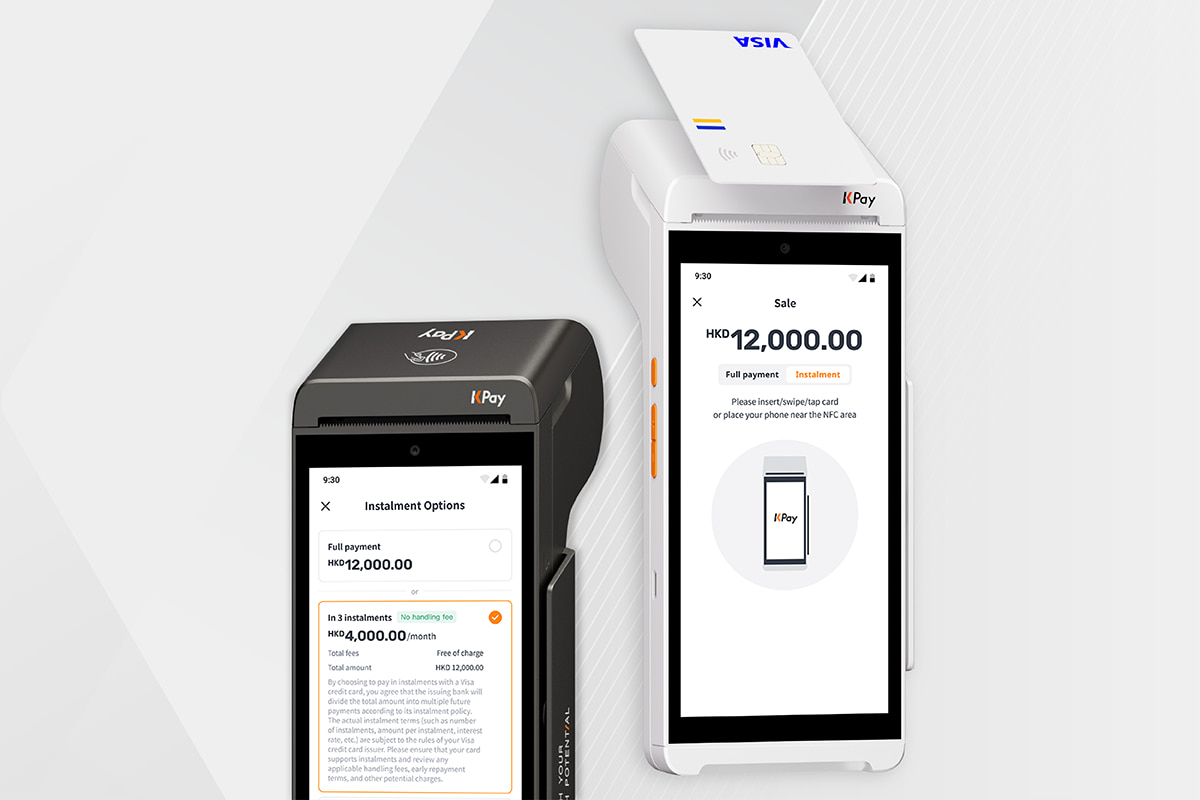
With KPay Terminal Pro, you can accept not only credit cards but also the payment methods that your customers usually prefer. KPay Terminal Pro's features include:
- Accepts 20 major payment methods seamlessly on one portable device.
- No subscription fees, annual fees or terminal rental fees.
- Everyday Settlement* with KPay Business Account delivers faster access to cash flow and liquidity, significantly boosting operational efficiency.
- 24/7, 365-day customer support to ensure merchants get up and running quickly should any issues occur.
With KPay Terminal Pro, you can reduce counter clutter, accept multiple payment methods, and have peace of mind when it comes to settlement, letting you focus on other important aspects of the business.
How Hong Kong credit card processing is unique
The Hong Kong payment landscape is distinct from markets like the US, UK, or Australia. To succeed here, your processing setup must account for two major local factors.
1. The dominance of UnionPay and multi-network acceptance
In Hong Kong, UnionPay is not just another card network, it is a commercial necessity. As Mainland Chinese visitor volumes continue to grow, a significant share of transactions in tourist-heavy corridors like Tsim Sha Tsui, Causeway Bay, and Mong Kok come from UnionPay cardholders. For retailers, F&B operators, and service businesses, not accepting UnionPay effectively means turning away a large segment of high-spending customers.
Beyond UnionPay, Hong Kong merchants typically need to support a broader range of payment options than their counterparts in other markets, including Visa, Mastercard, American Express, and mobile wallets such as AlipayHK and WeChat Pay HK.
The challenge is that each network carries different processing rates. A processor that does not offer transparent, network-level pricing can quietly erode your margins, particularly when Mainland Chinese tourism is a core revenue driver for your business.
2. High-Reward credit cards and unregulated interchange fees
Hong Kong consumers are among the most rewards-savvy in Asia. Whether it is a premium miles card from HSBC, Citibank, or DBS, or a high-cashback offering from Standard Chartered or American Express, customers are highly incentivised to pay with whichever card earns them the most points. These perks are funded by interchange fees, which are the non-negotiable wholesale costs set by the card networks and paid by the merchant to the cardholder's issuing bank.
Critically, the Hong Kong Monetary Authority (HKMA) does not impose a cap on interchange rates. This means that when a customer pays with a premium rewards card, the merchant absorbs the full, unregulated interchange cost, which can be meaningfully higher than a standard card.
If your business is on a flat-rate pricing plan, you are likely subsidising these expensive premium cards on every single transaction. Flat-rate providers calculate their single fee by looking at the most expensive high-reward cards on the market and building a safety margin on top. When a customer pays with a standard, no-frills card, your processor pockets the difference as pure profit. For F&B and retail owners across Hong Kong, this can quietly erode margins over thousands of transactions.
Choosing the right processing model
In Hong Kong, flat-rate models are often marketed as simple, but they may hide the true cost of doing business.
Interchange Plus (IC+) is the industry's answer to this lack of transparency. Here is how it breaks down:
- Interchange: The wholesale cost set by the card schemes including Visa, Mastercard, UnionPay, and American Express.
- Plus: A separate, clearly defined fixed markup that represents the processor's actual service charge.
By moving to Interchange Plus, savvy Hong Kong SMEs can finally see exactly where every dollar of their processing fee is going. When a customer pays with a lower-cost standard card, you pay the lower rate, rather than a padded flat fee designed to protect the processor's margins. In Hong Kong's competitive, high-rent environment, this level of transparency is not just useful. It is essential for any business serious about protecting its cash flow.
Look for a partner, not a vendor
Credit card processing shouldn't be a utility you ignore; it should be a tool that helps you grow. By understanding the roles of the acquirer and the benefits of Interchange plus, you're better equipped to select a payment solutions partner that helps you meet your business needs.
Credit card processing FAQs
How long do credit card payments take to process?
Most of the time, credit card payments take 1-3 business days to process. However, this can vary depending on the bank, credit card, and the day or time the purchase was made.
What is a standard credit card processing fee?
While there is no single "standard" rate, most Hong Kong small businesses see an effective all-in cost between 2.5% and 3.5% per transaction. This fee is typically composed of three parts: the Interchange fee, a small Scheme or Network fee (paid to Visa, Mastercard, UnionPay, or American Express), and the Processor's markup. Your final cost depends heavily on your pricing model. While flat-rate plans offer simplicity, an Interchange Plus (IC+) model is often more cost-effective as IC+ passes the actual wholesale costs directly to you, meaning that when a customer pays with a lower-cost standard card, you pay the lower rate rather than a padded flat fee.
How long do returns take to process on credit cards?
In Hong Kong, a credit card refund typically takes 3 to 7 business days to appear on a customer's statement. For the best customer experience, merchants should advise customers that while the refund is initiated at the terminal immediately, the clearance time depends on the cardholder's issuing bank. Some major Hong Kong banks such as HSBC, Hang Seng, or Bank of China (HK) may reflect credit within 48 hours, while others may take up to 10 business days to show the funds in the customer's available balance.


















%20(4).png)



.png)