What your customers want at checkout: A merchant's guide to electronic payments
28 September 2026
7 min read
KPay Editorial Team
Making the complex sides of financial management, business operations and digital transformation simple. We share practical tips and local stories to help you run your business smarter and grow faster.
Key takeaways:
Electronic payment in Hong Kong includes: Credit and debit cards, stored-value cards like Octopus, e-wallets, and mobile payments — not just phone-based apps.
There are three main e-payment types in Hong Kong: E-wallets (such as PayMe, AlipayHK and WeChat Pay HK), cards, and mobile payments via tap or QR code.
Additional benefits to adopting e-payments: Merchants adopt e-payments mainly to match customer preference, but the switch also brings faster settlement, cleaner records and more detailed sales data.
Digital, timestamped records: Electronic payments typically leave detailed records that simplify profits tax filing and reduce manual cash-tracking.
Useful features that payment service providers offer: Detailed reporting that eliminates the need to manually match payments to sales; features like real-time transaction views, downloadable reports and POS integration remove this work.
The peak hour crowd is rousing, and your checkout queue is only getting longer. Your customers are checking their watches impatiently to pay for a single item, and you can see those in a rush starting to leave the queue, as you and your staff try to work faster to clear the queues. You try to count the cash a little faster, but the seconds saved are insignificant for your customers rushing off.
Digital wallets, also known as e-wallets in Hong Kong, are one of the most common payment methods in 2026. As a result, local businesses in Hong Kong increasingly offer more payment methods, including electronic payments to cater to a wider pool of customers with different payment preferences. Learn what is electronic payment, the different types of e-payments commonly used in Hong Kong, and how your business can start offering e-payments to tap into a wider pool of customers.
What is electronic payment in Hong Kong?
Electronic payments (also known as e-payment) refer to a payment transaction that goes through an electronic device or network instead of cash or cheque. It covers more than phone apps. Credit cards, debit cards and stored-value cards such as Octopus all count.
For a merchant, the main difference from cash is that the payment passes through a provider. The payment service provider records the transaction and later sends the money to your bank account. For example, a customer could tap their phone on your payment terminal, which then sends the details to the provider. The provider then settles the funds to you.
Common electronic payment methods in Hong Kong
Merchants in Hong Kong typically handle with three main types of electronic payment: e-wallets, cards and mobile payments.
E-wallets
An e-wallet (electronic wallet) is a digital wallet on a mobile phone that holds a customer's cash balance or linked credit and debit cards. Customers use it to pay either in-store or online, which is typically completed in less than a minute. Many e-wallets in Hong Kong also support person-to-person transfers and bill payments. Common examples include PayMe, AlipayHK and WeChat Pay HK.
Credit and debit cards
Cards remain a core electronic payment method in Hong Kong. Customers can tap a physical card or add it to Apple Pay or Google Pay. Cards also work online through a payment gateway, which is the service that passes card details securely from your checkout page to your payment provider.
Mobile payments
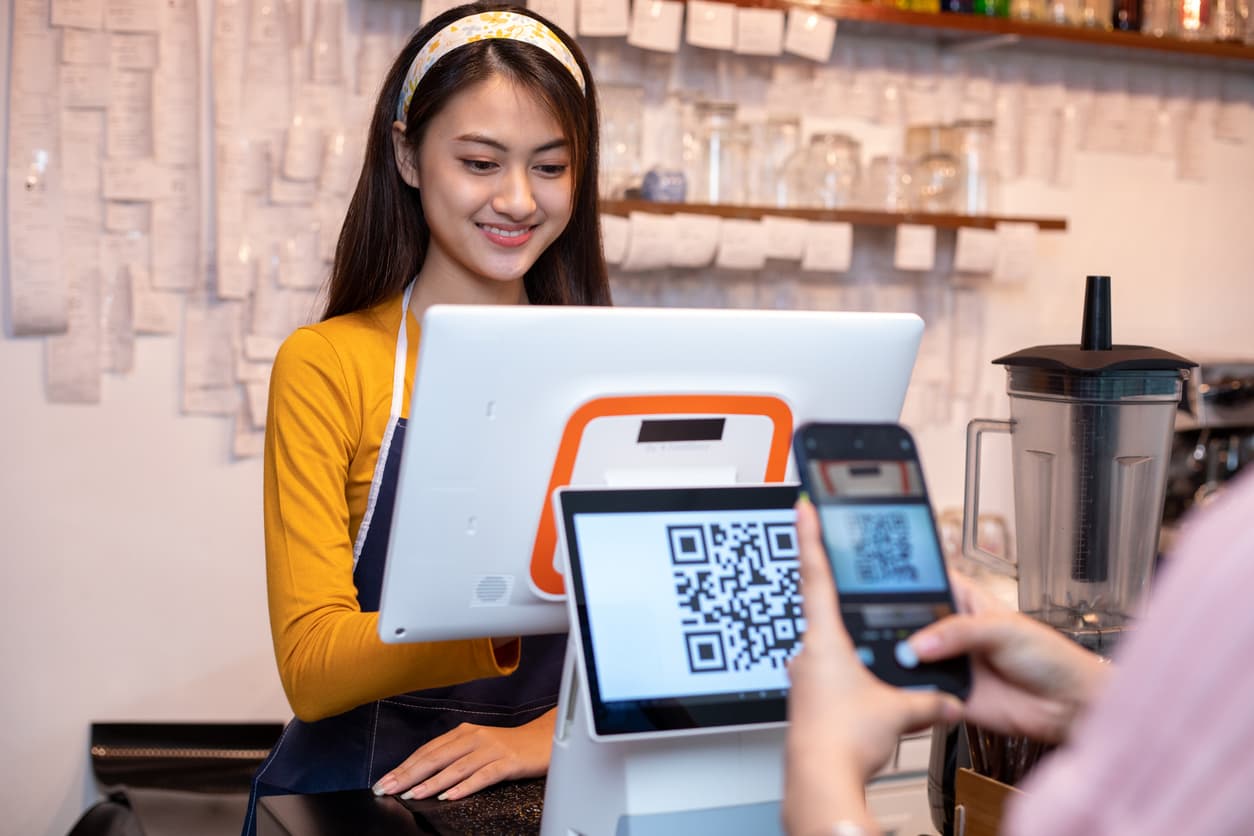
Mobile payments let customers pay with a smartphone instead of a card or cash. Customers usually do this in one of two ways. They tap the phone on the terminal using a service such as Apple Pay or Google Pay, or scan a QR code with either a banking, or a mobile payment app.
Why merchants are choosing to offer e-payments in Hong Kong
In Hong Kong, merchants mainly offer e-payment options in order to keep up with changing consumer preferences. However, the switch to accept electronic payments also brings a separate set of benefits that business owners may not immediately consider, from faster settlement to more detailed sales data.
Cleaner financial records for audit and tax filing
Electronic payments leave a digital record that business owners can reference and review later when the time comes for business owners to file profits return tax according to Hong Kong accounting standards. Merchant accounts are typically used in tandem with the electronic payment service, and allow business owners to have a unified platform to track their incoming e-payments from customers. This consolidated view of customers' incoming payments in the merchant account app reduces the time spent on manually tracking cash payments in a log.
Speed and convenience shorten the payment step
Electronic payments can shorten the payment step when customers tap their cards, or scan a QR code instead of handing over cash. With electronic payments, both customers and instore staff spend less time counting cash for the checkout transaction. This results in queues being cleared faster, especially during peak hours.
Broader shopping channels make payment options part of the sale
In Hong Kong, it's reported that the online-merge-offline (OMO) model is an increasingly popular business strategy, with 38.5% of merchants adopting the approach in 2026 - a year-on-year increase of 7.4%. For business owners who operate an OMO model, being able to cater to a wider range of online and offline payment preferences opens up opens up a larger share of that opportunity.
What merchants should look for when adopting e-payments
Before adopting electronic payment methods to add to your payment stack, it's crucial to review the different available options in the market and evaluate how the tool can address your customer's pain points and fit into your daily operations.
Payment method coverage
Payment method coverage refers to the range of cards and wallets a provider lets you accept. For businesses or SMEs serving mainly local clientele, it's important to pick a payment service provider that offers a wide coverage of local payment methods, such as Octopus, Faster Payment System (FPS) transfers, or e-wallet options like AlipayHK and WeChat Pay HK.
Settlement speed
Settlement speed is how quickly customer payments reach your bank account. Payment service providers usually offer T+1 or T+2 settlement. T stands for the transaction day, while the number shows how many business days pass before settlement is processedyour funds land in your business account balance. For businesses and SMEs running on a tight pool of funds, it's important for business cash flow to be optimised in order to keep operations running smoothly. A delay of even one or two extra days can affect whether a business can pay suppliers on time, cover payroll, or restock inventory when it's needed. Faster settlement gives merchants more control over these day-to-day decisions, since funds are available to work with sooner rather than tied up in transit.
How you can easily reconcile payments with sales
Reconciliation means matching payment records against your sales records and bank deposits. A e-payment service provider that takes the manual work out of the equation for you, is one that offers you a complete picture of your business transactions, saving you the effort of matching sale amounts to the corresponding transactions. This function comes in handy when you need to put together company books or records, or when it comes to making strategic business moves, such as applying for loans.
Business owners will benefit from having:
Real-time transaction view: Check that you can see sales as they happen.
Downloadable reports: Look for reports you can pass to your accountant.
POS integration: Confirm that payment data syncs with your sales records.
How KPay makes accepting electronic payments a breeze
KPay's range of electronic payment solutions can help you to speedup checkout quickly and securely. Explore our suite of payment tools, and find the payment solution that best suits your business's needs.
Offline Payments
This range of payment tools is catered to brick-and-mortar stores, who require quick and fuss-free payment methods that are easy to use.
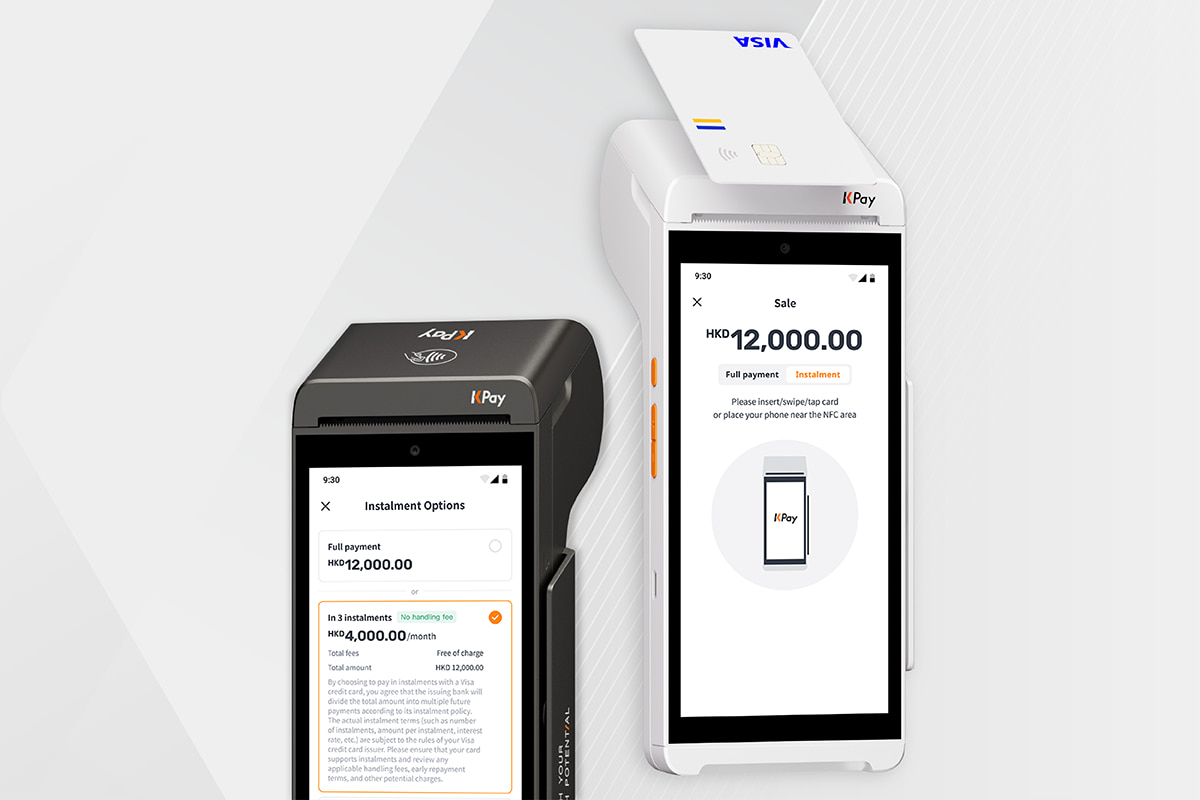
KPay Terminal Pro
KPay's modern, unified solution for your business
Accepts 20 major payment methods seamlessly on one portable device.
No subscription fees, annual fees or terminal rental fees.
24/7, 365-day customer support to ensure merchants get up and running quickly should any issues occur.
With KPay Terminal Pro, you can reduce counter clutter, accept multiple payment methods, and have peace of mind when it comes to settlement, letting you focus on other important aspects of the business.
Tap to Pay with KPay
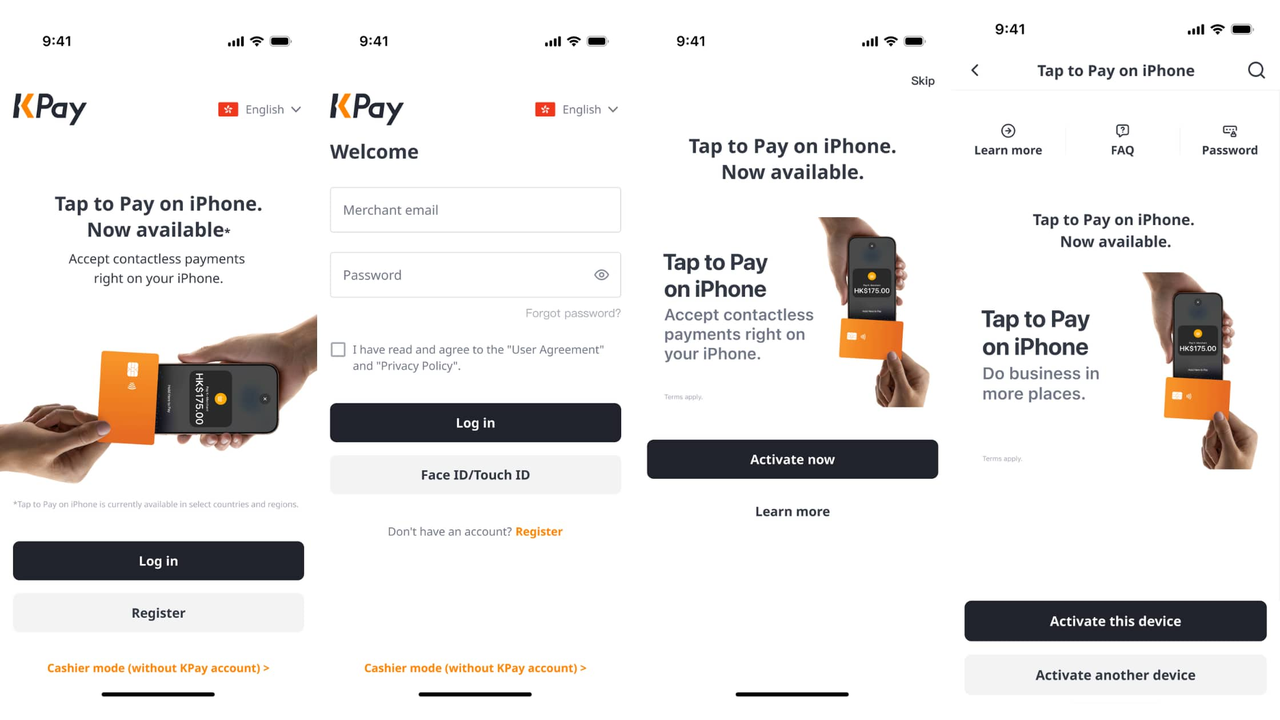
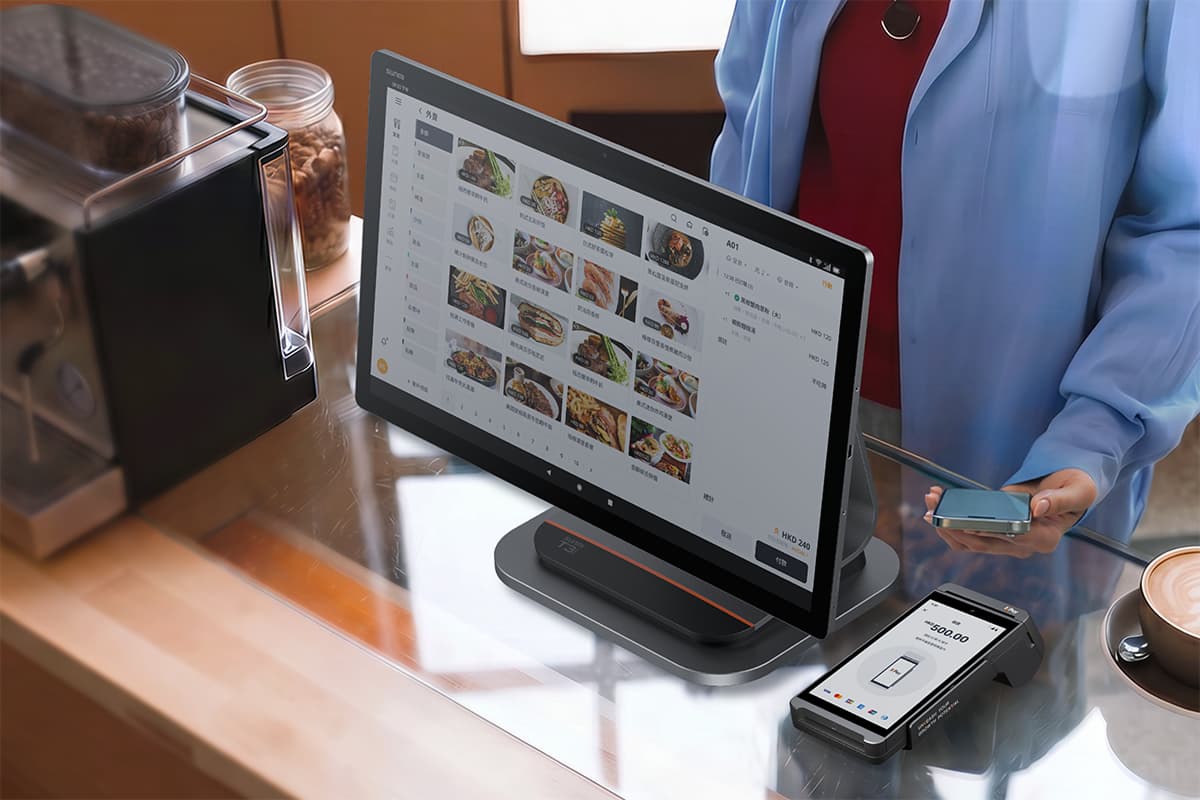
For many businesses, Tap to Pay is designed to work alongside your payment terminals, not replace them. Merchants can continue using terminals as their primary checkout solution, while adding Tap to Pay where flexibility, mobility, or backup is needed. There’s no need to purchase new hardware, overhaul workflows, or retrain teams; Tap to Pay fits naturally into existing operations. Additionally, there is a cashier mode where there isn't a need for a registered KPay account to start accepting payments. This mode enables staff to accept payments via Tap to Pay, but does not allow them to view all business data, keeping your business data safe.
This makes it suitable for both small businesses seeking a simple way to accept payments, and larger merchants looking to improve efficiency during peak periods or across multiple touchpoints. Because Tap to Pay integrates into KPay’s platform, transactions from both terminals and mobile devices are managed together, keeping reporting and reconciliation straightforward.
How to activate Tap to Pay as an existing KPay merchant
If you're already an existing KPay merchant, activating Tap to Pay is a simple and quick process:
Open the KPay App
Log in to your KPay Merchant account
Tap on the Tap to Pay banner on the homepage, and select on "Activate now"
Activate Tap to Pay for the device you're currently using, or activate it on your preferred device
You're ready to use Tap to Pay for your business!
To see which setup suits your business, contact KPay to start an application.
Online Payments
KPay's suite of online payments is easy to implement and integrate into your existing workflows, especially for business owners juggling an online and offline store. They're the natural addition to your payment stack if you're considering an OMO model, or if you are simply considering expanding your store online to reach more customers.
KPay Payment Link
Payment Link allows merchants to accept payments anytime and anywhere, without requiring a website or complicated technical setup. Merchants are able to make the checkout process a smooth one through:
Instant link-generation and sharing: Create and share secure payment links instantly via WhatsApp, Instagram or email. Turn any chat into a checkout page.
Long-lasting links with high-limits: Accept payments up to HK$50,000 per transaction, with links valid for up to 30 days, making it a good choice for high-ticket items and pre-orders.
Scalable bulk creation: Generate thousands of payment links simultaneously by uploading a single CSV file, which can help businesses that use recurring billing and mass promotions.
Role-based access and control: Assign specific staff roles via the KPay App/KPay Dashboard to manage Payment Link creation and transaction visibility, ensuring that your business operations remain secure. This means that you can set access for staff to only create Payment Links without the ability to view and export transaction details.
KPay Payment Gateway
KPay Payment Gateway gives online merchants a fast, secure, and flexible payment experience — removing the complexity often faced during integration and reducing the number of failed transactions. Here is how KPay Payment Gateway can help businesses to focus on converting customers instead of fixing payment problems:
3 integration modes: With 3 different integration modes — "all-hosted page", "hosted page", and "full API integration", merchants have the flexibility of choosing a solution that meets their business needs.
All major payment methods, one integration: For businesses using "all hosted mode", you can accept major credit and debit cards, e-wallets, and local payment methods across Hong Kong, Mainland China and beyond from a single unified checkout.
Launch with professional support: KPay provides a complete walk-through and full developer documentation during integration and onboarding to ensure a smooth journey. KPay also ensures PCI compliance, and offers centralised reporting via one dashboard.
Enterprise-grade security: KPay is ISO 27001 certified, attained PCI DSS Level 1, partners with HSBC, and holds regional operating licenses across multiple regions such as Hong Kong, Australia and Singapore.
Start accepting electronic payments with KPay today
Offering electronic payments in Hong Kong is no longer just about matching customer preference. It affects how quickly you get paid, how much manual work goes into your books, and how easily you can reach a larger pool of customers.
Sign up online to start accepting electronic payments with our range of online payment and in-person payment acceptance tools. Contact our sales team today to find out more!














%20(4).png)



.png)




.jpg)