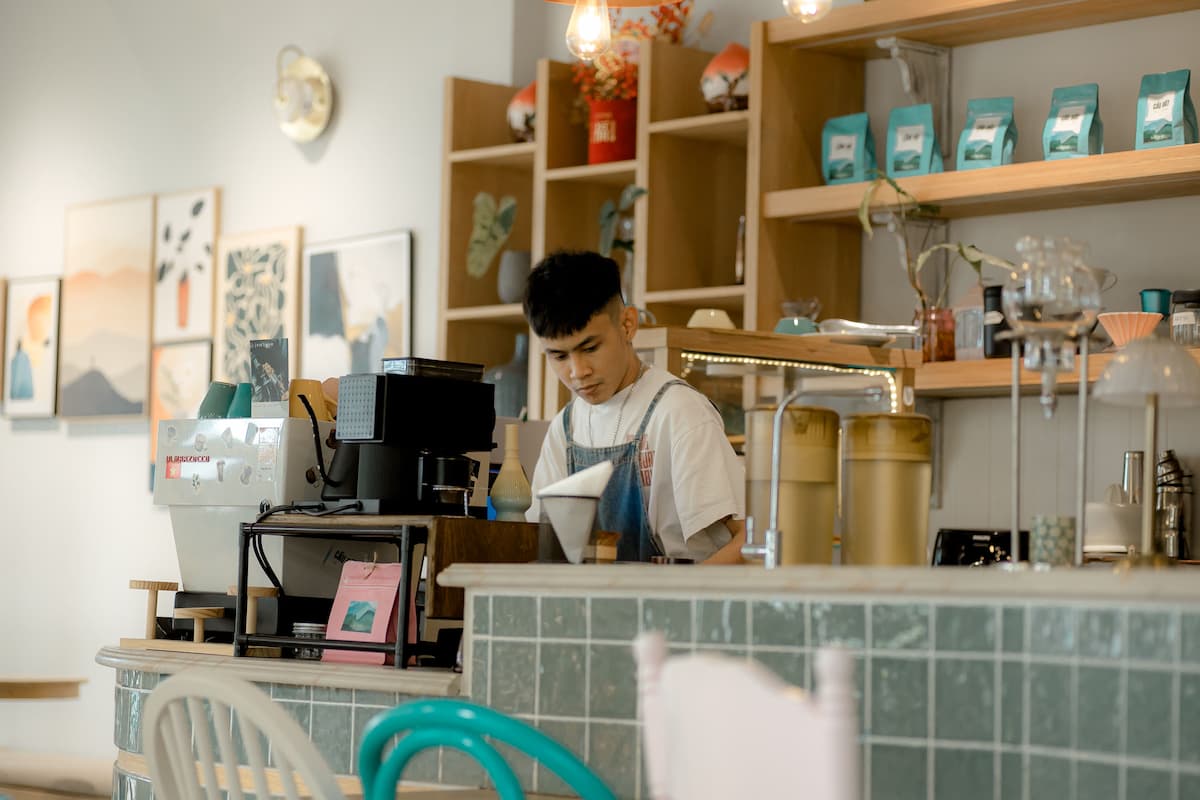
From the nostalgic aroma of traditional "Yuen Yeung" in local Cha Chaan Tengs to the thriving specialty café scenes in Sham Shui Po, Sai Ying Pun, and Sheung Wan, the demand is constant. However, with high rents and a persistent manpower crunch, learning how to start a café involves more than just a good roast, it requires a digital-first strategy.
This 6-step guide provides a roadmap to navigate the processes involved in starting your own café in Hong Kong.
Step 1: Business registration and compliance
Every Hong Kong business must register with the Companies Registry (CR) and the Inland Revenue Department (IRD).
- Business Registration (BR): You must apply for a Business Registration Certificate within one month of starting operations.
- Incorporation: If you are setting up a limited company, you must appoint at least one natural person as a director and a Company Secretary (who must be a HK resident or a holder of a Trust or Company Service Provider license).
- Capital Requirements: Ensure you have enough liquidity to cover the Security Deposit (typically 2–3 months' rent plus 1 month's management fee) and your initial licensing fees.
Once registered, you will receive a Business Registration Number (BRN), which is essential for opening a business bank account and applying for government funding, such as the TVP (Technology Voucher Programme).
Step 2: Securing a location and "permitted use"
In Hong Kong's high-density landscape, location is one of the key factors when it comes to driving footfall, with proximity to MTR stations or "artisan" hubs like Sham Shui Po offering guaranteed visibility, although at a steep rental premium. However, before committing to a Tenancy Agreement (TA), it is important to verify the property’s Occupation Permit (OP) with the Buildings Department and the Lands Department to ensure the premises are zoned for "Eating Place" use. Attempting to convert a space not originally intended for F&B can lead to a costly and time-consuming battle with the Town Planning Board, which could significantly delay your opening.
Once you've identified a viable site, the process moves to submitting a Letter of Intent (LOI) to the landlord to officially indicate your interest. During this stage, it's worth trying to negotiate for a "Rent-Free Fit-out Period" of at least one to two months. Having this buffer is essential in Hong Kong, as the dual-track process of physical renovation and navigating rigorous FEHD licensing inspections can take some time. Securing this grace period ensures you aren't burning through capital on rent before the first cup of coffee is even served.
Step 3: Licensing (FEHD and Liquor)
To serve food and beverages in Hong Kong, you must obtain a license from the Food and Environmental Hygiene Department (FEHD).
- General Restaurant vs. Light Refreshment Restaurant License: Most specialty cafés apply for a Light Refreshment Restaurant License, which is cheaper and faster to obtain but restricts the types of food you can cook on-site.
- Hygiene Manager & Supervisor: You must appoint a staff member who has completed the Hygiene Manager/Supervisor Training Course recognised by the FEHD to ensure daily compliance with safety standards.
- Liquor License: If you plan to serve "Coffee Cocktails" or craft beer in the evenings, you must apply separately to the Liquor Licensing Board (LLB), a process that includes a public gazette period.
Technical requirements: Ventilation and grease traps
The FEHD and Environmental Protection Department (EPD) have strict requirements:
- Ventilation: You must have a specialised air change system and fire dampers certified by a registered specialist contractor.
- Waste Management: A grease trap is mandatory to prevent oil from entering public sewers.
Step 4: Solving the manpower crunch with automation
One of the biggest hurdles in starting a café in Hong Kong is hiring. With a permanent manpower crunch in the F&B industry, leveraging technology becomes essential.
Digital POS systems that enable QR-code ordering allows a leaner crew to manage a busy morning rush. Your baristas can focus on pulling shots rather than manually inputting orders or handling physical menus.
KPay POS for businesses
KPay POS is designed with F&B businesses in mind and integrated with the KPay ecosystem so that you can access all you need in one place. We help to streamline your business operations, so you can focus on what matters — delivering an exceptional dining experience.
KPay POS offers various features to help you run your business efficiently:
- From first order to final close-out — one system, zero gaps: Taking the order, printing to the kitchen, collecting payment, and closing out at the end of the day are all connected and automatic, so nothing falls through the cracks.
- Built for complex orders, not retrofitted: Drink and food customisation options such as removing specific ingredients, indicating your preference for milk type, sugar level and size are built into the order and priced automatically. What the counter takes is exactly what the kitchen makes.
- Your floor moves as fast as your team does: Transfer, merge, or clear tables with a tap. Every action updates instantly across the system, so front-of-house always knows what's available, occupied, and ready to seat.
- Every order accounted for, at a glance: Each order is tracked live from placement through to completion, so your team always knows what needs attention without chasing the kitchen or digging through receipts.
- Every shift starts clean, every variance caught early: At shift open, staff enter the starting cash and the system automatically cross-checks it against the previous day's closing balance, flagging any discrepancy on the spot. No more end-of-day surprises or manual reconciliation guesswork eating into your close-out time.
With 24/7 support by a professional team that will guide you through the process of selection for a POS system that suits your business needs and ensure seamless setup, you'll be able to ensure that your business workflows are made more efficient so you can focus on helping your business grow.
Contact our sales team today to learn more about how KPay POS can help your café to operate more efficiently.
Step 5: Setting up your payment ecosystem
With the move towards a cashless environment, digital payments are becoming increasingly popular. This also means that if you don't accept various types of digital payment methods such as FPS, Octopus and PayMe, you may lose customers. Accepting popular foreign digital payment methods such as Visa and Mastercard is also important to capture tourist spending.
When looking for a payment terminal, it's important to look for a unified solution — instead of having three different machines, use an all-in-one Smart Terminal that consolidates all local and international payment methods. This helps to free up counter space and can make the payment process even more seamless.
Besides accepting a variety of payment methods, your payment terminal is just as important for cash flow. Some providers offer T+3 or T+5 settlement, but this can be crippling for merchants with smaller cafés that need the cash flow to pay vendors, staff, or to make decisions that help with operational efficiency. This is why having at least T+1 Settlement is important when it comes to selecting a payment terminal. For a new café, having yesterday's revenue in your bank account today is vital for paying milk and bean suppliers on time.
KPay's modern, unified solution for your business success
This is where a single smart terminal, like KPay Terminal Pro, can help with your cash flow:
- Accepts 20 major payment methods seamlessly on one portable device
- No subscription fees, annual fees or terminal rental fees
- T+0 settlement delivers faster access to cash flow and liquidity, significantly boosting operational efficiency
- 24/7, 365-day customer support to ensure merchants get up and running quickly should any issues occur
With KPay Terminal Pro, you can reduce counter clutter, accept multiple payment methods, and have peace of mind when it comes to settlement, letting you focus on other important aspects of the business.
Step 6: Marketing and local SEO
In a city of foodies, being discoverable is crucial for your café's survival. This includes ensuring that you can easily be found across multiple digital platforms.
Here are a few things to set up before opening the doors to your café:
- OpenRice & Google Business Profile: Ensure your café appears on Google Maps and OpenRice by setting up your profiles on these two platforms. Fill up your profile with relevant information and update your opening hours as relevant so that customers do not turn up to closed doors.
- Social accounts: Having accounts on various social media platforms can help with discoverability as you are able to tap in to a larger audience. Besides organic content to share with potential customers more about your offerings, consider social media ads to reach a wider audience. By having engaging content on your social media channels, you can also gradually build a community of loyal customers that will automatically act as ambassadors, helping your business to reach more people through word of mouth.
- Instagrammable Interiors: In Hong Kong, café culture is largely driven by "Check-ins" (打卡). Design a space that encourages social sharing, and link your digital menu to your Instagram bio so customers can browse before they arrive. Having your food or drink offerings look visually appealing or unique can also help to draw in a crowd, but make sure that this is not at the expense of the quality of your food so that you can retain loyal customers.
Starting small, thinking digital
Starting a café in Hong Kong may be a high-stakes journey, but it can be a rewarding one. By controlling fixed costs and using automation to solve manpower issues, you can focus on what matters most: the perfect cup of coffee.