You're setting up your very first business and getting things in order. You've gotten your inventory in order, production to scale and figured out a marketing strategy, but there's one more thing left on your list: the payment method.
It seems straightforward, but there are several factors to consider. What business needs do you have? Which payment method would suit your business better?
In this guide, we break down the differences between QR payments and card payment machines. Learn more about the respective benefits of each payment method, the differences in set up, customer experience, and how they can integrate into your daily workflow and operations so you can make the right decisions for your business.
What is QR code payment?
Also known as Scan-to-Pay, QR code (Quick Response code) payments are a digital payment method that utilises a unique square barcode with a distinct pattern that, when scanned, triggers a page prompting the customer to complete the payment transaction on their smartphone.
Depending on the type of QR code implemented by the business, the user will either authorise the transaction at their end, or enter the payment amount required. The sale will then be finalised after the business staff have verified the completed transaction. There are 2 types of QR code payments: static and dynamic.
Static QR codes
This category of QR codes usually involves a single QR code printed out and placed at the place of business. The user scans the static QR code for payment, triggering a payment page. They will be prompted to enter the payment amount into the payment field themselves and confirm the QR payment. The staff or business owner will verify the transaction completion and consider the sale finalised.
Dynamic QR codes
This is a unique QR code generated in real-time for every individual transaction. There are unique identifiers tied to each dynamic QR payment transaction, such as date, time, amount, and a unique string of characters that helps verify the authenticity of the transaction.
Dynamic QR codes are typically generated by a payment gateway or payment terminal. For each QR code generated, the payment amount is already encoded into the bar code. The customer simply scans the QR code and confirms the transaction.
What is a card payment machine?
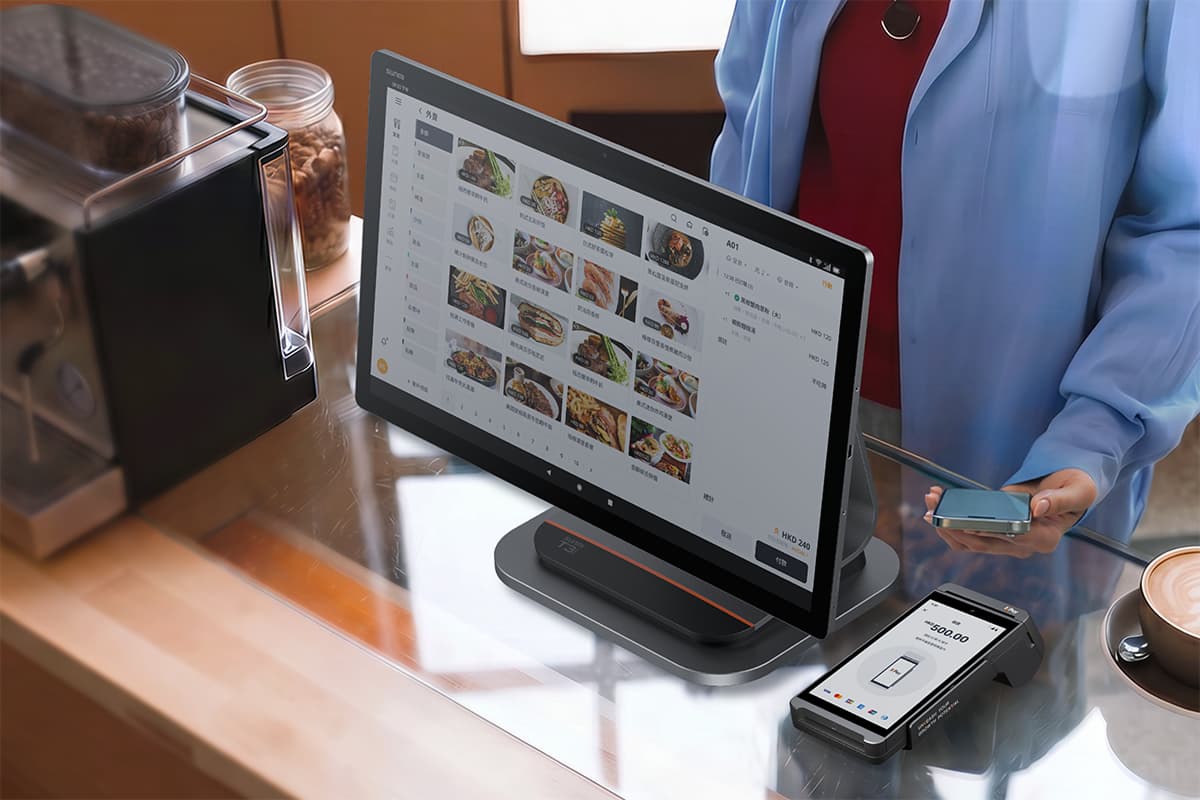
A card payment machine, or card terminal is a hardware device used by businesses to accept card and contactless payments. These devices typically connect to a payment network via Wi-Fi, Ethernet, cellular data, or Bluetooth. When the customer presents their card or smart device for payment, the card payment machine communicates with the card network and the customer's bank to authorise the transaction via Wi-Fi, Bluetooth, Ethernet or cellular data.
Unlike QR code payment, card payment machines require dedicated hardware that businesses need to purchase or lease, set up, and maintain. Card payment machines typically accept payments via:
- NFC (Near-Field Communication) payment
NFC payment is a contactless payment method where the customer taps their NFC-enabled card, smartphone or smartwatch on the card payment machine to make a payment. The customer's credit card is linked to digital wallets like Apple Pay, Google Pay, Samsung Pay, Huawei Pay, etc. - Swipe
The customer's card is swiped through a slot on the card terminal, allowing the machine to read the data stored on the card's magnetic stripe and process the payment accordingly. - Chip
The customer inserts their card into the terminal's chip reader, where the embedded chip generates a unique transaction code. The customer is prompted to enter their card PIN to complete the payment.
QR code payment vs card payment machines: What's best for your business?
Both QR payments and card terminals are versatile payment methods that can support businesses of different scales across different industries in their daily operations. The right choice ultimately depends on factors such as the nature of your business, your customers' preferred payment methods, and how quickly you need to get your payment system up and running. Learn about how each payment method compares across key factors and determine the right fit for your business.
| Key considerations |
QR Code payments |
Card payment machines |
| Setup time and cost |
Implementation cost and set-up time for QR codes is lower as no physical hardware needs to be purchased, shipped, or installed — a QR code can be generated and displayed within minutes. |
Card terminals have higher implementation costs and longer setup times, requiring hardware to be purchased, shipped, and installed. |
| Transaction speed |
Slower transaction speed, as customers must scan, manually enter the payment amount, and wait for staff confirmation. |
Faster processing and verification result in quicker transactions. |
| Hardware required |
Static QR codes require no hardware and can simply be printed; dynamic QR codes need a smart device to generate a unique code per transaction. |
Hardware payment terminal is required. |
| Customer adoption and familiarity |
Some customers may struggle with the manual steps to scan, key in the transaction amount and submit payment. |
High — card payment machines are widely understood and trusted across age groups. |
meow
| Best suited for |
Low-volume, flexible, or mobile setups |
High-volume businesses |
Achieve your business goals with KPay's card payment machine and QR code payment
Whether you're looking to get started quickly with a cost-effective QR code payment solution or seeking a robust card terminal for high-volume, in-person transactions, KPay's payment solutions are built to support a variety of businesses in Hong Kong. Learn more about KPay's card terminals and QR payment solutions that help you start accepting payments quickly and securely.
Static QR Code
KPay's Static QR Code is an affordable, hardware-free QR payment solution that allows businesses to accept payments by simply printing and displaying a QR code. With no terminal or installation required, it is one of the most straightforward ways for businesses to start accepting digital payments. With Static QR Code, you get:
- One QR code for every wallet: Accept payments from all major e-wallets and payment apps without requiring customers to download a specific app for QR payment.
- Low operational cost: With no hardware to purchase, lease, or maintain, you can keep payment infrastructure costs low while still offering customers a seamless digital payment experience
- Accept payments anywhere, anytime: Display your QR code at your counter, on a table, in a printed invoice, or even online — so payments can be collected with or without staff present.
- Shorter queues and faster checkout: Customers scan, enter the amount, and confirm in seconds — reducing manual handling at the counter and keeping your queue moving during peak hours.
KPay Terminal Pro
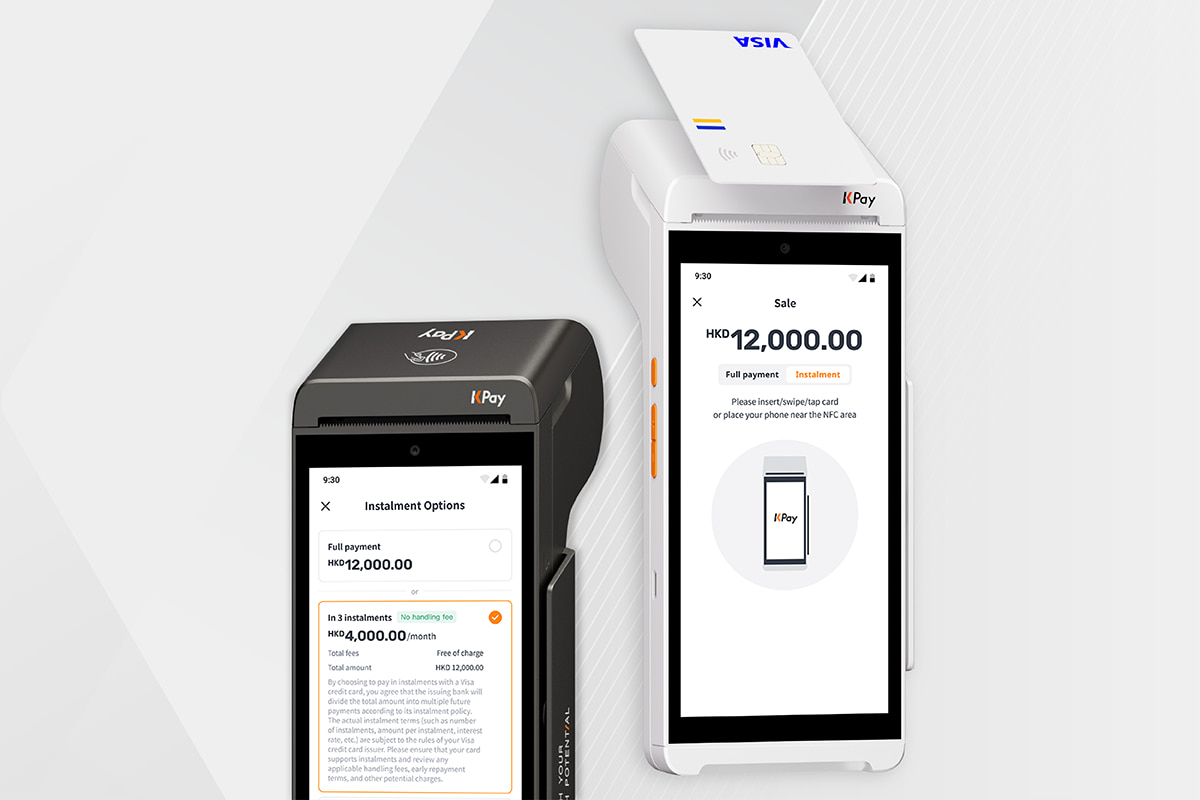
KPay Terminal Pro is an all-in-one smart terminal that supports foreign currency payment, EMV chip and QR payments through a single card payment machine. By consolidating multiple payment methods into one card terminal, businesses can streamline their checkout process, reduce hardware complexity, and offer customers a faster payment experience.
- More accepted payment options at checkout: KPay Terminal Pro accepts 20 payment methods right from your terminal. We eliminate the complexity of managing multiple payment integrations by consolidating major cards, e-wallets, and local payment methods into a single device.
- Customer data protection and better security: KPay Terminal Pro is PCI-certified in compliance in accordance with industry security standards. While you keep your customer payment data secure, you build trust and long-term credibility with your customers.
- Round-the-clock support for your business: 24/7, 365-day multilingual customer support to ensure merchants get up and running quickly should any issues occur.










%20(4).png)



.png)




.jpg)