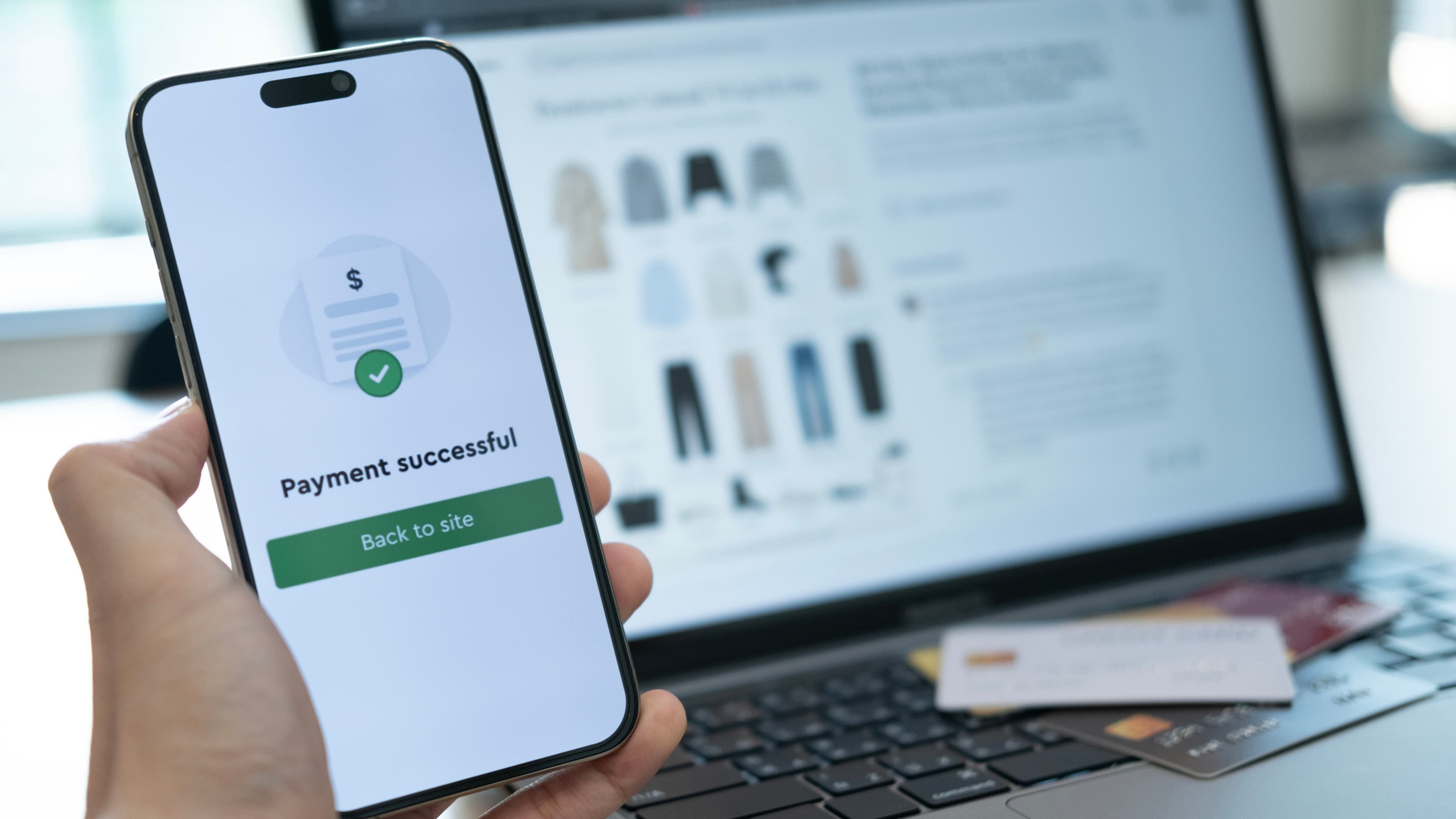
You click 'Checkout' after keying in your card details on the checkout page of an online store.
A loading icon appears, telling you that the payment gateway has taken over.
Behind that spinning icon, your encrypted card details are being picked up from the merchant's checkout page, packaged into a secure request, and sent down an encrypted channel to the payment processor — all before the icon stops spinning.
When setting up an online store, choosing and integrating the right payment gateway in Hong Kong is one of the most important steps to ensuring every purchase transaction is safe and secure. Learn what a payment gateway is, how it works, and how it can help your business.
What is a payment gateway?
A payment gateway is a software application that's built and operated by payment processing companies and acts as an intermediary for electronic financial transactions. It facilitates online payment and forwards a request to the payment processor when your customer submits their card details on your checkout page.
Payment gateways are increasingly important around the world as more consumers continue to adopt digital payment methods, driving an increase in the need for secure online checkouts. They provide enhanced layers of security for customers and offer transaction reporting that gives business owners greater visibility into their sales performance.
How does a payment gateway work?
The payment gateway bridges the gap between the customer, the business, and the respective financial institutions on one platform. Payment gateways typically charge a fee every time a transaction is processed.
- Customer initiates payment
Your customer enters their card details. - Payment gateway encrypts and tokenises card dataThe payment gateway reads the card data input by your customer, encrypts the raw card data via Transport Layer Security (TLS), and replaces the sensitive details with a string of randomly generated tokens, ensuring that your customer's payment information stays secure.
- Payment processor raises an authorisation request
The tokenised card data is forwarded to the payment processor, which raises an authorisation request to the card issuing bank to either approve or reject the transaction request. - The issuing bank responds with an approval or a decline
The card issuing bank checks whether the customer has sufficient funds, the card is valid, and no fraud flags are triggered. It sends an approval or decline message back through the card network to the payment processor. - The payment processor returns the response to the payment gateway
The processor forwards the issuing bank's approval or declines back to the payment gateway. - The payment gateway returns the response to the merchant's checkout page
The gateway delivers the result to the online store — this is the moment the loading icon stops, your customer sees either an "order confirmed" or "payment declined" screen.
What can payment gateways do for your business in Hong Kong?
In Hong Kong, fast and reliable payments are how you stay ahead in one of Asia's most demanding markets. Ensuring that your payment systems and processes are fast, reliable and secure is how you can build lasting customer trust, reduce cart abandonment, and capture revenue at every opportunity.
Implementing a robust payment gateway in Hong Kong does exactly that and gives you an edge over your competitors, both operationally and in customer experience. You secure the sale faster, your customers experience lag-free checkout, and you avoid the risk of failed transactions that could lead to cart abandonment.
Securely handle your customer's payment details at checkout
With tokenisation and encryption, payment gateways in Hong Kong can secure your customers' data and keep their personal information safe, safeguarding against data leaks and fraud. You protect your customers' data; they trust you with their business.
Wider customer payment options with less hassle
The days of negotiating separate contracts with multiple payment providers are over. A payment gateway brings together card networks like Visa and Mastercard, and digital wallets like Apple Pay — all through a single integration. Your customers have their preferred payment method at checkout, and you don't need to juggle multiple provider relationships whenever you want to add a new payment method.
Automate payment processes
A payment gateway usually includes built-in features like recurring billing, automated invoicing, real-time transaction monitoring, and instant payment notification, reducing manual work and letting your team focus on running the business.
How you can choose a payment gateway in Hong Kong for your business
Whether you're an independent freelancer, managing a chain of stores, or running an enterprise-level franchise, choosing a payment gateway is no small decision, as it's the final checkpoint of a customer's sales journey. Review the checklist below to help you choose the best payment gateway in Hong Kong for your business needs.
Enquire about pricing structures and transaction fees: Optimise your business cost
Cost is always one of the top factors to consider for businesses, regardless of industry, size, or how long you've been in business. Payment gateways in Hong Kong typically use one of two pricing structures: per-transaction fees or a subscription model.
- Per-transaction: The payment gateway provider in Hong Kong charges business owners on a per-transaction basis. This could be either a flat rate charged for each transaction processed, a percentage of the transaction amount, or both.
- Subscription: Some payment gateway providers charge a fixed monthly fee regardless of the number of transactions processed or total transaction value.
However, you also need to watch out for additional fees that can add up quickly.
- Chargeback fees: Businesses tend to incur chargeback fees if a customer files a chargeback on their credit card. It covers the administrative costs of processing the payment dispute.
- PCI compliance fees: Some payment gateway providers may charge a fee for maintaining this security standard. PCI compliance is required as mandated by Hong Kong law, so this is a cost you cannot avoid unless your payment gateway provider absorbs it on your behalf.
Check how quickly funds are settled into your account
For any business operating in Hong Kong, fast settlement is a necessity. Especially for small businesses where cash flow is important for the business's survival, merchants usually want to avoid having a low cash flow and their earned revenue tied up with the payment gateway. Slow settlement also stalls the decisions and investments that drive growth and can even impede your daily business operations.
Fast settlement empowers business owners with the confidence to scale the business quickly, whether you're hiring the next team member, launching new campaigns, or reinvesting in the business without waiting on a settlement window.
For merchants with an existing KPay Business Account (KBA), KPay is offering Everyday Settlement, which features:
- Daily settlement, maximum liquidity: Receive your funds every single day. No more waiting for days to access your hard-earned money; keep your business moving with steady cash flow.
- 365 days a year, no exceptions: Enjoy settlement services every day, including weekends and public holidays. We ensure your funds reach your KBA 365 days a year, rain or shine.
- Predictable cashflow, simplified accounting: With a fixed settlement daily, you can automate your financial planning and reconcile your books with ease and high predictability.
To register for a KPay Business Account, sign up online or contact our sales team to guide you through the process. For merchants who have successfully enabled your KPay Business Account, you will be eligible for Everyday Settlement at no additional cost — this special offer is available for a limited time* only!
Consider the cost of integration
Choosing a payment gateway with minimal setup can help with ensuring that the integration of your payment gateway into your checkout process is as smooth as possible, especially if you do not have the technical expertise to handle a complex setup without delays, additional costs, or outside help. Payment gateways in Hong Kong are typically integrated with these 3 integration modes:
| Type of Payment Gateway |
Technical Expertise Needed |
What You Need to Do |
| All-hosted page |
Low technical expertise needed |
Insert an embed code into a prebuilt page via HTML, or link the payment gateway with a simple URL. |
| Hosted page + API |
Some experience needed |
You write a backend script that redirects your customer to the payment gateway provider's website, where they enter their card details into a form and complete the payment. |
| Full API |
Developer proficiency |
Business owners fully control the payment gateway's layout and behaviour, but a developer needs to build, maintain, and update it whenever changes are needed. For enterprises with a development team and specific checkout requirements, that control is worth the investment. For everyone else, it's often unnecessary cost and complexity that rarely pays off at the early stages. |