What is customer lifetime value (CLV) and how merchants can use it to grow
9 November 2026
10 min read
KPay Editorial Team
Making the complex sides of financial management, business operations and digital transformation simple. We share practical tips and local stories to help you run your business smarter and grow faster.
Key takeaways:
Customer lifetime value (CLV) measures the total revenue a customer generates across their entire relationship with your business
CLV is calculated using three variables: Average order value, purchase frequency, and customer lifespan
Improving even one of those three variables has a compounding effect on revenue
Payment experience, both online and in-store, is a CLV lever most merchants underestimate
It's inevitable that some customers spend more than others. There is the regular who comes in every week, reorders the same service package, or buys across your online store and your physical counter, as compared to the one-time buyer who found you through a discount and hasn't been back since. However, have you ever considered putting a number on that difference?
That number is known as customer lifetime value. Once you understand it, the way you think about discounts, loyalty, payment options, and even how you set up your checkout starts to shift.
This article breaks down what customer lifetime value means, how to calculate it, and what you can actually do with it as a merchant running a real business.
What is customer lifetime value (CLV)
Customer lifetime value (CLV) is the total revenue your business can expect from a single customer over the entire time they shop with you. Not just one transaction, but rather the full picture.
While it may seem straightforward, most merchants don't necessarily think this way automatically. A customer who spends HK$300 once looks the same in your weekly sales report to a customer who spends HK$300 eight times a year for three years. The second customer is worth roughly HK$7,200. The first is worth HK$300. The decisions you should make about both are completely different.
CLV also changes how you read your acquisition costs. If you're spending HK$200 to bring in a new customer and they buy once, you've barely broken even. If that same HK$200 acquires someone who keeps coming back, your return is compounding over time. The ratio between what you spend to acquire a customer (customer acquisition cost, or CAC) and what they're worth (CLV) is one of the most important numbers in your business.
How to calculate customer lifetime value
The formula is simpler than most guides make it look:
CLV = Average order value × Purchase frequency × Customer lifespan
Average order value (AOV): How much a customer spends per transaction on average
Purchase frequency: How many times they buy in a given period (usually a year)
Customer lifespan: How many years they remain an active customer
Multiply the three together and you have a working CLV estimate. While this will not be perfect, it gives you a number you can actually act on.
A simple CLV example for a Hong Kong merchant
Say you run a skincare clinic in Sham Shui Po. For this example, imagine a typical regular spends HK$450 per visit, returns around eight times a year, and stays a client for roughly two to three years. This brings their total CLV to approximately HK$9,000
This total is several times what that customer spent on their first visit. Now, compare that to a customer who found you through a group-buying platform, used a discount voucher once, and never returned. Their CLV is whatever they paid that one time.
The main point here isn't which customer you prefer, but whether your marketing, loyalty, and checkout decisions actually reflect that difference.
Why customer lifetime value changes how you run your business
Once you have a CLV figure, decisions that used to feel like guesswork become easier to justify or easier to question.
Discounts look different: A blanket promotion erodes margin across every customer, including your most loyal ones who would have paid full price anyway. A retention offer targeted at high-CLV customers protects margins while rewarding the people who are actually driving your revenue.
Loyalty programmes have a clearer business case: Instead of asking "is this loyalty programme worth the cost?", you can ask "does this programme increase purchase frequency or lifespan enough to justify the investment?" Tools like KPay Loyalty are built around this moment, such as embedding a coupon directly in the digital receipt so the offer reaches a customer when their attention is at its highest, not days later when the visit is a distant memory.
Acquisition spend gets smarter: Knowing your average CLV helps you become more aware of how much you can spend to acquire a customer. If your CLV is HK$9,000, spending HK$500 on acquisition isn't reckless — it's rational. Without a CLV benchmark, that decision is just a feeling.
Staffing and operations shift focus: If your highest-CLV customers are regulars who visit during peak hours, their experience during that busy period matters more than you might have assumed. A long queue or a payment that takes too long is a retention risk.
How to improve customer lifetime value — practical steps for merchants
CLV improves when any of its three components improve: customers spend more per visit (AOV), they come back more often (frequency), or they stay loyal longer (lifespan). Most of the changes with the biggest impact aren't expensive or complicated. In fact, they're operational.
Turn one-time buyers into subscribers
Subscription and recurring billing is the most direct way to improve CLV. This is because it directly improves two of the three variables at once: frequency becomes predictable, and customer lifespan extends because the relationship is formalised.
For businesses where repeat consumption is natural, such as beauty treatments, fitness sessions, monthly service packages, and F&B add-ons, a subscription model removes the friction of the customer having to remember to rebook or reorder. It also removes the merchant's dependence on hoping they come back.
KPay's Subscription Payment
KPay's Subscription Payment gives merchants a reliable, automated way to collect recurring payments, helping to remove the manual effort of chasing invoices and reducing revenue lost to payment failures. Here is how Subscription Payment helps businesses build more predictable, sustainable income:
Automated recurring billing: Once a customer links their card, payments are charged automatically on the configured billing schedule. This means no manual invoicing, no payment reminders, and no chasing renewals.
Flexible subscription plans: Create products with custom billing cycles and set end dates across 1, 2, 3, 6, or 12 cycles — or define a custom duration. Subscription start dates and first billing dates can be set independently, allowing merchants to configure free trial periods and improve conversion.
Smart payment recovery: If a payment fails, the system automatically retries on day 3, day 7, and the final day of the grace period, recovering revenue that would otherwise be lost to involuntary churn without any manual follow-up.
Subscription performance dashboard: Track key metrics in real time — Monthly Recurring Revenue (MRR), active subscriptions, overdue payments, and payment failure reasons — so merchants can monitor performance and act quickly when issues arise.
Seamless customer communications: Customers receive automated email notifications at every stage of their subscription journey, from confirmation and upcoming expiration to payment success and failure alerts, keeping them informed and reducing the staff required to manage this.
This means that a skincare clinic offering a monthly facial package or a café selling a prepaid coffee subscription can convert visitors who only visit occasionally into reliable recurring revenue without having to hire any additional administrative staff.
The shift in thinking required is that instead of asking "how do I get this customer to come back?", the question becomes "what subscription offer makes staying a default, not a decision?"
Make it easy for customers to pay wherever they buy from you
Merchants who sell across various platforms, whether in-store, via WhatsApp, Instagram, or a website, often lose repeat buyers not because of poor products or service, but because checkout is inconsistent or payment options are missing at the moment of purchase.
KPay Payment Link solves this for conversational and social commerce.
KPay Payment Link
KPay Payment Link allows merchants to accept payments anytime and anywhere, without requiring a website or complicated technical setup. Merchants are able to make the checkout process a smooth one through:
Instant link-generation and sharing: Create and share secure payment links instantly via WhatsApp, Instagram or email. Turn any chat into a checkout page.
Long-lasting links with high-limits: Accept payments up to HK$50,000 per transaction, with links valid for up to 30 days, making it a good choice for high-ticket items and pre-orders.
Single or unlimited use of payment links: Choose whether a payment link is to be used once or repeatedly for unlimited payments based on your business needs.
Customisable payment amounts: When creating a payment link, merchants can choose whether to create a payment link with a merchant-set amount or to enable customers to key in their own amount to be paid:
Merchant-set amount
Merchants set a fixed payment amount for customers to pay directly, with no changes allowed.
Suitable for deposit collection, fixed-price products, and event registration fees.
Customer-entered amount
Customers enter their own payment amount, while merchants can set an acceptable payment range.
Suitable for flexible pricing, balance payments, and social commerce scenarios with multiple products and variants.
Pause and resume payments anytime: Merchants can set a payment link to “Paused” at any time to stop accepting payments, and click “Resume” to start accepting payments again whenever needed. Easily adapt and adjust the payment status in real time to suit your business needs.
Role-based access and control: Assign specific staff roles via the KPay App/KPay Dashboard to manage Payment Link creation and transaction visibility, ensuring that your business operations remain secure. This means that you can set access for staff to only create Payment Links without the ability to view and export transaction details.
KPay Payment Gateway is also worth considering for merchants who have an eCommerce site.
KPay Payment Gateway
KPay Payment Gateway gives online merchants a fast, secure, and flexible payment experience — removing the complexity often faced during integration and reducing the number of failed transactions. Here is how KPay Payment Gateway can help businesses to focus on converting customers instead of fixing payment problems:
3 integration modes: With 3 different integration modes — "all-hosted page", "hosted page", and "full API integration", merchants have the flexibility of choosing a solution that meets their business needs.
15+ major payment methods, one integration: For businesses using "all hosted mode", you can accept major credit and debit cards, e-wallets, and local payment methods across Hong Kong, Mainland China and beyond from a single unified checkout.
Launch with professional support: KPay provides a complete walk-through and full developer documentation during integration and onboarding to ensure a smooth journey. KPay also ensures PCI compliance, and offers centralised reporting via one dashboard.
Enterprise-grade security: KPay is ISO 27001 certified, attained PCI DSS Level 1, partners with HSBC, and holds regional operating licenses across multiple regions such as Hong Kong, Australia and Singapore.
For online stores, cart abandonment is almost always a friction problem. Reducing it has a direct effect on purchase frequency and, over time, CLV.
Reduce in-store checkout friction to protect repeat business
Research on consumer behaviour consistently shows that negative experiences are remembered more strongly than positive ones. While a smooth transaction goes unnoticed, a slow or failed payment at the counter often stays with a customer.
For in-store merchants, the last 30 seconds of a visit, which is the payment process, can undo a good experience that took an hour to build. Customers who face difficulty paying at checkout are less likely to return, even if everything else was fine.
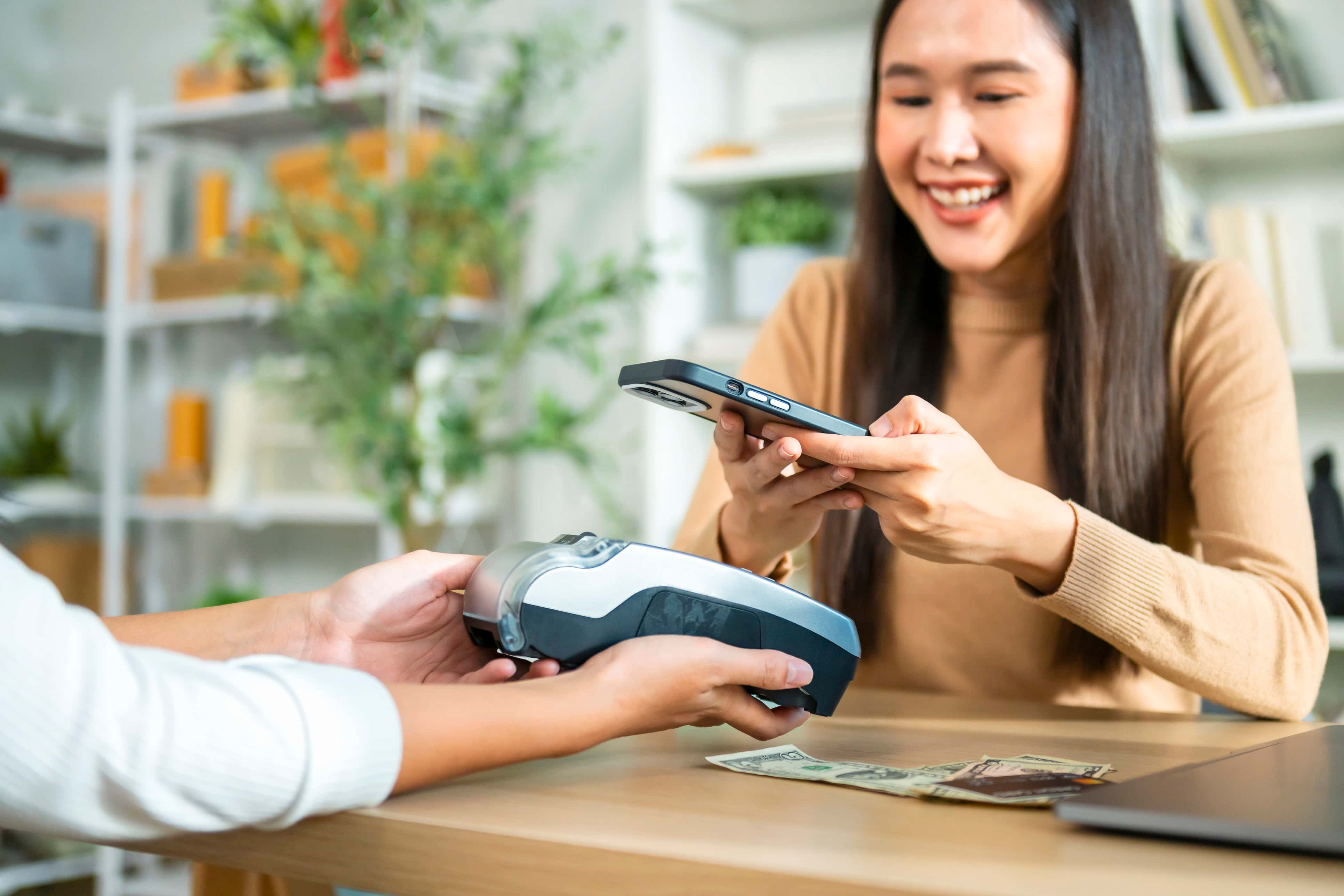
Having a payment terminal like KPay Terminal Pro can help to ensure that the checkout process is as smooth as possible.
KPay Terminal Pro
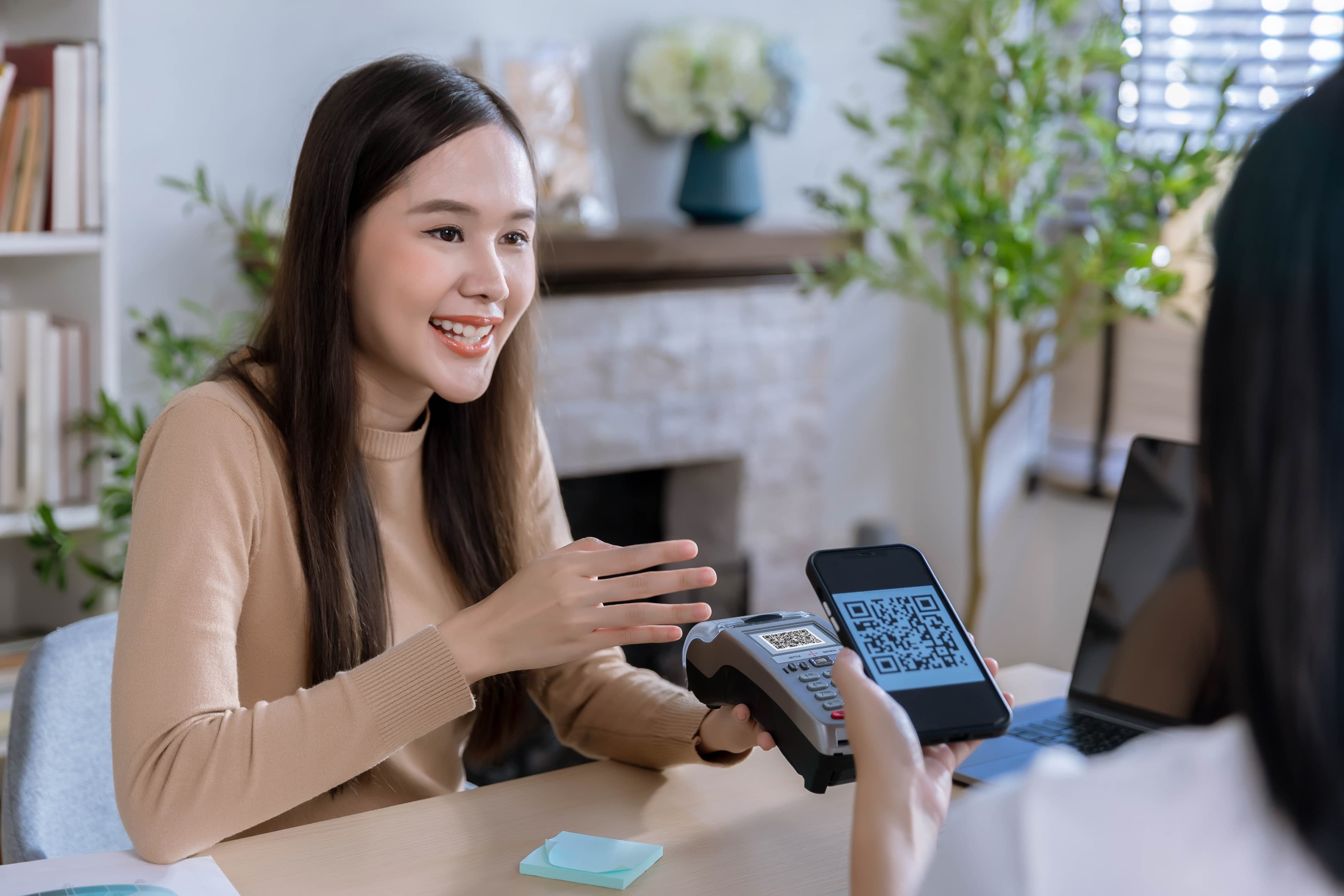
20+ payment methods on one portable terminal: Accept NFC, EMV chip, and QR code payments across 20+ major methods on a single device, with no extra hardware needed.
150+ integrations, one terminal: Connect KPay Terminal Pro to your POS, kiosk, loyalty programme, vending machines, and online channels. One device that fits into your existing business — not the other way around.
Up to T+0 settlement for faster, reliable cash flow: With express T+0 to T+2 settlement cycles, you can keep your cash flow stable and predictable.
24/7 support every step of the way: From onboarding to settlement queries, our dedicated team is on hand around the clock to keep your business running without interruption.
With KPay Terminal Pro, you can reduce counter clutter and accept multiple payment methods. For busy periods in particular, a terminal that doesn't slow down the queue isn't just a convenience, it also plays an important role in whether customers come back, and how often.
Use post-purchase follow-up to reduce churn
The moment a transaction completes is when a customer's attention is at its highest. Most merchants let that window close. A receipt is printed, handed over, and pocketed — and the next interaction depends entirely on whether the customer decides to come back.
That gap between one visit and the next is where a significant portion of CLV is lost. Customers don't always leave because of a bad experience. They leave because there was nothing pulling them back.
KPay Loyalty
KPay Loyalty is a 3-in-1 bundle — Digital Receipts, Rewards Management, and KPay Pocket — that turns the end of a payment into the start of the next visit.
Digital receipts that replace printed paper at checkout: Customers receive their receipt via NFC tap, QR code scan, or email. No app, no sign-up required for NFC and QR delivery. Thermal paper, printer jams, and restocking are removed from the equation entirely.
Deliver a coupon the moment a customer's attention is highest: Rewards Management embeds a coupon directly in the digital receipt, automatically distributed after every qualifying transaction. Customers save it to Apple Wallet, Google Wallet, or KPay Pocket with one tap — no registration required, and it's there waiting when they return.
Keep your offers visible between visits: KPay Pocket surfaces all saved coupons and receipts in one place for customers. Your promotions stay visible even when they're browsing offers from other merchants, which makes it a passive touchpoint that drives repeat visits without additional spend.
Track coupon performance in real time: The dashboard shows distributed, claimed, and redeemed counts for every campaign, so you can optimise future offers based on what's actually working.
Shared records that reduce counter interruptions: Every receipt is permanently saved in the merchant dashboard. Customers can access their own copies independently, cutting the back-and-forth on returns, warranty queries, and transaction lookups.
Live from your first transaction, with setup in minutes: KPay Pocket activates when Digital Receipt is switched on. Coupons can be created in as little as 3 minutes. There's no separate infrastructure to build or maintain.
The link between payment experience and customer lifetime value
Payment infrastructure is rarely framed as a CLV investment, but it should be.
A customer who can pay smoothly in-store via a reliable terminal, and just as smoothly online through a payment gateway or payment link, has fewer reasons to go to a competitor. The consistency of that experience across channels and payment methods builds familiarity and trust in small, invisible increments.
For merchants managing both physical and online sales, fragmented payment infrastructure creates fragmented customer experiences. Different payment options across different platforms, inconsistent checkout flows, or a terminal that doesn't support the payment method a customer prefers — each of these is a small friction that accumulates over time.
KPay's payment solutions work across in-store, online, and social/conversational commerce, with KPay Subscription Payment and KPay Payment Gateway handling recurring billing. For merchants thinking about CLV, that coverage matters because it removes payment-related reasons for a customer to stop buying from you.
Common mistakes merchants make when thinking about CLV
Treating all customers the same when allocating marketing spend
If 20% of your customers are generating 60% of your revenue, a campaign that targets your full customer list may not be the best use of your resources. Segmenting by purchase history and focusing retention spend on your highest-value cohort is not complicated as it just requires knowing who that cohort is.
Measuring success only by new customer numbers
Acquisition metrics are easy to report and feel good in the short term. Retention rate is harder to measure but more directly connected to long-term revenue. A business that acquires 50 new customers a month but loses 40 is running in place. One that acquires 30 and retains 28 is compounding.
Most of the changes that matter the most, such as introducing a subscription option, improving checkout speed, and tightening post-purchase follow-up, are available to SME merchants right now. The gap between knowing CLV matters and acting on it is usually not about resources. It's about framing the problem clearly enough to act on it.
Start with the number, then make better decisions
Customer lifetime value isn't a metric reserved for businesses with analytics teams and dedicated data infrastructure. It's a way of reframing decisions you're already making about discounts, loyalty, payment options, and how you invest in customer experience.
Once you know what a loyal customer is actually worth, the maths on subscriptions, payment flexibility, and checkout quality can start to look very different.
To find out how KPay's payment solutions can help you grow your most valuable customer relationships, contact our team.