Key takeaways
- Hong Kong diners rely heavily on OpenRice, Google Maps, and social media before choosing where to eat, which means that your presence on these platforms is non-negotiable.
- Payment flexibility (FPS, PayMe, Octopus, Alipay HK, WeChat Pay HK) is a basic expectation, not a value-add.
- QR-based ordering and integrated POS terminals reduce friction at the table and free up staff to focus on the experience.
- Consistent review management, loyalty incentives, and offline-to-online tactics compound over time and reduce your dependence on paid promotions.
If you run a restaurant in Hong Kong, you already know the feeling: a full house on Friday night that barely covers the week's rent, a three-month-old Google Maps listing with zero reviews, and a queue snaking out the door while the table in the corner sits empty because no one wants to wait.
Restaurant marketing in Hong Kong is not about posting pretty food photos. It is about understanding how Hong Kong consumers discover, decide, and pay, while positioning your restaurant at each of those touchpoints before a competitor does.
This guide breaks down what actually works for Hong Kong F&B operators, from the platforms that drive bookings to the operational tools that turn first-time diners into regulars.
Why restaurant marketing in Hong Kong is different
Hong Kong's F&B market is arguably one of the the most competitive in the world. Restaurants operate on tight margins, small footprints, and high staff-to-guest ratios. A restaurant in Sham Shui Po faces completely different competitive pressure than one in Times Square, but both share the same structural challenge: high discovery cost and low switching barriers for diners.
A few realities specific to Hong Kong that shape your marketing approach:
- Diners research before they go: OpenRice, Google Maps, and social platforms like Instagram and Xiaohongshu are the primary discovery tools. A restaurant with no reviews or outdated photos is often less likely chosen by diners.
- Mobile-first consumption: Most bookings, searches, and payments happen on mobile phones. Your entire digital presence needs to work on a screen.
- High expectations around payment acceptance: Customers expect to pay with Octopus, PayMe, FPS, AlipayHK, or WeChat Pay HK. This means that cash-only or card-only restaurants regularly lose walk-in traffic.
- Manpower constraints: With limited front-of-house staff, marketing channels that reduce service friction (QR ordering, self-service payment) double as operational tools.
Build your restaurant's digital foundation first
Before you run a promotion or invest in paid ads, your digital foundation needs to be solid. Most diners will check at least two platforms before deciding to visit.
Claim and optimise your Google Business Profile
Google Maps is often the first touchpoint for diners searching nearby restaurants. Make sure your profile includes:
- Accurate opening hours (including public holidays)
- Current menu photos — food quality photos outperform décor shots in Hong Kong search behaviour
- A short, keyword-rich business description
- Responses to every review, positive or negative
A restaurant that actively manages its Google Business Profile signals trustworthiness to both Google and potential diners.
Get serious about OpenRice
OpenRice remains one of the most trusted F&B discovery platforms in Hong Kong, yet operators often underinvest here. Your OpenRice listing should ideally have updated photos, complete menu sections, and responses to user reviews. Merchant accounts also allow you to run targeted promotions to users in your area, further amplifying your reach to diners who are most likely to visit for a meal.
Build a presence where your customers actually scroll
For Hong Kong diners, Instagram and Xiaohongshu are the dominant visual discovery platforms. Xiaohongshu in particular has grown significantly as a restaurant research tool, especially for younger diners and mainland visitors. Even a small but consistent content output, such as weekly dish features, behind-the-scenes prep, and seasonal menu announcements, builds familiarity and trust over time.

Make your online reviews work harder
Reviews are part of marketing and should not be neglected. A restaurant with 200 reviews and a 4.3 average will consistently outperform a restaurant with 20 reviews and a 4.7 average in terms of customer confidence. Volume signals activity, and recency signals relevance.
Ask at the right moment
The best time to request a review is typically immediately after a positive interaction. This can happen when the bill arrives, when a diner compliments the food, or after a successful event. A simple QR code at the table or on the receipt linking directly to your Google or OpenRice page removes the friction from leaving a review, and an incentive such as a free drink or snack on the next visit can help to further encourage diners to do so.
Respond to negative reviews without being defensive
A thoughtful response to a negative review often does more for your reputation than the review itself. Acknowledge the experience, avoid getting defensive, and offer to make it right. Other diners reading that response are evaluating how you handle adversity, not just the complaint. This often translates to the brand perception that diners have of your business, which can impact walk-in traffic over the long term.
Use payment acceptance as a competitive advantage
Many Hong Kong restaurants still treat payment as an afterthought. However, in a city where consumers routinely use four or five different payment methods across a single week, gaps in payment acceptance translate directly into friction, and friction costs you customers.
Your restaurant should accept, at minimum:
- Credit and debit cards (Visa, Mastercard, UnionPay)
- Octopus
- FPS
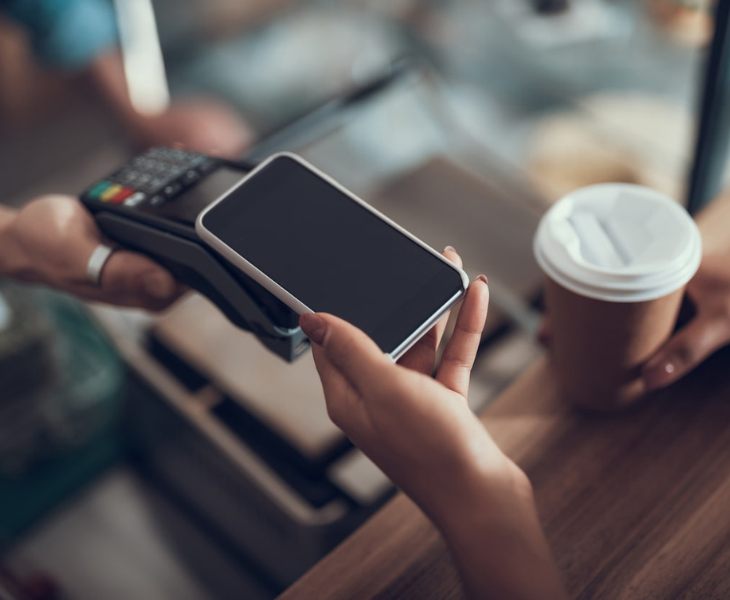
- Mobile wallets such as AlipayHK, WeChat Pay HK, PayMe
Payment flexibility also opens your restaurant to mainland Chinese visitors and tourists, a significant dining segment in areas like Causeway Bay, Tsim Sha Tsui, and Mong Kok.
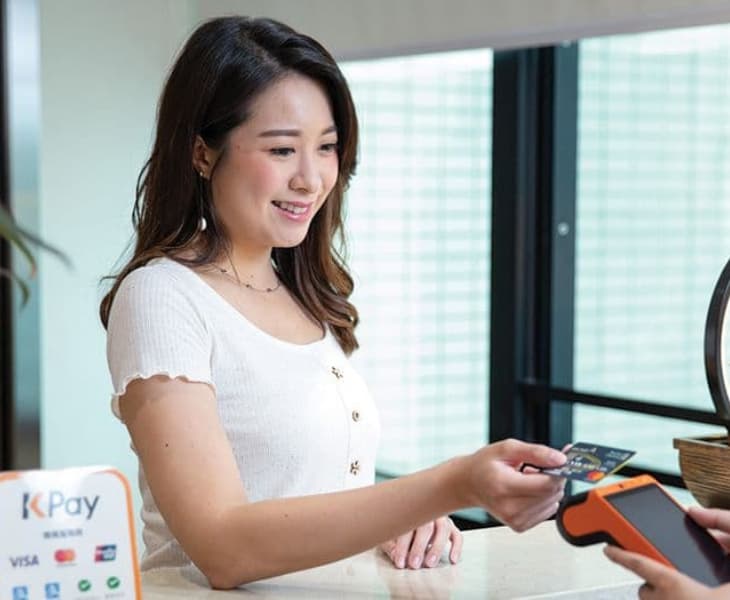
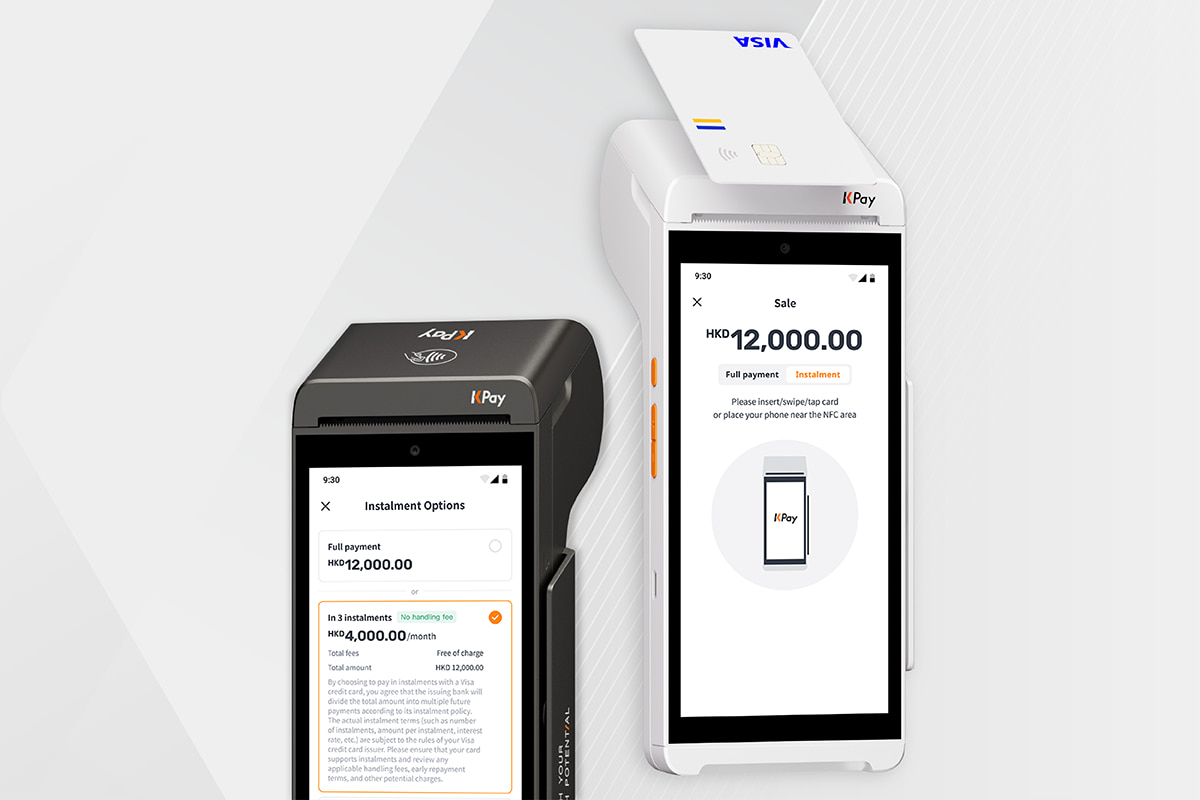
Rather than having multiple payment readers at your counter, it is worth considering a payment terminal that supports all major Hong Kong payment methods through a single device, ensuring that your counter remains clutter-free and speeds up the payment process.
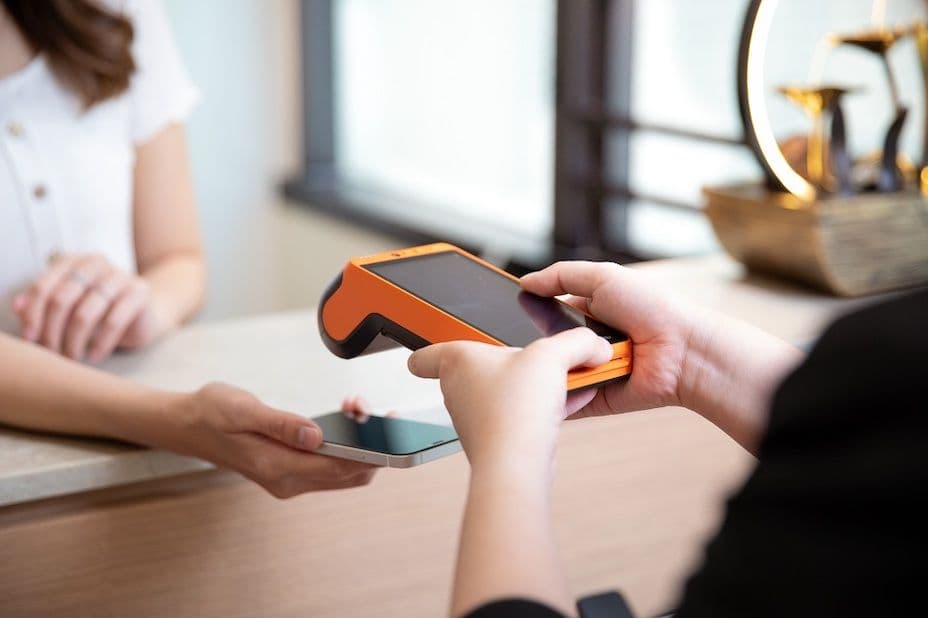
A smoother payment experience with KPay Terminal Pro
KPay Terminal Pro is an all-in-one smart terminal that supports foreign currency payment, EMV chip and QR payments through a single card payment machine. By consolidating multiple payment methods into one card terminal, businesses can streamline their checkout process, reduce hardware complexity, and offer customers a faster payment experience.
- Accepts 20 major payment methods seamlessly on one portable device.
- No subscription fees, annual fees or terminal rental fees
- T+0 Settlement delivers faster access to cash flow and liquidity, significantly boosting operational efficiency.
- 24/7, 365-day customer support to ensure merchants get up and running quickly should any issues occur.
Getting your payment infrastructure right is the foundation, but the technology running your restaurant floor can do more than just process transactions. It can also actively shape the experience your customers remember and come back for.
Use technology to market through the dining experience
The dining experience itself is a marketing channel. A smooth, frictionless visit creates memories worth sharing. Operational friction, such as long waits, confused staff, and incorrect orders, does the opposite.
QR ordering reduces wait times and increases average spend
Restaurants that implement QR-code ordering typically see two outcomes: faster table turnover during peak hours, and higher average order values because diners can browse and re-order at their own pace without flagging down staff.
For Hong Kong F&B operators dealing with tight staffing, QR ordering also means front-of-house staff can focus on hospitality rather than order-taking.
Optimise business operations with KPay's Scan to Order
KPay's Scan to Order supports integrated QR ordering alongside payment, meaning your operations and marketing data sit in the same system. This makes it easier to identify your most-ordered dishes and build promotions around them.
With KPay's Scan to Order, you can:
- Scan to order and use KPay for instant online or offline payments
- Capture tourist spends with multi-language menus
- Update menus, time slots, pricing and availability instantly
- Utilise flexible static and dynamic QR codes to improve efficiency and security
- Customers can easily access your ordering system without the need to login to an app
Additionally, KPay's Scan to Order integrates seamlessly into the KPay ecosystem, letting you have a clear view of your orders and payments all within one platform.
Contact our sales team to find out more about how KPay's suite of products can help to streamline your business operations.
Use your transaction data to understand your customers
Your transaction data on your merchant dashboard is a goldmine of customer behaviour data. Which dishes drive repeat visits? What time does your lunchtime rush peak? Which tables turn fastest? These insights should inform your marketing decisions as you prioritise promotions around high-margin dishes, optimise staffing for marketing events, and design a menu that guides diners toward your best sellers.
Build loyalty without a loyalty card
Formal loyalty programmes are often expensive to build and hard to maintain. But loyalty can be cultivated through simpler tactics that still drive repeat visits.
Offer value, not just discounts
Percentage discounts train diners to wait for deals rather than visit at full price. Instead, consider:
- Complimentary add-ons for repeat visitors
- Early access to new menu items for returning diners
- Priority booking during busy periods
- These tactics reward loyalty without eroding your margin.
Engage your existing customer base via WhatsApp or social
For smaller restaurants, a WhatsApp broadcast list of regulars is a low-cost, high-conversion marketing channel. A short message announcing a new menu, a limited-time dish, or a private event generates more response than most paid ads when the list is built from genuine previous customers.
Local marketing tactics that work in Hong Kong
Beyond digital, a few offline and community-based tactics are particularly effective in the Hong Kong F&B context.
Partner with nearby businesses
Office buildings, hotels, shopping malls, and coworking spaces in your vicinity represent a potential lunch and after-work dining market. A set lunch deal for nearby office workers, or a partnership with a hotel concierge, can generate consistent weekday traffic without advertising spend.
Target food media and neighbourhood KOLs
Hong Kong has a dense ecosystem of food bloggers, review accounts, and local Key Opinion Leaders (KOLs) across Instagram and Xiaohongshu. A well-timed media invitation or a collaboration with a local foodie account with 5,000–50,000 engaged followers will often outperform a paid campaign aimed at a cold audience.
Run events around Hong Kong's dining calendar
Hong Kong diners love seasonal and occasion-based dining. Key dates worth building promotions around include:
- Chinese New Year set menus and prosperity toss (lo hei) specials
- Valentine's Day and White Valentine's
- Mid-Autumn Festival dining sets
- Christmas Eve and New Year's Eve dinners
- Hong Kong Restaurant Week
Events tied to occasions give your marketing a clear hook and create shareable, social-friendly moments.
Track what's working
Restaurant marketing investment, whether time or money, should be tracked. At minimum, monitor:
- Google Business Profile views and direction requests
- OpenRice review volume and rating trend
- Instagram follower growth and post reach
- Average spend per cover
- Table turnover rate during peak hours
Most merchant dashboards, including KPay's, provides transaction-level data that gives you a clearer picture of operational performance alongside your marketing activity.
What this means for your restaurant
Restaurant marketing in Hong Kong works best when you treat digital presence, payment acceptance, the dining experience, and loyalty as one connected system, instead of separate initiatives.
Operators who invest in their OpenRice and Google profiles, accept every major payment method their diners use, create smooth table experiences, and build genuine relationships with returning customers will consistently outperform those chasing one-off promotions.
If you are looking to streamline your payment setup or explore how integrated POS and QR ordering can support both operations and marketing, speak to the KPay team to learn more.
FAQs
What are the most important platforms for restaurant marketing in Hong Kong?
OpenRice and Google Maps are the highest-priority platforms for local discovery. Instagram and Xiaohongshu drive social discovery, particularly for younger diners. WhatsApp is effective for direct customer communications and loyalty outreach.
Do Hong Kong restaurants need to accept all digital payment methods?
Not necessarily all, but coverage of the major methods is expected. Octopus, FPS, PayMe, AlipayHK, WeChat Pay HK, and Visa/Mastercard together cover the vast majority of Hong Kong consumer transactions. Gaps in any of these can cost you walk-in and repeat business.
How can a restaurant increase table turnover without hurting the customer experience?
QR-based ordering and integrated payment terminals allow diners to order and settle their bill without waiting for staff. This reduces peak-hour wait times and improves turnover, without creating a rushed experience.
Is OpenRice still relevant for Hong Kong restaurants?
Yes. OpenRice remains a primary research tool for Hong Kong diners, particularly for those planning ahead or looking for cuisine-specific options. Maintaining an active, reviewed listing with updated photos is worthwhile for most F&B operators.
How much should a small restaurant in Hong Kong spend on marketing?
There is no fixed benchmark, but many operators find that a combination of free channels (Google Business, OpenRice, organic social) combined with modest paid promotion on Instagram or OpenRice delivers a reasonable return. Technology investments, such as a POS terminal, or QR ordering, often pay for themselves through operational savings and improved average spend.








.png)



.jpg)