A customer at your showroom has test driven the car they want, and they like it. But they're hesitating. When it comes to a car purchase in Hong Kong, that hesitation usually comes down to the size of the commitment.
You have a warm lead in front of you, but your sale stalls because your customer can't commit to making payment on the spot. You've priced the car strategically to accurately reflect its quality, and to preserve brand value. Despite the price, your customer recognises the appeal of the car they've test driven.
However, recognising the appeal isn't the same as being ready to pay for it today. This is exactly where a high price strategy is tested. You've deliberately priced this car to reflect its quality, and that decision is exactly what causes your customer to hesitate when it comes to making payment. This is where interest-free instalment payment plans come in: you reduce the size of their upfront commitment, and complement your pricing strategy with payment methods that take away your customer's hesitation.
Learn how you can protect your earnings with instalment plans, and how they go hand in hand with your high price strategy to maintain the premium customer perception of your brand.
What is a high price strategy?
A high price strategy means charging more than other businesses selling similar products, on purpose. In Hong Kong's retail and automotive sectors, where shoppers are among the most likely in the region to research and compare across channels before buying, holding a higher price takes more than good products. As the business owner, you'll need to maintain healthy profit margins, while ensuring your brand value remains intact. This means that offering discounts to your customers is not an option you can rely on, no matter how close you are to losing the sale.
Yet, many businesses do exactly that. Research modelling discount behaviour at the point of sale has found that despite having other promotional tools available, discounting remains the one retailers reach for most often. It's a common pattern: a business charges a premium, then offers a discount the moment a customer pauses. That usually isn't a sign the pricing was wrong. It's a sign the business had no other way to handle the customer's pause.
While offering discounts is one of the easiest ways for a business to increase sales in the short term, it's not the most sustainable way to boost sales as it eventually eats into your profit margin. Discounting undermines your high price strategy. When a business responds to hesitation by cutting the price, it solves the immediate problem but damages the positioning that the whole strategy depends on.
Research published in the Journal of Retailing found that retailers continue to rely heavily on discounting despite "lack of evidence in the existing literature about their impact," and that discounting across a wider range of items in a category tends to lower overall store margin.
Why do businesses implement a high price strategy?
Businesses use it when they want price itself to work as a signal, telling the customer this product is worth more before they have used it. A high price strategy keeps the price of a product higher than similar or competitor products in the market. It is the deliberate choice to use the price to signal superior quality, exclusivity or differentiated value. Businesses often implement high price strategy to:
- Shape how customers judge quality: Customers often assume a higher price means a better product, especially before they’ve tried it. The study "The price-perceived quality relationship: A meta-analytic review and assessment of its determinants" by Franziska Völckner and Julian Hofmann found that “consumers still use price as an important indicator of quality".
- Protect what you earn per sale: Charging more gives you room to cover costs, invest in service, and avoid the squeeze that comes from competing purely on price.
- Attract the right customers: A higher price tends to filter out customers who are only shopping on cost, leaving ones who value quality and are less likely to haggle.
The same research by Völckner and Hofmann suggests this signal works in both directions. They advise managers to factor price-quality inferences into their pricing decisions, and warn that discounting can undermine how customers judge quality:
“For example, setting a low selling price or lowering a price with a discount not only lowers consumer costs but also threatens to lower their perceptions of product quality through negative signaling effects. Managers should therefore be cautious when using discounts or pure penetration pricing to induce consumers to try new products or switch to less familiar brands and retailers.”
In plain terms, customers can read a lower price as lower quality. That works against the signal a high price is meant to send, especially if you are trying to position your products as higher quality than your competitors.
The reality of using a high price strategy
Setting a high price is the easy part. What determines whether the strategy actually works is what happens the moment a customer hesitates at the till.
The core tension: hesitation at the point of sale
A high price creates a gap between wanting something and being able to pay for it right away. The customer likes the product; they just pause before committing. How a business handles that single moment decides whether the strategy holds or collapses. Cave in and offer a discount, and you risk undercutting the very positioning it built the price around. Do nothing, and you risk losing a customer who wanted to buy but needed a way to make the payment feel manageable.
The cons of a high price strategy
A high price strategy comes with real trade-offs, and it's worth being clear-eyed about them rather than treating the strategy as a guaranteed win.
In marketing terms, a high price strategy is a form of market-skimming pricing: businesses deliberately set higher prices to draw revenue from the segment of buyers who are willing to pay. This strategy could cost you to:
- Risk being undercut by cheaper competitors: Kotler and Armstrong's Principles of Marketing sets out two conditions. This approach requires your product's quality to genuinely justify the higher price, and competitors to be kept out of the market, rather than being able to undercut you easily. If either one slips, customers stop seeing your price as worth paying.
- Shrink your pool of target customers: A high price strategy means some customers simply won't buy. The same Principles of Marketing source frames this as a deliberate trade: a business pricing this way "makes fewer but more profitable sales." You're not trying to sell to everyone — you're trying to earn more from the customers who do buy.
For a business running a high price strategy, these risks point to the same underlying problem: the price itself isn't the vulnerability, it's how the business responds when a customer hesitates.
How interest-free instalment payment plans resolve the moment of hesitation at the point of sale
Interest-free instalment plans address the hesitation problem directly, without requiring a business to lower its price or a customer to apply for separate financing. Instead of putting down a lump sum deposut
Immediate at the counter, no approval required
In Hong Kong, buying a car usually means arranging what's commonly known as dealer-arranged car financing, or 買車上會 in Cantonese. The customer applies for a financing facility, typically arranged through the dealer with a bank or finance company, and waits for a decision.
Here's where the wait becomes a genuine problem, not just an inconvenience: banks and finance companies in Hong Kong typically don't publish how long approval takes, because it depends on the applicant's credit profile and how complete their documents are. Some traditional banks like OCBC offer a faster "pre-approval" step based on basic information, but pre-approval is not final approval — lenders keep the right to review the full application and can still reject it, or change the terms, once that review is done.
Your customer isn't just waiting for paperwork. They're waiting for an answer that isn't guaranteed, with no fixed timeline for when it arrives. And for business owners, that sale isn't confirmed until your customer receives the bank's final loan approval.
No upfront deposit required
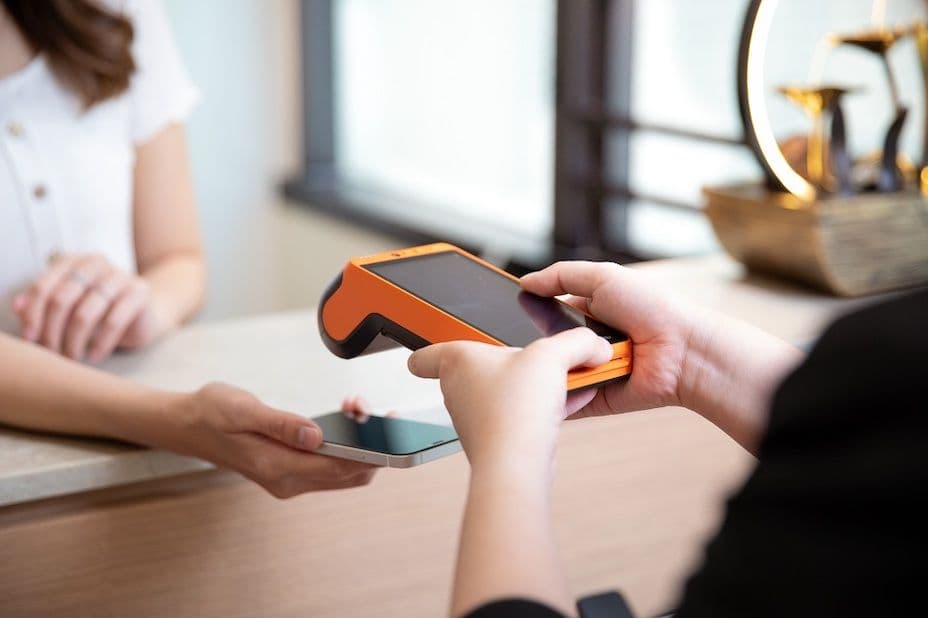
Interest-free instalment plans such as VIS Visa Instalment Solutions can typically be offered over the counter when closing the sale. Depending on the payment service provider, the customer can opt for monthly interest-free payments over the payment device. The customer pays through the instalment plan on their existing credit card, with nothing extra required before completing the purchase.
Interest-free monthly payments
Depending on the payment service provider, customers can split a purchase into instalments of 3, 6, 12 or 24 months, with interest-free options available, depending on the terms of the card and the plan selected. A HK$380,000 car purchase, for example, can become a manageable monthly amount without the price of the item changing. The sale is closed and confirmed, on the spot, instead of waiting for the loan to be approved and disbursed by the bank.
Why interest-free instalment plans matter for a high price strategy
None of this touches the price. A business running a high price strategy keeps its margin and its positioning intact, while removing the one obstacle it can actually control: the gap between a customer wanting to buy and being able to pay right now.
VIS Visa Instalment Solutions: the interest-free credit card instalment plan to complement high price strategy
VIS Visa Instalment Solutions is a great choice for Hong Kong retailers looking to offer flexible payments without the complexity of third-party apps. VIS allows cardholders to use their existing Visa credit cards to split purchases into installments directly at the checkout, either online or in-store.
What are the benefits of VIS Visa Instalment Solutions?
It's clear that VIS Visa Instalment Solutions significantly reduces the sticker shock that comes with expensive products or services for customers. This often leads to higher conversion rates and increased AOV. By breaking a large purchase into manageable, interest-free monthly payments, businesses can capture customers who might otherwise hesitate or decide against a purchase.
For merchants, there are multiple benefits to using VIS Visa Instalment Solutions:
- Lower risk: You receive the full payment upfront, while Visa manages the instalment collection from the customer.
- Frictionless experience: Since the customer uses their existing card, there is no need for them to sign up for a new service or undergo a separate credit check at the moment of purchase. This pre-approved nature of VIS Visa Instalment Solutions significantly reduces friction, ensuring that the impulse to buy isn't lost to a lengthy registration process.
- Foster customer loyalty: Shoppers are more likely to return to a merchant that offers the financial flexibility they need to manage their monthly budgets.
- All-in-one payment flow: With VIS Visa Instalment Solutions, you're able to complete the entire instalment process, from selection to authorisation, directly on the POS terminal without the need for additional hardware.
Activating VIS Visa Instalment Solutions with KPay
Merchants who already own a KPay POS terminal may wish to contact our customer service team via WhatsApp to assist you in activating VIS Visa Instalment Solutions on your KPay POS terminal, or if you should have any questions about VIS Visa Instalment Solutions.