How to create a restaurant menu for Hong Kong's holiday peak season
16 October 2026
8 min read
KPay Editorial Team
Making the complex sides of financial management, business operations and digital transformation simple. We share practical tips and local stories to help you run your business smarter and grow faster.
Key takeaways:
Holiday menus should be simplified and profitable, not comprehensive
Set menus improve kitchen speed and reduce errors during busy service
Sold-out items need to be managed in real time, not discovered by guests at the table
Integrating your menu with your KPay Scan to Order lets you update availability and pricing instantly, across every service
The booking confirmations are stacking up, and your WhatsApp is pinging with group dinner enquiries. And somewhere between confirming a 20-person Christmas Eve table and working out whether the slow-braised short rib is still worth running at current import prices, you realise your menu hasn't been updated since April.
For most Hong Kong restaurants, the holiday season, including Christmas, New Year's Eve, and Lunar New Year, represents the highest-revenue weeks of the year. Getting the menu right is not just a design exercise. It affects how many orders your kitchen can handle, how much each table spends on average, and how well your team copes when the restaurant is full and everyone's in a rush.
This guide walks through how to create a restaurant menu built for peak season — from format decisions and menu pricing to real-time updates when items run out mid-service.
Why your regular menu won't survive the holiday rush
The menu that works fine on a quiet Tuesday in October will struggle on December 31st.
Peak season brings larger tables, faster covers, and guests who are celebrating, which means expectations are higher and tolerance for delays is lower. A menu with 50-plus items stretches your kitchen, slows ordering, and increases the chance of costly errors on the busiest nights of the year.
What changes during the holidays:
Ingredient costs fluctuate, as imported proteins and premium seafood spike in price across the festive period
Prep time per dish needs to hold up at two to three times normal volume
Your team is under more pressure, and having fewer menu options means faster, more consistent execution
The restaurants that handle peak season well are typically the ones who trim their offering, not expand it.
Step 1: Decide between a set menu, à la carte, or a hybrid
Before writing a single description or pricing a single dish, decide on the menu format.
Set menus are the standard for Hong Kong's Christmas and New Year dinners. They streamline kitchen prep, create a predictable spend-per-head, and make table turnover far easier to manage. They also give you a fixed cost structure that protects margins when ingredient prices are volatile.
À la carte gives guests more choice but creates ordering complexity at peak service, particularly when popular items sell out mid-evening and need to be removed on the fly.
A hybrid approach, such as having a curated holiday set alongside a shorter à la carte selection, works well for restaurants with a loyal base who expect flexibility, but still want the ease of a festive package.
For most Hong Kong restaurants managing back-to-back seatings across December and into Lunar New Year, a dedicated holiday set menu is the most operationally sound choice.
Step 2: Build a profitable menu, not just a popular one
Once you've settled on format, item selection needs to be driven by margin, not just what your regulars enjoy most.
Start by identifying your highest-margin dishes that are achievable at volume. Cross-reference your suppliers for expected price movement across the holiday period; imports typically rise from late November through to the end of Lunar New Year.
A few guiding principles:
Anchor the menu to two or three hero dishes that define the meal and justify the price point
Include at least one strong vegetarian option as group dinners in Hong Kong almost always have mixed dietary requirements
Avoid dishes with fragile timing — anything that must be plated the moment it leaves the heat will bottleneck your kitchen
Build in a premium upsell such as a supplementary dish, a wine pairing, or a festive add-on that guests can opt into
Write a rough cost structure for each item before committing it to the menu. If a dish only works at your target price point when a specific import is available, that's a risk worth acknowledging before you print.
Step 3: Write menu descriptions that do the selling for you
Guests at celebratory dinners scan menus quickly — the conversation is already going and the occasion is the priority. Your descriptions need to work in seconds.
Good holiday menu copy is specific, sensory, and concise. Avoid filler language such as "delicious," "indulgent," or "mouth-watering" as it adds no information. Instead, describe the ingredient origin, the preparation method, or the flavour contrast.
Weak: Pan-fried sea bass with vegetables
Stronger: Pan-seared sea bass, yuzu beurre blanc, crispy capers, wilted Hong Kong pak choi
For set menus, a short header note works well. This means one to two lines about the seasonal inspiration or the sourcing story behind the menu, and adds perceived value while giving your team a natural talking point when guests ask about the food.
Step 4: Design your menu layout for the occasion
For printed menus, design signals the experience. A Christmas or New Year's set menu should feel different from your everyday card — guests notice, even if they don't say so.
Practical considerations for Hong Kong restaurants:
Single-page or bi-fold is standard for set menus; guests should not be flipping through multiple pages
Use your brand colours as a base, with one seasonal accent: deep green, gold, or warm red for the Christmas and New Year period
Show the price clearly as set menu diners expect to see the per-head cost upfront, not buried at the bottom
Leave white space as dense layouts look rushed and are harder to read in low-light dining rooms
If you're using a QR-linked digital menu or an in-app ordering system, the same principles apply. Clean, readable, and easy to navigate on a mobile screen. A menu that guests can't parse in under a minute will slow down ordering and increase staff queries during your busiest service.
Step 5: Plan for menu changes mid-service before they happen
This is where most restaurants underinvest, and where peak season can go wrong quickly.
An item sells out. Your team is mid-service on a full floor, a guest has already ordered it, and the menu still shows it as available. Having to explain a sold-out dish to a table that is already seated and waiting, is one of the most common guest complaints on peak nights, and entirely avoidable.
The fix is a menu that can be updated in real time.
For restaurants on a digital POS or Scan to Order system, sold-out items can be removed from the ordering interface the moment stock runs out, without having to reprint menus, pulling staff aside, or guests seeing an option that is no longer possible.
This matters especially during the holiday season when:
Ingredient quantities are often pre-ordered and fixed
Kitchen output is under pressure and overcommitting creates quality problems
The guest experience is at its most visible — a sold-out disappointment on New Year's Eve will be remembered
How KPay Scan to Order supports real-time menu management during peak season
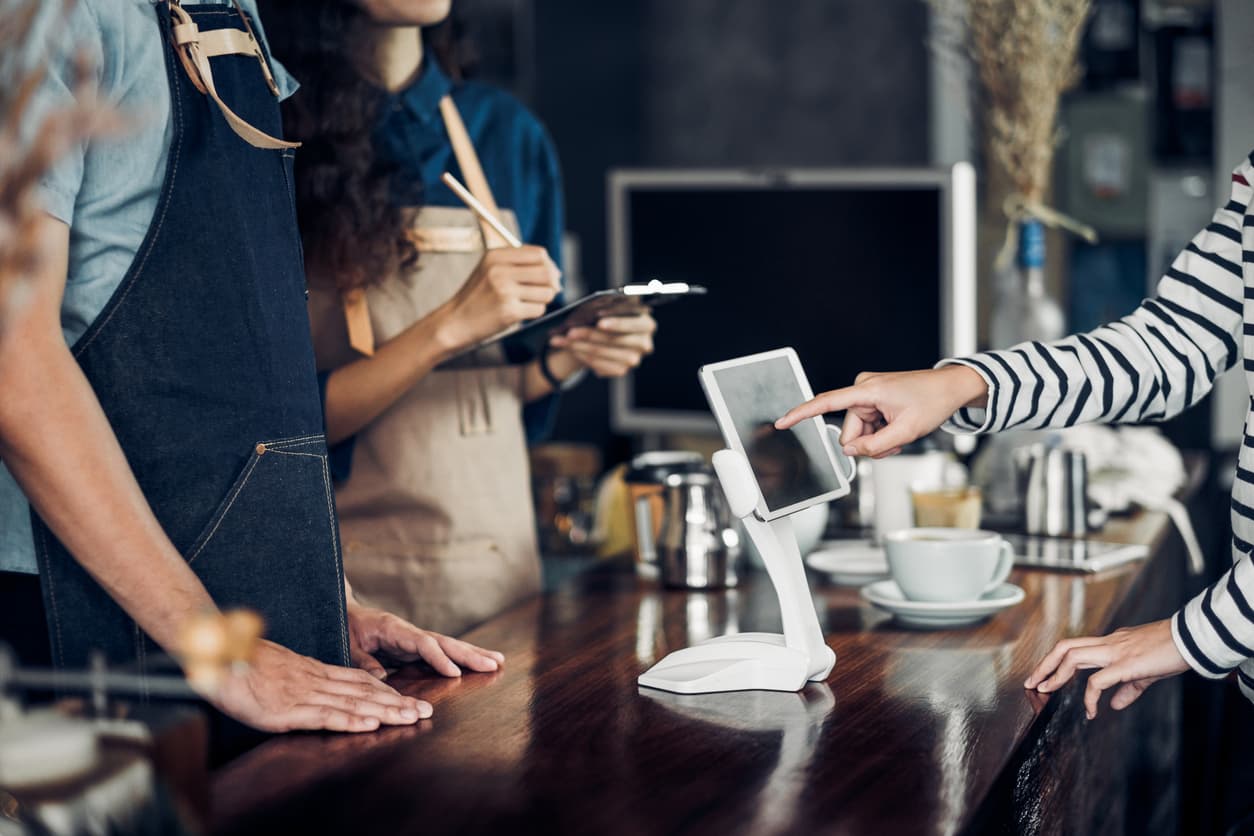
For Hong Kong restaurants managing holiday menus digitally, KPay Scan to Order lets you update menu items in real time from the backend. This means no reprinting and no briefing the floor mid-service.
When an item is sold out, it can be removed immediately. When you're running a limited-time holiday promotion, whether it's a Christmas Eve special, a New Year's Eve champagne add-on, or a Lunar New Year set at a different price point, those items and their pricing are reflected in the system from the first cover to the last.
KPay's Scan to Order can help to address these needs:
Scan to order and use KPay for instant online or offline payments
Capture tourist spends with multi-language menus
Update menus, time slots, pricing and availability instantly
Utilise flexible static and dynamic QR codes to improve efficiency and security
Customers can easily access your ordering system without the need to login to an app
Additionally, KPay's Scan to Order integrates seamlessly into the KPay ecosystem — letting you have a clear view of your orders and payments all within one platform.
To learn more about how KPay's Scan to Order can support your restaurant's holiday operations, contact the KPay team.
Step 6: Brief your team before service, not during it
Even the best-designed menu underperforms if your front-of-house team cannot communicate it confidently.
Before each holiday service, run a focused pre-service briefing covering:
Which items are available and which are limited in quantity
Any changes since the previous sitting, including any additions, removals, and pricing adjustments
Upsell opportunities such as dish pairings, add-ons, drinks that complement the menu
Allergy and dietary information for any new menu items, particularly seasonal ingredients
If your POS or Scan to Order system shows real-time availability, train your team to check it during service. Guests who ask about availability should receive an accurate answer immediately, instead of "let me check with the kitchen."
FAQs: Creating a restaurant menu for peak season
How far in advance should I finalise my holiday menu?
Aim to lock your menu at least three to four weeks before your first holiday service. This allows time to cost dishes properly, confirm supplier quantities, run kitchen tests at volume, and prepare any printed or digital materials.
Should I use the same menu for Christmas and Lunar New Year?
Not necessarily. Christmas and New Year's Eve menus tend to skew towards Western fine-dining formats, while Lunar New Year menus often feature traditional Cantonese dishes with auspicious associations. Your decision should reflect your cuisine positioning and the expectations of your regular guests.
How many courses should a holiday set menu include?
Most Hong Kong holiday set menus run three to four courses: a starter, a main, a dessert, and either an appetiser or an intermezzo. Five courses works for premium positioning. Beyond five, dining time increases significantly and table turnover becomes harder to manage.
How do I handle sold-out items without disrupting service?
Digital menus on Scan to Order systems and POS-integrated ordering let you remove unavailable items from the guest-facing menu instantly. For printed menus, designate one staff member per section to communicate availability changes to the team before they reach a guest's table.
Can I offer a different menu for lunch and dinner during the holidays?
Yes, and a Scan to Order system or POS-integrated menu makes this straightforward. You can set different menus and price points by service period without needing separate printed materials for each sitting.
Putting it together
Knowing how to create a restaurant menu for peak season requires more than good food decisions. It calls for a format that your kitchen can execute at volume, pricing that holds up when ingredient costs move, descriptions that communicate to celebrating guests in seconds, and a system that lets you respond when something changes mid-service.
The restaurants that come out of the holiday period with strong margins and positive guest feedback are the ones who planned the menu as an operational document, not just a food list.
For Hong Kong F&B operators ready to streamline menu management across the holiday peak season, KPay Scan to Order supports real-time menu updates, QR ordering, and flexible pricing adjustments that stay in sync from your first December booking to your last Lunar New Year sitting.
Get in touch with KPay to find out how KPay Scan to Order can support your restaurant this holiday season.