Customer retention: What it is, how to measure it, and how SME merchants can improve it
23 November 2026
12 min read
KPay Editorial Team
Making the complex sides of financial management, business operations and digital transformation simple. We share practical tips and local stories to help you run your business smarter and grow faster.
Key takeaways:
Customer retention measures how many of your existing customers keep coming back over time
Retention and acquisition both matter — the right balance depends on where your business is
Most of the metrics you need can be pulled from your POS transaction data
The most common reasons customers stop returning are things that can be fixed: slow checkout, unsupported payment methods, inconsistent service, and a lack of reason to come back
Most merchants know that winning a new customer takes effort. What fewer stop to ask is what happens to that customer after their first visit.
For many small businesses, the honest answer is: not much. The customer comes in once, the transaction goes through, and then there's nothing. No follow-up, no reason to return, no way of knowing whether they ever came back. Weeks later, the focus is back on getting the next new face through the door.
This is not a problem unique to any one business, but it means that a lot of effort gets spent filling a bucket that quietly leaks at the bottom. Customer retention is about fixing the leak and understanding what is causing it in the first place.
This article covers what customer retention means in plain terms, which metrics are worth tracking, why customers quietly stop returning, and what practical steps are most likely to make a difference for SME merchants.
What is customer retention?
Customer retention is a business's ability to get existing customers to return and keep buying, rather than drifting away or switching to a competitor.
It is different from acquisition, which is about getting someone to buy for the first time. Retention starts after that first purchase. The goal is to turn a one-time buyer into someone who comes back regularly and, over time, spends more with your business than they otherwise would have.
This distinction matters because the two challenges require different approaches. Acquisition is largely a marketing problem: reaching new people and convincing them to try you. Retention is more of an operations and experience problem: making sure that once someone has tried you, the experience is good enough and the reasons to return are clear enough.
Retention and acquisition: why your business needs both
Retention and acquisition are not competing priorities. They work together, and most businesses need to manage both at the same time.
A business that is only focused on acquisition will constantly be replacing customers it loses. Each new customer costs time and money to win, and if they do not come back, that investment does not compound. The business does not grow even when marketing activity picks up.
A business that focuses only on retention will eventually run out of new people to convert into regulars. Growth requires a flow of new customers, not just keeping the ones you already have.
The balance between the two shifts over time. Businesses that are still starting out typically need acquisition more urgently. More established ones, with a steady flow of new customers but a high drop-off after the first visit, often have a retention problem that is more worth solving. Most SMEs are managing both, even if they do not use those exact terms.
One practical way to think about it: acquisition brings people in. Retention determines how much of that effort actually turns into long-term revenue.
Why do customers stop coming back?
This is where most businesses struggle, because the reasons are often invisible. A customer who had a bad experience and does not return rarely tells you why. Instead, they often leave quietly.
Here are the most common causes, particularly for physical retail and food and beverage merchants in Australia.
1. Payment friction
If a customer could not pay the way they wanted to, had to wait too long, or had a transaction fail, that is often the last thing they remember about the visit. Most customers will not complain. They will find somewhere easier next time. For Australian merchants, this includes not accepting payment methods customers expect, such as EFTPOS, Visa, and Mastercard, as well as contactless options like Apple Pay and Google Pay.
2. Inconsistent service
Staff turnover across Australia's hospitality and retail sectors is a common challenge. When the experience depends heavily on who is working that day, customers are not inclined to return again. One good experience followed by one average one is often enough to break the pattern.
3. No reason to return
If there's no loyalty offer, no seasonal reason to come back, or no memorable moment from their first visit, customers have no reason to return. The first transaction was fine, but it was not remarkable enough to pull them back when a competitor is just as convenient.
4. Slow or complicated ordering
During busy periods, if getting served or placing an order feels slow or hard to navigate, customers factor that in when they want to make a purchase again. This applies to both physical and online channels.
5. Perceived value shifting
Perceived value shifting is not always about prices going up. Sometimes it is that the product, the experience, or the service feels less worth it than it used to, even if nothing has obviously changed. This is harder to spot and harder to fix, but starts with actually asking customers how they feel.
How to measure customer retention
You cannot improve what you do not measure. The good news is that most of the numbers you need can be pulled from your existing POS or sales data, and you do not need enterprise software to get started.
Customer retention rate
This is the core metric. It tells you what percentage of your customers from a given period came back.
Formula: ((Customers at end of period - new customers gained) / customers at start of period) x 100
Example: A salon in Melbourne's CBD starts the quarter with 100 regular clients. During the quarter, it gains 20 new clients. At the end of the quarter, it has 90 active clients. Retention rate = ((90 - 20) / 100) x 100 = 70%.
Industry benchmarks vary significantly depending on how often customers are expected to visit. A coffee shop with daily regulars and a homeware store with occasional shoppers will have very different natural retention rates. The most useful benchmark is your own rate over time — is it going up or down?
Customer churn rate
Churn is the other side of the same coin. It measures the percentage of customers who stopped returning. If your retention rate is 70%, your churn rate is 30%. They always add up to 100%.
Tracking churn alongside retention helps you spot problems faster. A stable retention rate can mask a rising churn rate if you are simultaneously acquiring a lot of new customers.
Repeat purchase rate
What percentage of your customers made more than one purchase in a given period? This is the most accessible metric for small merchants. It does not require a CRM or complex data set. A transaction export from your POS is usually enough to calculate a rough figure.
For food and beverage and retail, this is often the most meaningful number to track week to week.
Average order value (AOV)
Not strictly a retention metric, but this is worth watching alongside it. A customer who keeps returning but spending less each visit is a different situation from one whose spend is holding steady or growing. AOV tells you whether the relationship is deepening or slowly thinning out.
Customer lifetime value (CLV)
CLV is the total revenue you expect from a single customer over the full time they buy from you. It is most useful as a strategic framing for decisions: how much is it worth investing in keeping a customer, compared to how much it costs to win a new one?
For most SMEs, CLV is a rough estimate rather than a precise figure. A simple calculation can change how you think about the value of a regular.
Quick reference:
Metric
What it tells you
Good for
Retention rate
Share of customers who came back
Quarterly health check
Churn rate
Share who stopped returning
Finding drop-off points
Repeat purchase rate
How often customers return
F&B and retail tracking
Average order value
Spend per visit
Tracking value over time
Customer lifetime value
Long-term revenue per customer
Investment decisions
6 practical ways to improve customer retention
1. Make paying as easy as possible
The checkout is the last impression of every visit. A payment that takes too long, fails, or does not accept the method a customer wants to use can quietly undo an otherwise good experience.
For Australian merchants, this means covering the full range of payment methods that local consumers use day to day: EFTPOS, Visa, Mastercard, Apple Pay, and Google Pay. A customer who wants to tap and pay and finds the terminal does not support it will not always say so. They will simply remember it.
2. Set up a simple loyalty programme
Loyalty programmes work best when they are easy to join and quick to reward. A digital stamp card, a points system, or a targeted email or SMS to your regulars with a small offer does not have to be complicated. The goal is to give customers a reason to choose you again rather than somewhere equally convenient.
The key word is simple. A programme that requires customers to download a separate app, fill in a long form, or accumulate a large number of points before they see any benefit will likely be ignored. Consider starting with the minimum viable version and adding to it over time.
3. Keep service consistent
Consistency is one of the hardest things for short-staffed businesses to maintain, but it is also one of the biggest drivers of whether people return. Customers who had a great first experience and a mediocre second one often do not come back for a third.
Some practical steps: a short onboarding process for new staff, clear service guidelines for peak hours, and a culture where regular customers are recognised. When someone feels known, they are more likely to return.
4. Use your transaction data
If your POS or payment terminal keeps customer records, you already have the raw material for basic retention work. A regular who used to visit every two weeks and has not been in for six weeks is a signal worth acting on. A targeted message, a small offer, or even just a check-in can bring lapsed customers back before they are fully gone.
Without data, this is invisible. With even basic transaction records, you can start to see patterns that would otherwise only show up in declining revenue months later.
5. Give people a reason to return
Retention is partly a systems problem and partly a creativity problem. A new seasonal menu, an early-access offer for regulars, a pop-up event, a targeted email or SMS to your customer list — these are not expensive, but they give customers something to look forward to. If every visit is the same, return visits have to compete with novelty elsewhere.
Communicate what is new, even if it feels small. A regular who knows you have added something new is more likely to come in and check.
6. Handle complaints well
A customer who complains and gets a good, fast resolution often ends up more loyal than one who never had a problem at all. The complaint itself is less important than the response.
Train staff to handle issues on the spot where possible. A refund offered without an argument, a mistake acknowledged with a genuine apology, or a problem fixed before the customer has to ask twice are all things customers remember. That's not all — when it comes to complaint resolution, customers often share their experience with others, whether good or bad.
Subscription models and recurring revenue
For some businesses, the most powerful retention tool is removing the need for customers to decide to return at all.
If your business has a natural recurring purchase pattern, such as weekly meal prep delivery, monthly beauty treatments, regular cleaning or maintenance services, a subscription or recurring billing model makes staying the default. The customer signs up once and keeps receiving the product or service until they actively choose to cancel. The decision to stay is made once; the decision to leave has to be made every time.
This subscription-based business model may not be right for every business, but for those where repeat visits already happen on a predictable schedule, formalising that into a subscription can significantly improve retention by reducing the friction of re-buying each time.
How KPay can help merchants to improve customer retention
KPay Terminal Pro
One of the quietest reasons customers do not return is a checkout that did not work the way they expected. A declined card, a missing payment option, or a slow transaction leaves a poor final impression, and most customers will not say anything about it.
Here's how KPay Terminal Pro can help merchants provide a seamless checkout:
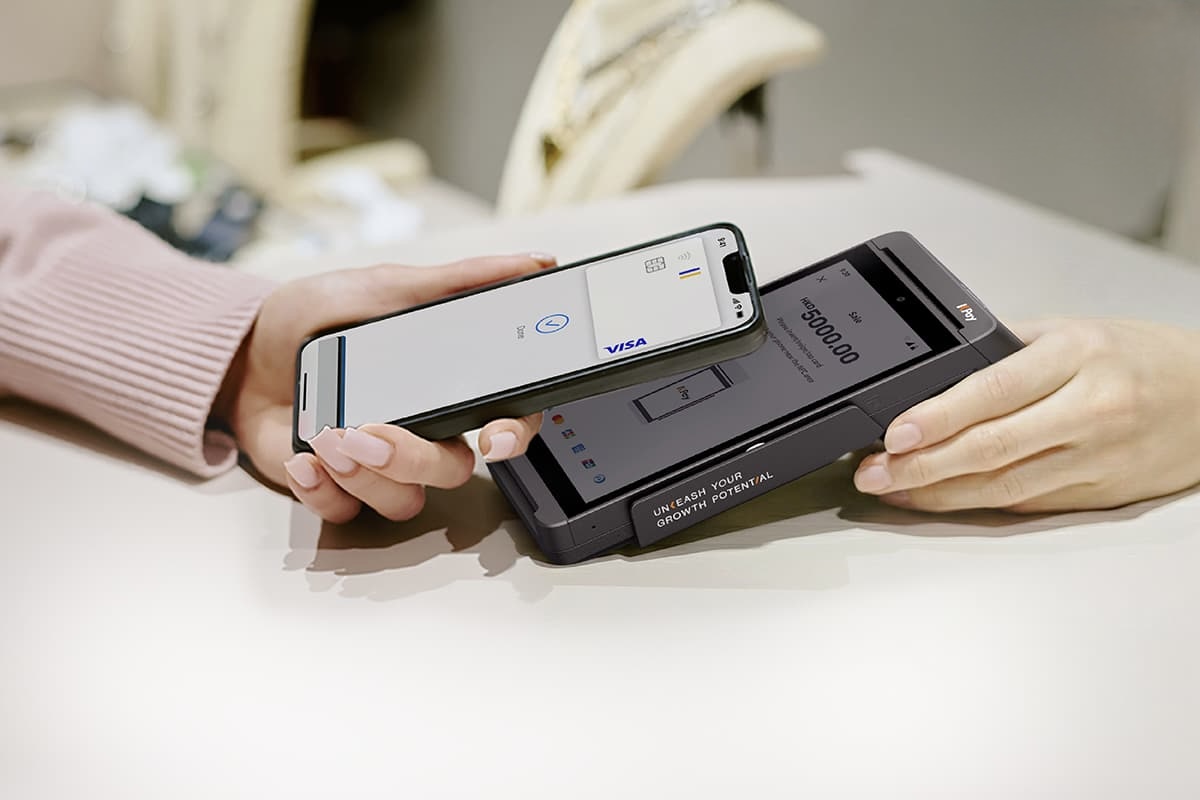
Accepts 12 major payment methods seamlessly on one portable device
No subscription fees, annual fees or terminal rental fees
Same-day settlement* gives you faster access to your takings.
Secure transactions and data points with industry-leading security standards, including PCI DSS, AICPA Soc 1 & 2, and ISO 27001.
24/7 customer support, every day of the year to ensure merchants get up and running quickly should any issues occur.
Access real-time sales reporting, peak hour analysis, and transaction reconciliation with KPay's Merchant App
With KPay Terminal Pro, you can reduce counter clutter and accept multiple payment methods, helping you ensure that the last thing a customer experiences before leaving is a smooth, fast payment, and not a frustrating one.
KPay Payment Gateway
For merchants selling online, the same principle applies. A customer who reaches checkout and finds their preferred payment method is not supported will often abandon the order rather than look for an alternative.
KPay Payment Gateway gives online merchants a fast, secure, and flexible payment experience — removing the complexity often faced during integration and reducing the number of failed transactions. Here is how KPay's Payment Gateway can help businesses to focus on converting customers instead of fixing payment problems:
All major payment methods, one integration: After connecting the payment gateway to your website using our plug-in or API, you can start accepting payments via credit cards, debit cards, and a growing range of digital wallets and local payment methods.
Enterprise-grade security: KPay is ISO 27001 certified and PCI DSS Level 1 compliant, partners with HSBC, and holds operating licences in Hong Kong, Australia and Singapore.
For businesses exploring subscription models, KPay Pay Gateway also enables recurring billing workflows that support membership, service retainer, and package-based business models.
Where to start if you have limited time and budget
Not every merchant has a dedicated marketing team or the budget for new software. Here is a practical starting point:
Pull your repeat purchase data: Most POS systems can give you a rough picture of how many customers returned in the last 90 days. Having an approximate figure gives you a baseline to improve on.
Audit your checkout: Are there payment methods your customers might want that you do not currently support? This is often the easiest friction point to fix.
Choose one retention action to run this month: A loyalty offer sent to your top customers, a feedback request after a visit, or a re-engagement message to people who have not been in for a while. Pick one and measure it.
Track one metric: Repeat purchase rate is the simplest starting point for most physical merchants. What gets measured gets managed.
Bringing it together
Customer retention is not one thing. It is the result of many small decisions adding up: how easy you make it to pay, how consistently you deliver on your service, how often you give customers a genuine reason to come back, and how quickly you respond when something goes wrong.
Most merchants already have some of the tools they need. The first step is knowing your numbers — even a rough one. From there, the improvements tend to be clearer than expected.
FAQs
It varies a lot by industry and how often customers are expected to visit. A coffee shop where regulars come in daily operates very differently from a furniture store where repeat purchases happen every few years. Comparing your rate to industry averages can provide rough context, but the most meaningful benchmark is your own trend over time. A rising rate, even from a modest starting point, is a positive indicator.
Retention measures whether customers come back. Loyalty describes a stronger commitment — customers who actively choose you over alternatives, not just ones who return out of habit or convenience. A customer can be retained without being loyal. Retention is the foundation, while loyalty is what you build on top of it.
A slow checkout, a failed transaction, or an unsupported payment method can leave a customer with a poor final impression of an otherwise good visit. Most will not mention it, but will factor it in next time they decide where to go. For Hong Kong merchants, this makes it worth checking that you cover the major local payment methods customers expect.
Yes. Many of the most effective actions cost almost nothing: responding to a complaint quickly, sending a WhatsApp message to regulars, adding a simple loyalty offer. Software helps you do these things at scale and more consistently, but it is not a requirement for starting. The baseline is building better habits around how you treat customers who have already bought from you.
If you want to start with improving your payment setup, find out how KPay can help you accept major payment methods your customers expect in-store and online by contacting the KPay team.