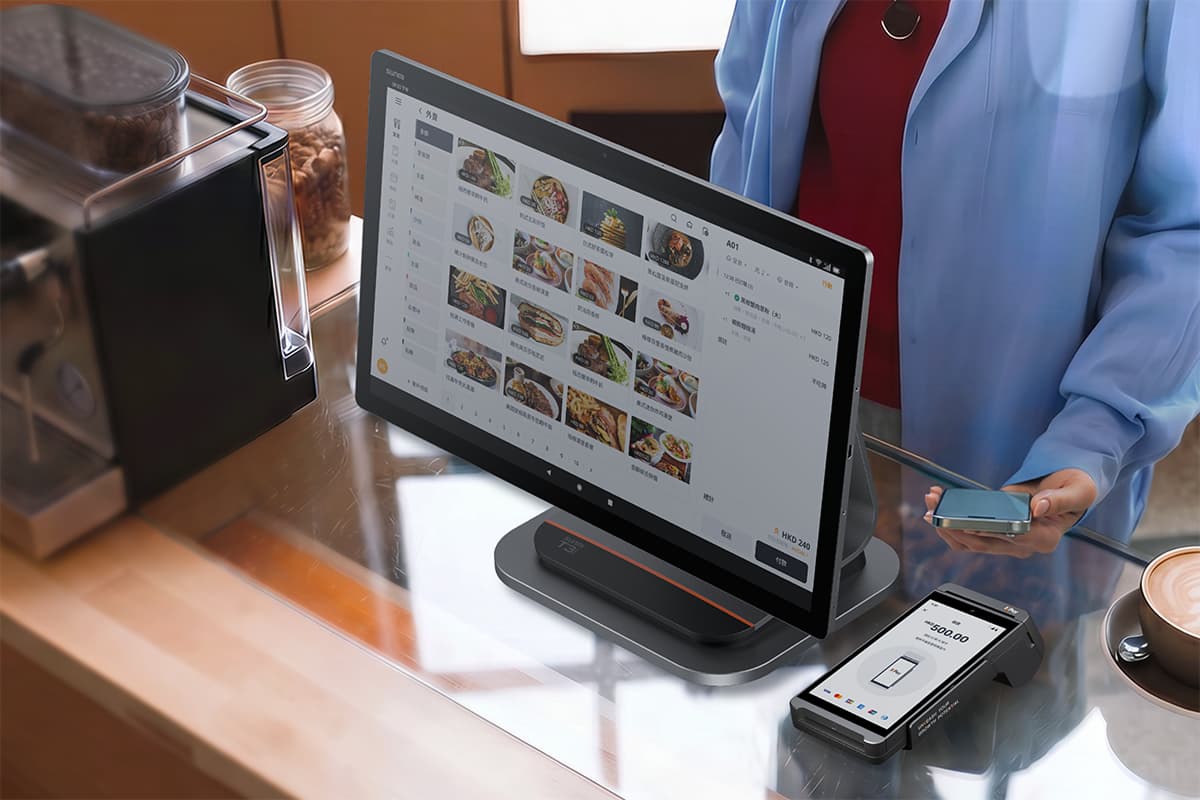





Cash payments are not as prevalent as they used to be. According to GlobalData’s Payment Instrument Analytics, the value of digital wallet transactions in Australia grew by 32.2%, increasing from AUD 126 billion (USD 83.2 billion) in 2023 to AUD 166.6 billion (USD110 billion) in 2024. For businesses, this means that your payment terminal is now the centre of your revenue.
Other than being expensive, traditional payment terminals are often slow and outdated — forcing businesses to miss out on transactions when customers get frustrated by slow payment processes or an inability to accept the payment method of their choice. A shift to modern payment terminals can help to ensure that businesses are able to effectively meet their customer's payment needs and preferences.
This guide defines the essential features of a modern smart terminal, focusing on cost-efficiency, speed, and multi-currency readiness for the Australian market.
An EFTPOS machine (which may also be referred to as a payment terminal) is an electronic device used to process card and digital payments at the point of transaction. It acts as the physical interface between the customer's payment method and the merchant's bank account.
Unlike old terminals that only accepted magnetic stripes and chips, a modern EFTPOS machine is a portable, cloud-connected computer that combines payment acceptance, receipt printing, and access to merchant management software (like the KPay Merchant App).
A smart terminal effectively replaces the need for separate machines for QR codes, cards, and manual reconciliation, making business operations more efficient and improving the customer's payment experience.
One of the must-haves for a business' payment terminal is versatility. Customers want to have a variety of payment methods made available, and businesses are thus looking for a single device that accepts every major payment type without additional hardware.
Check what the terminal accepts before anything else. At minimum, for an Australian business that means eftpos and dual-network debit, Visa and Mastercard credit, and the digital wallets - Apple Pay, Google Pay and Samsung Pay. Beyond local payment methods, international readiness is also essential — ensuring that the payment terminal of your choice accepts major foreign e-wallets (WeChat Pay, Alipay) means that your business does not have to lose out on tourist spending.
During peak hours, it's crucial for any business to be quick. Beyond optimising business processes, one aspect that should not be overlooked is the payment experience. A shorter transaction processing time could lead to shorter queue times, making it a more enjoyable experience for the customer.
Having an EFTPOS machine that is capable of fast transaction processing, built-in receipt printing, and portable 4G/Wi-Fi connectivity for tableside payment or pop-up stores can help to quicken the payment process.
As security threats evolve to become more sophisticated, it has also become increasingly important for businesses to ensure that security and compliance measures are in place, especially where payments and customer data are involved.
Payment Card Industry Data Security Standard (PCI DSS) is a global security requirement for any organisation that processes, stores or transmits credit cardholder information. The standard serves as a minimum set of requirements needed to protect customers’ payment data from being compromised and ensures the security of credit card transactions in the payments industry. PCI DSS Level 1 compliance is the most stringent compliance tier for merchants processing over six million credit/debit card transactions annually, requiring rigorous annual audits by a Qualified Security Assessor (QSA) for a Report on Compliance (ROC), quarterly network scans by an Approved Scanning Vendor (ASV), and an Attestation of Compliance (AOC), ensuring the highest level of security for cardholder data due to high transaction volume.
As such, PCI DSS Level 1 compliance is non-negotiable for protecting customer data.

However, getting an EFTPOS machine that suits your business needs is not as easy as it seems. Often, there are multiple things to consider and be aware of before choosing an EFTPOS machine for your business.
An aspect that is often overlooked when getting an EFTPOS machine is the hidden fees involved. This can include monthly rental, setup costs, and annual subscriptions.
One cost to consider is the Merchant Discount Rate (MDR). This is the most common form of transactional fees, and is a percentage charged by the acquiring bank and the payment network for processing the transaction.
However, MDRs can vary drastically based on your industry and the card type — local debit cards could have a different MDR from premium foreign credit cards. Consider requesting a breakdown of all MDRs to ensure that you are aware of all fees involved before making your decision.
Beyond the fees you have to pay, it's also crucial to consider your cash flow. Slow settlement times, such as T+3, or T+7, can starve a small business of capital. With cash flow impacted, this affects not only business operations but also overall stability and sustainability of the business.
This is why fast settlement is a necessity, especially for many small businesses. Having access to cash flow quickly means being able to pay your vendors on time, and to reinvest as you need to improve business operations.

Your EFTPOS machine is more than a payment processor. It also functions as the data collection hub for businesses. As customers complete transactions, the EFTPOS machine captures financial and transactional data that facilitates fast, accurate T+1 reconciliation, streamlines accounting, and provides the foundation for multi-outlet consolidated reporting.
Simultaneously, it acts as the immediate trigger for inventory and product data updates. When an item is scanned, the EFTPOS machine instantly instructs the system to deduct the SKU, ensuring real-time stock synchronisation across the physical store and all integrated e-commerce channels, while also collecting the sales frequency data needed to generate top-selling product reports and guide purchasing.
Furthermore, the EFTPOS machine is essential for building a holistic view of the customer and optimising operations. It collects customer and loyalty data by linking transactions to specific customer profiles via loyalty cards or phone numbers, creating a unified customer database across all channels and enabling personalised promotions.
Lastly, it gathers operational and employee data by tying every sale, void, or discount to the responsible employee, allowing managers to track performance metrics, manage shifts effectively, and identify potential issues or training needs.
A simple sale thus transforms into actionable business intelligence that drives better cash flow, enhanced efficiency, and smarter, data-driven decisions across the entire organisation.
Prompt assistance and expertise are crucial factors when getting an EFTPOS machine, as it can significantly impact a business' operational efficiency and long-term success. The complexity of modern omnichannel retail requires merchants to select a solution that not only processes payments but also integrates seamlessly with existing inventory and accounting systems. As such, prompt technical support is essential.
An EFTPOS machine is the core revenue engine, and system downtime—especially during peak hours—results in immediate, unrecoverable lost sales. Therefore, prioritising a provider with dedicated, 24/7 assistance is crucial. Expertise in resolving issues quickly is necessary to protect the business' revenue stream. For instance, if an EFTPOS machine fails during the Sunday brunch rush, quick intervention is needed to prevent substantial losses.
Providers offering standard business-hours support often leave merchants vulnerable. Prompt assistance guarantees maximum system uptime and gives the business owner the confidence to focus entirely on customers and sales, knowing any technical hiccup will be resolved swiftly by experts.

KPay Terminal Pro offers various features to help your business succeed:
With KPay Terminal Pro you can effectively meet your customers' needs for speed, versatility of payment methods, and ensure secure transactions — all with one device.
Getting the right terminal is one of the simplest levers you have on both efficiency and cash flow - and with card surcharging ending on 1 October, it's a good moment to review what you're paying.
Register online to get KPay Terminal Pro or talk to our sales team to find out more today.