Defining the modern POS
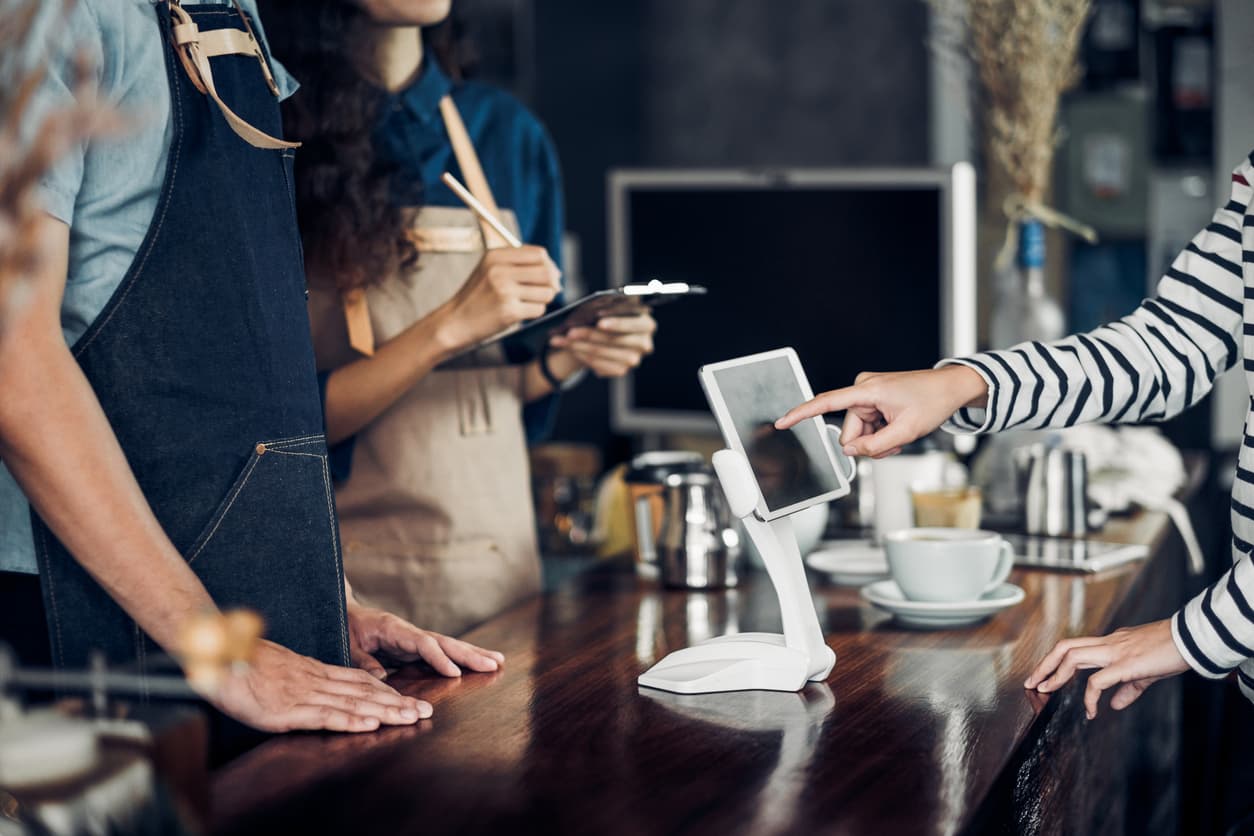
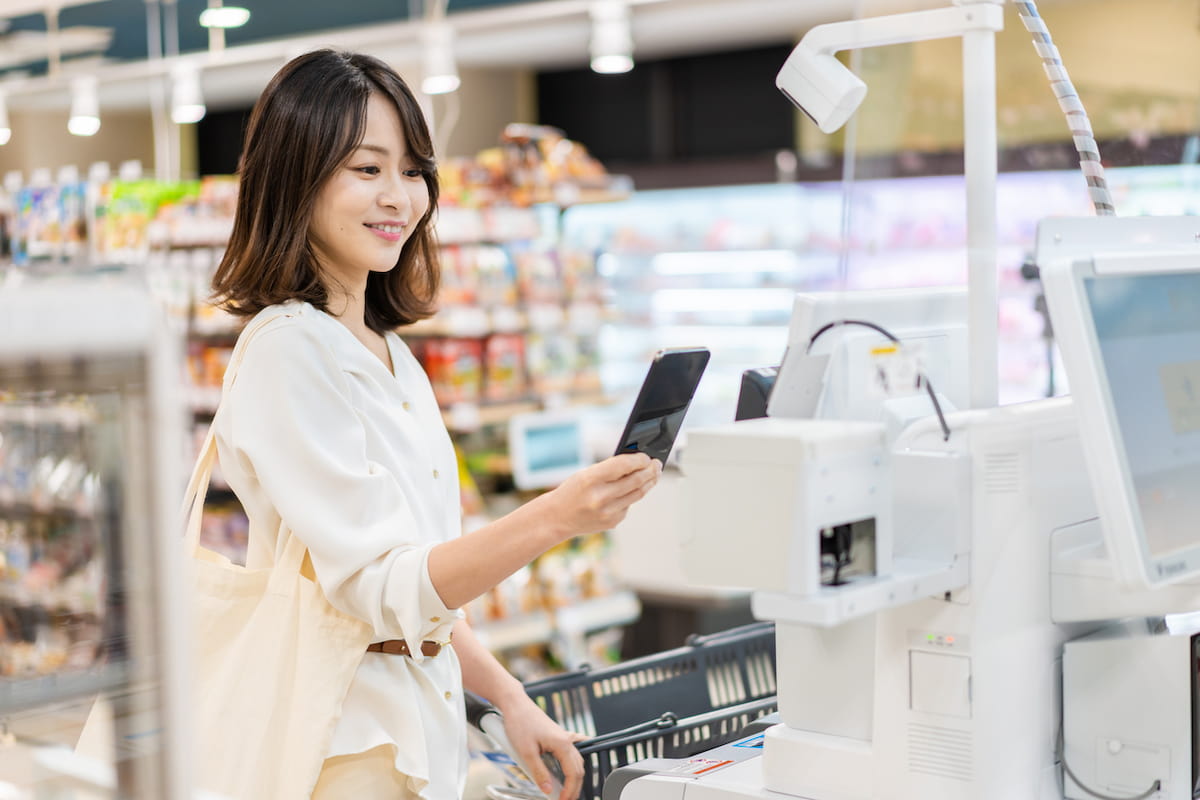
At its core, a Point of Sale (POS) system is where your customer makes a payment for goods or services. However, the definition has since expanded: it is an integrated information system that combines sales, inventory, staff management, and customer data into one interface. This can be split into the hardware and the software.
POS hardware
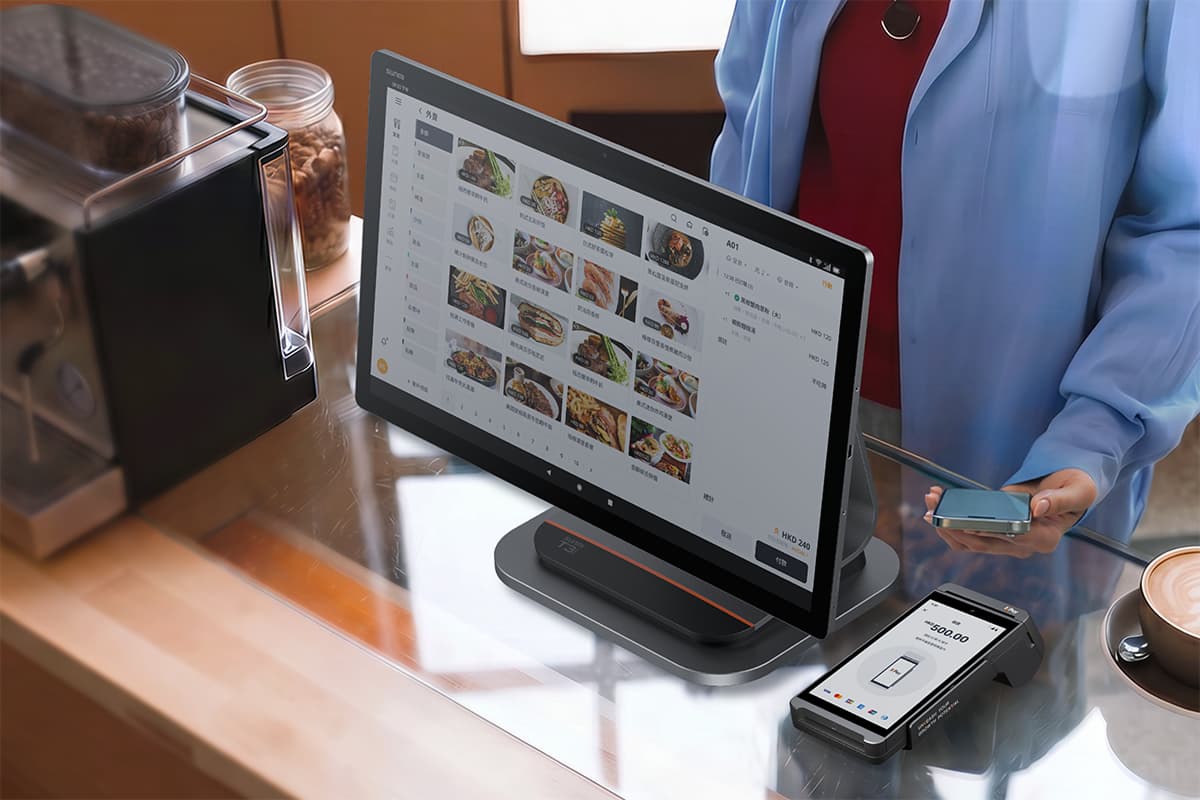
POS hardware refers to the physical devices used at the point of sale to enable transactions and capture customer payments. This typically includes a POS terminal or tablet for order entry, a card reader or PIN pad for accepting chip, contactless, and mobile wallet payments, a receipt printer, cash drawer, and peripherals such as barcode scanners or customer-facing displays.
In some industries, additional hardware like kitchen display screens, handheld ordering devices, or self-service kiosks may be used. POS hardware is responsible for securely capturing payment data, interacting with customers, and ensuring transactions can be completed reliably in a physical environment.
POS software
On the other hand, POS software is the system that runs on the hardware and manages all transaction logic and business operations. It handles product catalogues, pricing, discounts, order processing, and payment workflows, while also managing staff permissions, inventory levels, and sales reporting.
Modern POS software is typically cloud-based, allowing real-time data syncing across locations and integration with payment gateways, accounting systems, loyalty programs, and eCommerce platforms. While hardware enables the transaction, POS software delivers the intelligence that supports daily operations, analytics, and business growth.
More than payments: The 4 pillars of a POS hub
If you are only using your POS system to process card payments, you are missing out on its true value. Here is what a comprehensive system can do for a business in Australia:
Real-time inventory & ingredient tracking
In a city with world-leading rents, every square foot of shelf space must generate a return, making manual inventory a liability. A modern POS system enables you to efficiently track your inventory in real-time, and helps to eliminate dead stock by acting as an auditor across all your sales channels.
Through features like automatic sync, the system bridges the gap between your physical storefront and online shop, ensuring that a final item sold in-person is instantly delisted online to prevent overselling. Furthermore, low stock alerts trigger notifications the moment an SKU hits a defined threshold. This ensures you never miss a peak-hour sale in your busiest locations simply because you forgot to restock.
For the F&B sector, this control extends down to the most granular level through ingredient-level tracking. Advanced systems use recipe mapping to account for raw materials used in your pantry for every dish sold. For example, the tracking system automatically accounts for the weight of fish fillet and flour used in every serving of fish and chips. This level of detail in the data allows owners to identify hidden waste, manage fluctuating supplier costs, and maintain healthy margins despite rising overhead.
By transforming inventory from a guessing game into a precise science, a POS system ensures you're able to capitalise on your best-sellers rather than gathering dust in a costly stockroom.
Employee management & performance
With a workforce shortage in the SME sector forcing businesses to operate with leaner teams, a modern POS system acts as an automated manager to maximise the output of every employee.
By integrating digital timesheets directly into the terminal, you save on the long hours typically spent each month on manual attendance tracking and payroll reconciliation. This automation gives you accurate, timestamped records of hours worked — the foundation you need for correct pay, penalty rates and superannuation, and the evidence you need if your records are ever questioned.
Beyond basic tracking, the POS system’s performance analytics transform raw data into a strategic roadmap for growth. By identifying top-performing staff for sales through metrics like average transaction value and upselling success, you can identify how to better train your staff and optimise shift schedules to put your best staff on during peak hours in high-traffic districts. Additionally, role-based security ensures that high-risk actions, such as processing large refunds or accessing sensitive profit data, are restricted to trusted managers.
This multi-layered approach protects your bottom line from internal errors while empowering your team to focus on providing a quality experience for your customers.
Customer relationship management (CRM) & loyalty
Capturing a customer is only half the battle; the real value lies in retention through digital member profiles. By using a POS system to link transactions directly to a phone number, you eliminate the friction of physical loyalty cards that customers often lose or forget. This allows you to build a comprehensive profile for every shopper, tracking their favourite items and spending habits across all your branches. Having this centralised database allows you to transform anonymous walk-ins into a tangible asset that increases your business's long-term valuation.
Leveraging this data through personalised promotions turns a cold POS system into a powerful marketing engine. Instead of mass advertising, you can trigger automated, hyper-targeted WhatsApp or SMS offers based on specific behaviours, such as sending a "We miss you" 10% discount to a regular who hasn't visited your store in three weeks. This level of personalisation resonates with the high expectations of modern consumers, driving foot traffic during slow hours and significantly increasing customer lifetime value (CLV).
By shifting from generic sales to data-driven engagement, you ensure your marketing spend is always focused on the individuals most likely to convert.
Automated accounting & business intelligence
A crucial part of business operations is accounting, and manual bookkeeping is an expensive drain on an owner’s most valuable resource: time. Modern POS systems solve this by providing automated accounting sync, which pushes every transaction, refund, and tax record directly to software like Xero or QuickBooks in real-time.
This eliminates the long hours spent reconciling, keeps your records ready for BAS time, and satisfies the ATO's requirement to keep business records for five years. By removing the risk of human error during data entry, you maintain an accurate financial ledger that allows for instant reporting whenever you need to evaluate your cash flow.
Beyond just balancing the books, these systems can also help to grow your business through data-driven business intelligence. Instead of guessing your busiest times based on your gut feel, you can access visual heatmaps that pinpoint exactly when your sales peak down to the hour. This allows you to optimise staff shifts accurately, deploying more help only when the data predicts a rush, reducing wasted labour costs. By transforming raw sales numbers into actionable insights, your POS system shifts your role from a reactive manager to a proactive strategist, ensuring your overhead is always aligned with your actual revenue.
POS system checklist for Australian businesses: Features that matter
Not all POS systems are built for Australia. Ensure your choice meets these local requirements:
- Unified local payments: Does it process payments from PayTo, Visa, Mastercard and more in one device?
- T+1 settlement at least: In a high-rent environment, cash flow is king. You need your funds settled the next business day.
- Self-service features: Does it support QR code ordering or self-service kiosks? These can reduce front-of-house labour needs.
- 24/7 support: Whether your rush peaks on Friday night's dinner service, or brunch on a Sunday morning, it's important to have dedicated support to ensure your business can stay up and running at crucial moments.
KPay POS for businesses
KPay POS is designed with F&B businesses in mind and integrated with the KPay ecosystem so that you can access all you need in one place. We help your business to operate more efficiently with a fast, reliable and modern POS system including built-in tools, so you can focus on growing the business.
KPay POS offers various features:
- All-in-One F&B solution: KPay POS is a simple, integrated POS & payments bundle built for hospitality merchants. Let one system handle everything for you, from taking orders to getting paid, so you can focus on what matters for the business.
- Cloud-based ordering and payment for real-time efficiency: Supports multiple service models with pay-before dine-in, pay-after dine-in and takeaway and scan to order (QR ordering) all included within the standard package, enabling you to streamline your operations and better provide a great dining experience for your customers.
- Manage multiple brands and outlets seamlessly in one system : Easily run multiple restaurants with flexible operational settings all via one platform.
- 24/7 Real-time support : Get support any time from a single provider, with dedicated implementation specialists who get you set up quickly and keep friction to a minimum across both POS and payments.
Additionally, KPay POS is also compatible with Android, iOS and Windows devices, making integration with your existing systems seamless and letting you streamline business operations quickly.
Find out more about KPay POS and how it can help your business by contacting our sales team today.
The Bottom Line
A POS system is an investment in time. By automating your inventory, staff tracking, and back-office reconciliation, you stop being a cashier and start being a strategist. This way, your business can stay ahead in the Australian market.