Running a successful F&B business in Australia is no small feat. Between rising manpower costs and a highly competitive dining landscape, the right restaurant equipment is the difference between a smooth service and a chaotic kitchen.
Whether you are launching a new pizza restaurant in Sydney or planning to open a fine dining establishment in Melbourne, choosing the right restaurant equipment is essential for maintaining speed and quality.
1. High-performance kitchen & storage solutions
As most restaurants may have to work with limited space for the kitchen, your restaurant equipment needs to be as compact as it is powerful.
Ovens and grills
There is a wide variety of ovens and grills available, and knowing which to pick depending on the food you're serving is important.
Flat-top grills are able to handle a wide variety of food as their solid surface provides even heat, prevents food from falling through, and allows for searing, toasting, and steaming. This means that flat-top grills are capable of cooking from delicate items to high-volume meals, which makes it a decent all-rounder to consider.
Brick ovens are often a staple in pizza restaurants as it offers an authentic cooking style which results in a crispy crust, and a unique smoky flavour. On the other hand, convection ovens offer speed as they tend to heat up quickly, and is a great choice for roasting meats, crisping vegetables, and baking cookies on multiple racks.
In Australia, to keep up with peak lunch hour crowds, it's important to pick equipment that helps reduce cooking time without sacrificing flavour.
Hobs and ventilation
While electric or induction hobs offer better energy efficiency, faster boiling times, easier cleaning, and better safety, they often cost more initially and require magnetic cookware. On the other hand, gas hobs offer instant heat, high-intensity flames for wok cooking, and universal pan compatibility, making them a good choice for commercial kitchens in Australia.
Under the model Work Health and Safety (WHS) Regulations and Australian Standard AS 1668.2 (Mechanical ventilation in buildings), hospitality operators must ensure adequate ventilation to manage heat stress and prevent the hazardous buildup of gas, steam, and grease-laden vapours.
For most commercial setups — especially where gas input exceeds 29MJ/h or electrical input exceeds 8kW, the installation of a compliant mechanical exhaust system is a legal requirement. These systems must be regularly maintained and cleaned to mitigate fire risks and ensure a safe, breathable environment for your team.
Food processors and blenders
Food processors are important as they can be used to speed up many kitchen prep processes, such as chopping vegetables. A restaurant food processor handles daily, high-volume, continuous use. It needs to have:
- Sufficient motor power
- Blade versatility
- Bowl capacity
It is important to select a durable food processor or blender that's easily cleaned, made with stainless steel for hygiene, and equipped with essential safety features like interlocking lids.
Similarly, selecting the right blender for a commercial kitchen requires matching the machine's power, capacity, and durability to your menu and intended daily volume.
Fridges and freezers
Fridges and freezers are an essential part of any commercial kitchen as they enable you to store your ingredients properly and help to keep your ingredients fresh.
Before deciding on a fridge, it's good practice to:
- Choose a suitable spot in your restaurant to place your fridge. Keep it out of high-traffic paths and clear of doorways.
- Measure the dimensions of your chosen spot to ensure that you choose the correct size.
- Consider whether you need solid doors for efficiency or glass doors for visibility and easy maintenance.
There are several factors that go into selecting a commercial fridge, such as:
- Fridge capacity for storage
- Space in your store or kitchen to place your chosen fridge
- Energy efficiency
- Stainless steel construction for durability and proper temperature control
Smallware and essential tools
While smallwares may seem less significant in a commercial kitchen, they are the daily tools that you will require. The full list of cookware will depend on your menu offerings, as well as the space available.
However, there is a set of basic tools which are a must-have for most commercial kitchens:
- Pots and pans of various sizes
- Utensils: tongs, scissors, serving spoons, ladles etc.
- Serving plates and platters
- Chopping boards and knives
Sinks and washing equipment
In Australia, maintaining strict separation between different washing tasks is a cornerstone of food safety compliance. Under Food Standards Code 3.2.3 and Australian Standard AS 4674 (Design, construction and fit-out of food premises), a commercial kitchen is typically required to have at least three distinct types of sinks to prevent cross-contamination:
- Dedicated handwash basin: This must be used exclusively for handwashing. It should be located within 5 metres of food preparation areas, be easily accessible (not obstructed by doors or equipment), and be supplied with warm running water, liquid soap, and single-use paper towels.
- Equipment and utensil washing: Most Australian councils require a double-bowl stainless steel sink (or a single bowl used in conjunction with a commercial dishwasher). This setup ensures that equipment can be properly washed in the first bowl and sanitised in the second.
- Food preparation sink: If your menu involves washing produce or rinsing raw ingredients, a separate, dedicated food prep sink is mandatory. This ensures that the dirt or bacteria from raw vegetables never comes into contact with the area where you clean your "ready-to-eat" plates and cutlery.
Food preparation areas
When designing your commercial kitchen, food prep stations should be sized for their specific tasks and set at comfortable heights to prevent chef fatigue. It is equally important to provide enough room to clearly separate raw proteins, like meat and fish, from other ingredients.
2. Front-of-house restaurant equipment
The service provided in restaurants go beyond the equipment that you have — it’s about presentation and speed.
Holding and serving equipment
Professional holding and serving equipment is key to preserving the food quality before a dish reaches the customer, ensuring that flavours and textures remain intact and consistent during busy service windows. This includes essential tools such as:
- Hot holding cabinets that maintain precise temperatures
- Steam tables
- Soup warmers
- Heat lamps that provide consistent thermal support
- Specialised items: chafing dishes, warming drawers for buffet or high-volume service
Automated beverage and service tools
Automated dispensing systems help to maintain consistency in high-traffic establishments like bubble tea shops or bars. This category of restaurant service equipment includes advanced coffee and tea service sets, as well as sophisticated drink dispensers that ensure exact proportions with every pour.
Additionally, specialised FOH equipment like wine service tools, ice buckets with elegant stands, and carving trolleys are essential for upscale dining venues looking to enhance their sensory presentation and brand ambiance.
Servingware and cutlery
Whether a restaurant is dine-in, takeaway or a combination of the two, it is important to have the appropriate style and quantity of servingware and cutlery. The maximum number of potential customers will dictate the volume required. Breakages should also be accounted for as this is almost unavoidable in a bustling restaurant environment.
3. Streamlining the final step: Ordering, payment & POS
No matter how good your restaurant equipment is, service falls apart if the ordering or payment process is slow.
Self-service and digital ordering hardware
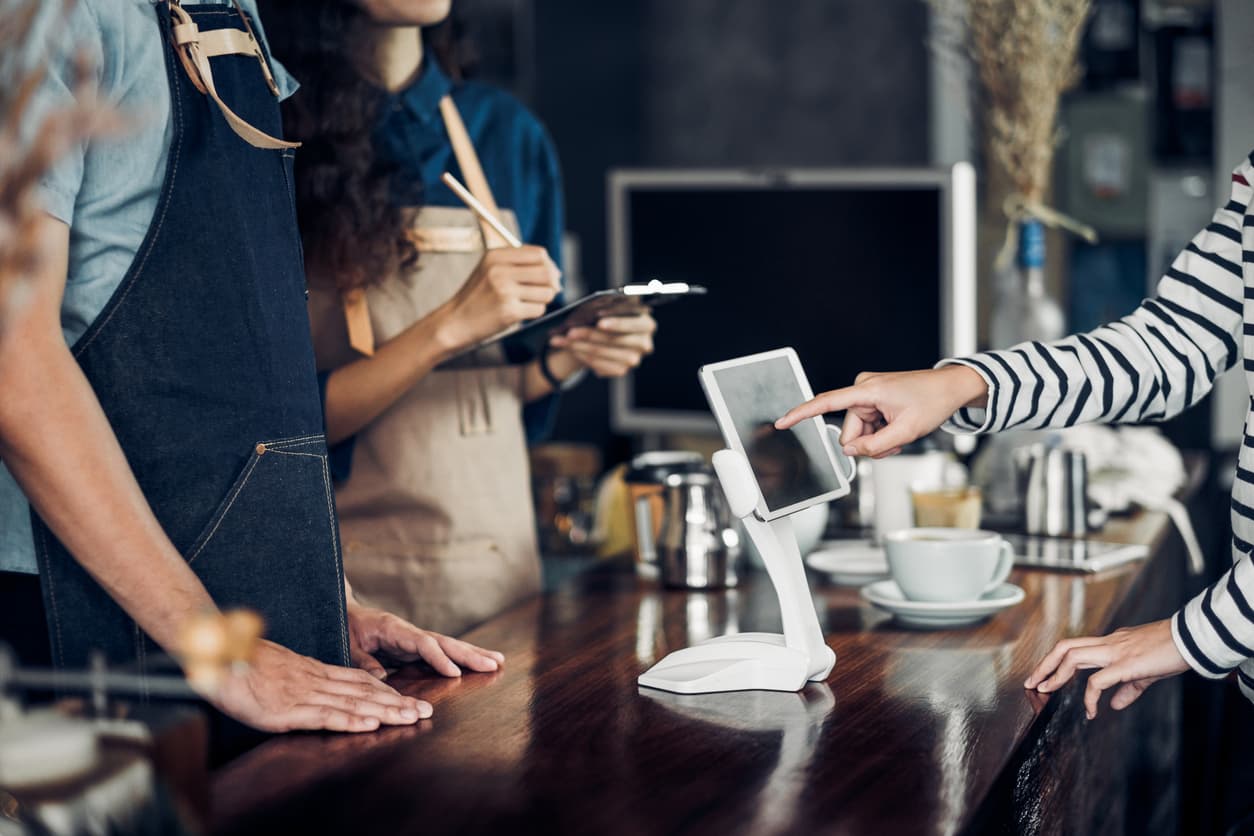
In light of severe manpower constraints, digital ordering hardware has become a cornerstone of modern restaurant service equipment across Australia. POS systems that support self-service kiosks and tablets, or scan-to-order systems that utilise QR codes can help to make your business operations more efficient. By using scan-to-order systems, your customers can browse menus and customise orders independently, which effectively reduces the pressure on floor staff during peak lunch hours.
KPay POS for businesses
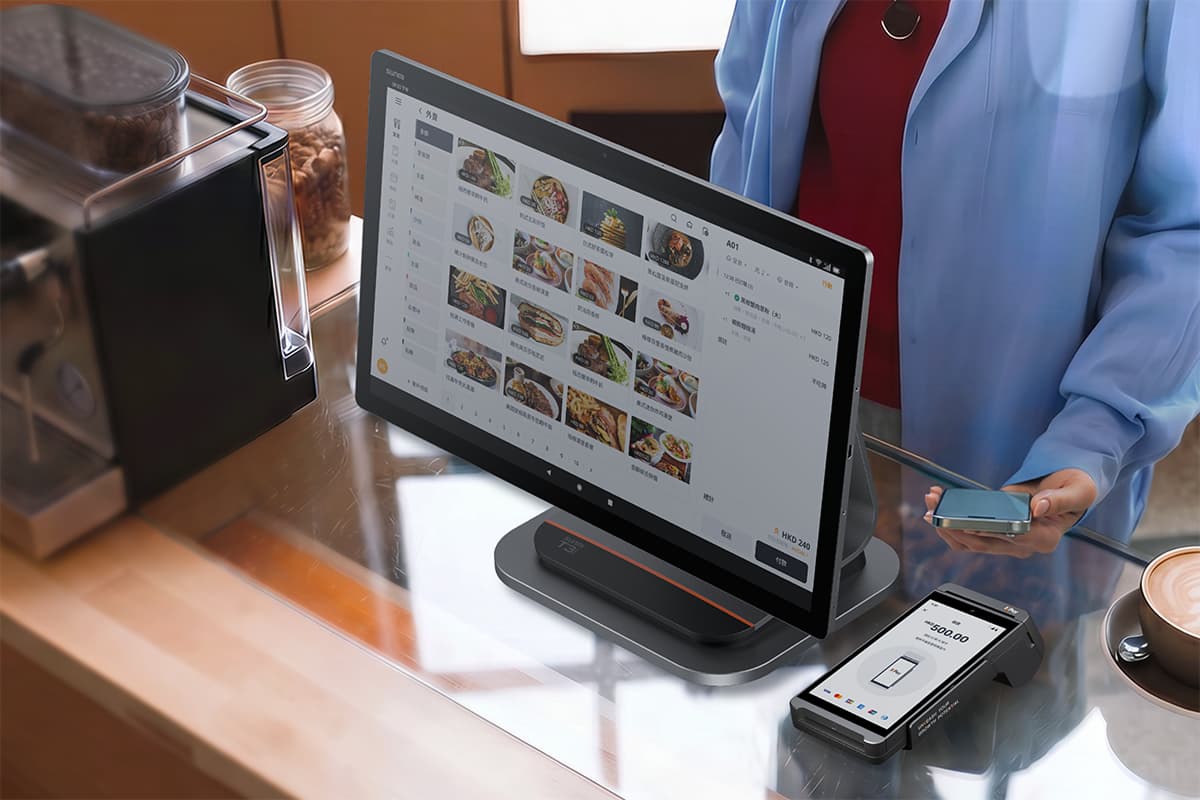
KPay POS is designed with F&B businesses in mind and integrated with the KPay ecosystem so that you can access all you need in one place. We help your business to operate more efficiently with a fast, reliable and modern POS system including built-in tools, so you can focus on growing the business.
KPay POS offers various features:
- All-in-one F&B solution: KPay POS is a simple, integrated POS & payments bundle built for hospitality merchants. Let one system handle everything for you, from taking orders to getting paid, so you can focus on what matters for the business.
- Cloud-based ordering and payment for real-time efficiency: Supports multiple service models with pay-before dine-in, pay-after dine-in and takeaway and scan to order (QR ordering) all included within the standard package, enabling you to streamline your operations and better provide a great dining experience for your customers.
- Manage multiple brands and outlets seamlessly in one system : Easily run multiple restaurants with flexible operational settings all via one platform.
- 24/7 real-time support : Get support anytime from single providers and dedicated implementation specialists that enables quick set up and minimal operational friction across both POS and payments.
Additionally, KPay POS is also compatible with Android, iOS and Windows devices, making integration with your existing systems seamless and letting you streamline business operations quickly.
Find out more about KPay POS and how it can help your business by contacting our sales team today.
Payment hardware
As Australia moves towards becoming a cashless society, the variety of digital payment methods available has increased. Customers now expect to pay their way — card, Apple Pay or Google Pay, and increasingly PayID for bank transfers.
To truly close the gap on efficiency, modern payment terminals allow your staff to take payments tableside. This eliminates the bottleneck at the counter, significantly improving table turnover and customer satisfaction.
KPay Terminal Pro offers various features to help your restaurant accept payments smoothly:
- Accepts major payment methods such as Visa, Mastercard, Apple Pay and more seamlessly on one portable device.
- No subscription fees, annual fees or terminal rental fees
- Same-day Settlement* delivers faster access to cash flow and liquidity, significantly boosting operational efficiency.
- Secure transactions and data points with industry-leading security standards, including PCI DSS, AICPA Soc 1 & 2, and ISO 27001.
- 24/7, 365-day customer support to ensure merchants get up and running quickly should any issues occur.
- Access real-time sales reporting, peak hour analysis, and transaction reconciliation with KPay's Merchant App
With KPay Terminal Pro you can effectively meet your customers' needs for speed, versatility of payment methods, and ensure secure transactions — all with one device.
Why integration is the future of Australia's F&B scene
In the modern F&B landscape, investing only in restaurant equipment is a missed opportunity for growth; having your restaurant equipment work alongside your POS system and payment terminals is when your operational workflow is optimised.
When these elements are synchronised, you eliminate the manual double-entry errors that often occur when staff must move between a kitchen order and a separate payment device. For instance, an integrated system ensures that the moment a server closes a bill on a mobile payment terminal, the transaction is reconciled in real-time, removing the risk of human calculation errors or lost tickets. This helps to free your team to focus on high-value hospitality rather than administrative troubleshooting.
Beyond error reduction, this level of integration also helps you to gain business intelligence. By linking your restaurant service equipment to a centralised data hub, you gain a view of your establishment's performance, allowing you to move from guesswork to data-driven decision-making. You can track exactly how your best-selling dishes correlate with specific service windows or even individual staff performance, identifying which menu items are truly driving profit and which are simply draining your prep resources.
This level of clarity allows you to optimise your inventory levels in real-time, automate reordering based on actual consumption, and craft personalised loyalty offers that resonate with your customers' specific tastes, turning transaction data into a roadmap for long-term expansion.