Many people dream about opening their own cafe. There's a chance to build a community and be a part of someone's daily routine. From speciality coffee shops to the thriving roastery café scene in Melbourne, Sydney, and Cairns, the demand for coffee is constant. However, with increasingly high rents and a manpower crunch, learning how to start a coffee shop involves more than just a good roast — it requires a digital-first strategy.
This 6-step guide provides a roadmap to navigate the processes involved in starting your own cafe in Australia.
Step 1: Business registration
To open a cafe in Australia, your business registration begins with the Australian Securities and Investments Commission (ASIC) and the Australian Taxation Office (ATO). You must first choose a legal structure — typically a Proprietary Limited Company for liability protection or a Sole Trader setup for simplicity — and apply for an 11-digit Australian Business Number (ABN), which is free and serves as your primary identifier for all government and tax transactions.
If you are not trading under your own personal name, you must also register your business name with ASIC (approx. $42 for one year or $99 for three years). Additionally, if your cafe’s projected annual turnover exceeds $75,000, registration for Goods and Services Tax (GST) is mandatory.
Step 2: Securing a location
Having a good location for your coffee shop is important as it influences your footfall. Having your cafe located within close proximity to train stations can attract a larger crowd, although rental costs for these prime locations are often high.
Above all, it will be beneficial to have a location strategy so that you can choose a location to rent that will meet your business goals and needs.
This means:
Knowing your customer: Understand your target customers better, as the location you choose depends on them. If you're planning to cater to students or freelancers, having your cafe located near a library or coworking space can be beneficial. On the other hand, if you're catering to busy working adults, having your cafe located near train stations, bus stops, or in the business districts is important. Your cafe's menu also has to match your target customers, which makes it crucial for you to identify who they are and know them better.
Foot/vehicle traffic: If a location has high foot or vehicle traffic, there is increased visibility for your cafe when it opens. However, the type of foot or vehicle traffic present at the location is just as important as the volume. If you're planning for a cosy cafe where customers slow down and unwind, choosing an industrial location where the majority of the footfalls are looking for a quick coffee fix may not be ideal.
Accessibility options: Selecting a location with accessibility options helps to widen your pool of potential customers. By choosing areas that have ramps or elevators, you are able to cater to customers who may be in a wheelchair or have difficulty climbing up stairs. Having parking space near your chosen location could also attract families that may find it difficult to travel via public transport.
Competitor proximity: How close are your competitors to you in your chosen location? By having competitors nearby, it could deter potential customers from visiting your cafe. Having a robust strategy in place when choosing a spot with a competitor in the proximity is essential.
Ensuring that these different considerations align with your brand's budget and needs for visibility, growth, and operational efficiency when selecting a location for your coffee shop.
Step 3: Licensing
To serve food and beverages in Australia, you must obtain a food business licence from your local municipal council. This is a mandatory requirement for restaurants, cafes, and kiosks. Beyond the food business licence, there are other licences that you may require depending on your cafe's business model.
1. Food business licence
This is your most critical permit. Before you open, you must register your cafe with your local municipal council.
- The process: You typically submit your kitchen and floor plans for a "fit-out assessment" to ensure compliance with Food Safety Standard 3.2.3.
- Pre-opening inspection: An Environmental Health Officer (EHO) will usually conduct an on-site inspection before you are granted the licence to trade.
- Annual fees: Expect to pay an annual registration fee ranging from $300 to $900, depending on the size and risk level of your cafe.
2. Food Safety Supervisor (FSS) certificate
Almost all Australian cafes are required to appoint a certified Food Safety Supervisor. This must be a staff member (often the owner or manager) who has completed a nationally recognised training course.
The FSS must be "reasonably available" (on-site or contactable by phone) whenever high-risk food is being handled. The certificate must be renewed every 5 years.
3. Liquor licence (State Authority)
If you plan to serve alcohol, even if it's mimosa brunches or espresso martinis, you need a state-issued liquor licence, such as from Liquor & Gaming NSW or VGCCC in Victoria.
- On-premises licence: This is the standard class for cafes where alcohol is secondary to food.
- RSA training: Every staff member who serves or handles alcohol must hold a valid Responsible Service of Alcohol (RSA) certificate for your specific state.
4. Music & entertainment licence
If you play music in your cafe (even from a personal Spotify account), you are legally required to have a public performance licence.
- OneMusic Australia: This single licence covers both APRA AMCOS and PPCA requirements. Playing music without it can lead to heavy copyright infringement fines.
- Public entertainment permit: Required if you plan to host live music, trivia nights, or other ticketed events that might impact the local neighbourhood.
While your brand and menu are the heart of your cafe, these legal and operational foundations are key to keeping your doors open and your business protected.
Step 4: Solving the manpower crunch with automation
One of the biggest hurdles in starting a cafe in Australia is hiring. With a permanent manpower crunch in the F&B industry, leveraging technology becomes essential.
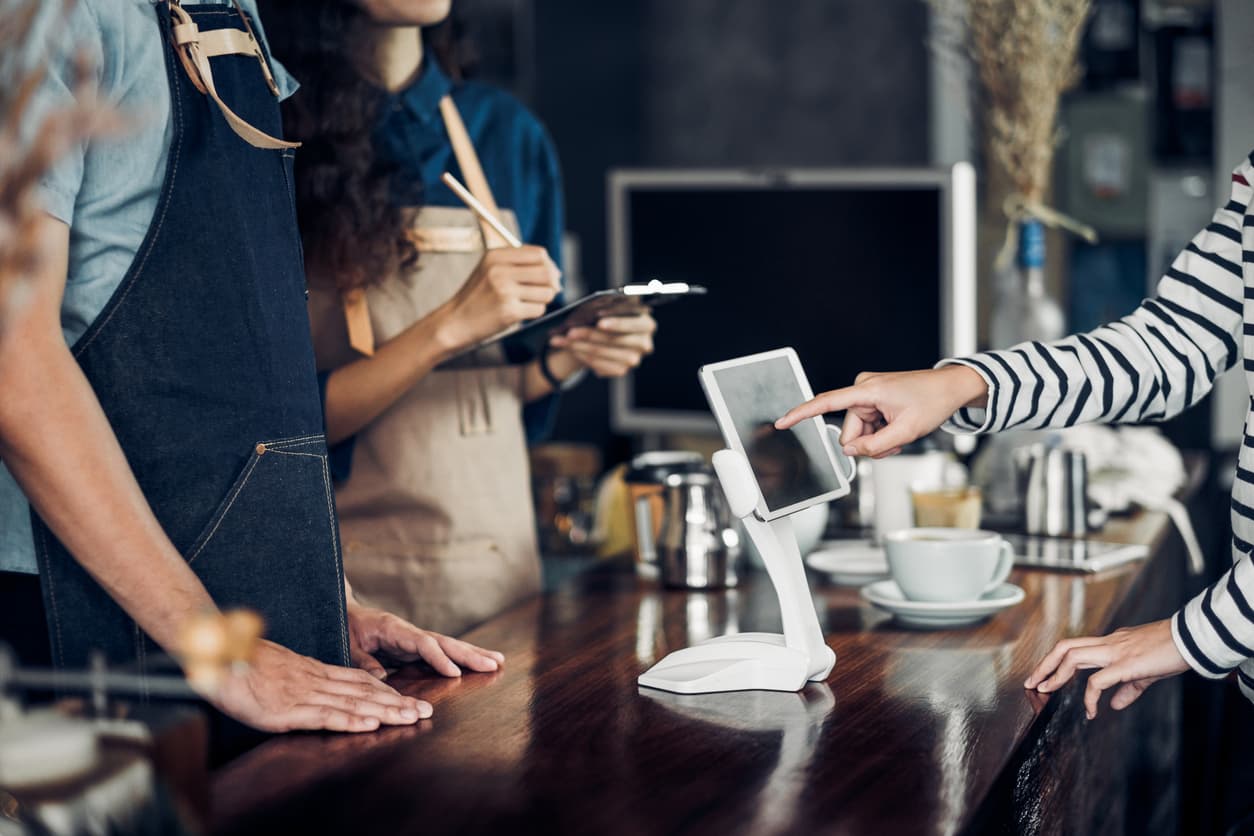
Digital systems such as a POS system that includes scan-to-order, where merchants can utilise QR-codes to help make your business operations more efficient. Through scan-to-order QR codes, your customers can browse the menu and make orders via their phones.
This allows a smaller crew to manage a busy morning rush, as your baristas can focus on serving quality beverages rather than taking manual orders.
KPay POS for businesses
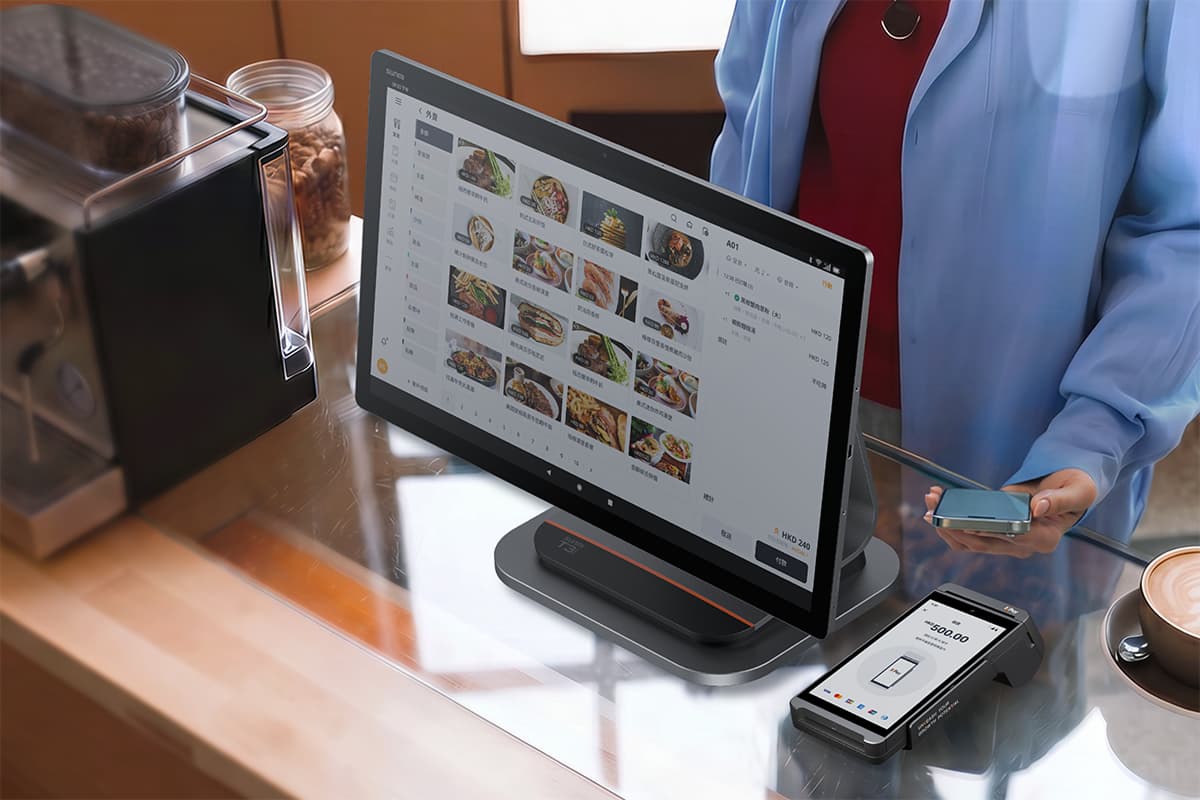
KPay POS is designed with F&B businesses in mind and integrated with the KPay ecosystem so that you can access all you need in one place. We help your business to operate more efficiently with a fast, reliable and modern POS system including built-in tools, so you can focus on growing the business.
KPay POS offers various features:
- All-in-One F&B solution: KPay POS is a simple, integrated POS & payments bundle built for hospitality merchants. Let one system handle everything for you, from taking orders to getting paid, so you can focus on what matters for the business.
- Cloud-based ordering and payment for real-time efficiency: Supports multiple service models with pay-before dine-in, pay-after dine-in and takeaway and scan to order (QR ordering) all included within the standard package, enabling you to streamline your operations and better provide a great dining experience for your customers.
- Manage multiple brands and outlets seamlessly in one system : Easily run multiple restaurants with flexible operational settings all via one platform.
- 24/7 real-time support : Get support anytime from single providers and dedicated implementation specialists that enables quick set up and minimal operational friction across both POS and payments.
Additionally, KPay POS is also compatible with Android, iOS and Windows devices, making integration with your existing systems seamless and letting you streamline business operations quickly.
Find out more about KPay POS and how it can help your business by contacting our sales team today.
Step 5: Setting up your payment ecosystem
Most of your customers will tap — a debit card, or a phone or watch. That means your terminal needs eftpos and dual-network debit, Visa and Mastercard, and Apple Pay, Google Pay and Samsung Pay as the baseline. If you're somewhere with international visitors or a large Chinese community, Alipay and WeChat Pay acceptance is worth having too - both work by QR, so check your terminal can scan or display one.
When looking for a payment terminal, it's important to look for a unified solution — instead of having three different machines, use an all-in-one Smart Terminal that consolidates all local and international payment methods. This helps to free up counter space and can make the payment process even more seamless.
Besides accepting a variety of payment methods, your payment terminal is just as important for cash flow. Some providers offer T+3 or T+5 settlement, but this can be crippling for merchants with smaller coffee shops that need the cash flow to pay vendors, staff, or to make decisions that help with operational efficiency. This is why having T+1 Express Settlement is important when it comes to selecting a payment terminal. For a new coffee shop, having yesterday's revenue in your bank account today is vital for paying milk and bean suppliers on time.
KPay's modern, unified solution for your business success
KPay Terminal Pro offers various features that meet your business needs:
- Accepts major payment methods seamlessly on one portable device.
- No subscription fees, annual fees or terminal rental fees
- Same-day settlement* gives you faster access to your takings.
- Secure transactions and data points with industry-leading security standards, including PCI DSS, AICPA Soc 1 & 2, and ISO 27001.
- 24/7, 365-day customer support to ensure merchants get up and running quickly should any issues occur.
- Access real-time sales reporting, peak hour analysis, and transaction reconciliation with KPay's Merchant App
With KPay Terminal Pro, you can effectively meet your customers' needs for speed, versatility of payment methods, and ensure secure transactions — all with one device.
Step 6: Marketing and local SEO
In a saturated industry, being discoverable is crucial for your coffee shop's survival. This includes ensuring that you can easily be found across multiple digital platforms.
Here are a few things to set up before opening the doors to your coffee shop:
- Set up your Google Business Profile: Ensure your coffee shop appears on Google Maps by setting up your Google Business Profile. Fill up your profile with relevant information and update your opening hours as relevant so that customers do not turn up to closed doors.
- Social accounts: Having accounts on various social media platforms can help with discoverability as you are able to tap into a larger audience. Besides organic content to share your offerings with potential customers, consider running social media ads to reach a wider audience. By having engaging content on your social media channels, you can also gradually build a community of loyal customers that will automatically act as ambassadors, expanding your business outreach through word of mouth.
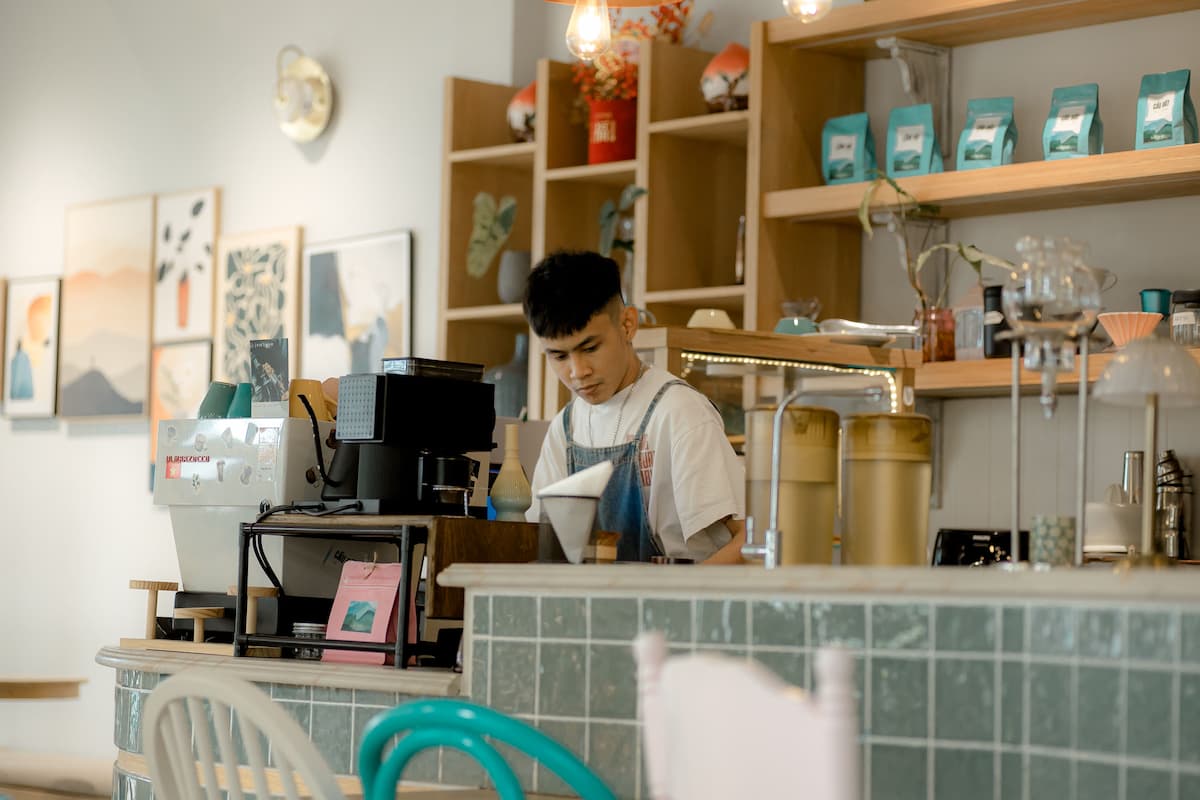
- Instagrammable interiors: In Australia, café-hopping culture is largely driven by visuals. Design a space that encourages social sharing, and link your digital menu in your Instagram bio so customers can browse before they arrive. Having visually appealing food and drinks offerings can also help to draw in a crowd, but make sure that this is not at the expense of the quality of your food so that you can retain loyal customers.
Starting small, thinking digital
Starting a cafe in Australia may not be an easy journey, but it can be a rewarding one. The key to survival is controlling your fixed costs while optimising your variable revenue. By setting up digital systems that can help you to operate more efficiently and help with cash flow, you can focus on what matters most: the perfect cup of coffee.