What is customer lifetime value (CLV) and how merchants can use it to grow
9 November 2026
10 min read
KPay Editorial Team
Making the complex sides of financial management, business operations and digital transformation simple. We share practical tips and local stories to help you run your business smarter and grow faster.
Key takeaways:
Customer lifetime value (CLV) measures the total revenue a customer generates across their entire relationship with your business
CLV is calculated using three variables: Average order value, purchase frequency, and customer lifespan
Improving even one of those three variables has a compounding effect on revenue
Payment experience, both online and in-store, is a CLV lever most merchants underestimate
It's inevitable that some customers spend more than others. The regular who comes in every week, reorders the same service package, or buys across your online store and your physical counter — as compared to the one-time buyer who found you through a discount and hasn't been back since. However, have you ever considered putting a number on that difference?
That number is known as customer lifetime value. Once you understand it, the way you think about discounts, loyalty, payment options, and even how you set up your checkout starts to shift.
This article breaks down what customer lifetime value means, how to calculate it, and what you can actually do with it as a merchant running a real business.
What is customer lifetime value?
Customer lifetime value is the total revenue your business can expect from a single customer over the entire time they shop with you. Not just one transaction, but rather the full picture.
While it may seem straightforward, most merchants don't necessarily think this way automatically. A customer who spends AU$80 once looks the same in your weekly sales report as a customer who spends AU$80 eight times a year for three years. The second customer is worth roughly AU$1,900. The first is worth AU$80. The decisions you should make about both are completely different.
CLV also changes how you read your acquisition costs. If you're spending AU$60 to bring in a new customer and they buy once, you've barely broken even. If that same AU$60 acquires someone who keeps coming back, your return is compounding over time. The ratio between what you spend to acquire a customer (customer acquisition cost, or CAC) and what they're worth (CLV) is one of the most important numbers in your business.
How to calculate customer lifetime value
The formula is simpler than most guides make it look:
CLV = Average order value × Purchase frequency × Customer lifespan
Average order value (AOV): How much a customer spends per transaction on average
Purchase frequency: How many times they buy in a given period (usually a year)
Customer lifespan: How many years they remain an active customer
Multiply the three together and you have a working CLV estimate. While this will not be perfect, it gives you a number you can actually act on.
A simple CLV example for an Australian merchant
Say you run a skincare clinic in Fitzroy. For this example, imagine a typical regular spends AU$120 per visit, returns around eight times a year, and stays a client for roughly two to three years. This brings their total CLV to approximately AU$2,400.
This total is several times what that customer spent on their first visit. Now, compare that to a customer who found you through a daily deals site, used a discount voucher once, and never returned. Their CLV is whatever they paid that one time.
The main point here isn't which customer you prefer, but whether your marketing, loyalty, and checkout decisions actually reflect that difference.
Why customer lifetime value changes how you run your business
Once you have a CLV figure, decisions that used to feel like guesswork become easier to justify or easier to question.
Discounts look different: A blanket promotion erodes margin across every customer, including your most loyal ones who would have paid full price anyway. A retention offer targeted at high-CLV customers protects margins while rewarding the people who are actually driving your revenue.
Loyalty programmes have a clearer business case: Instead of asking "is this loyalty programme worth the cost?", you can ask "does this programme increase purchase frequency or lifespan enough to justify the investment?"
Acquisition spend gets smarter: Knowing your average CLV helps you become more aware of how much you can spend to acquire a customer. If your CLV is AU$2,400, spending A$150 on acquisition isn't reckless — it's rational. Without a CLV benchmark, that decision is just a feeling.
Staffing and operations shift focus: If your highest-CLV customers are regulars who visit during peak hours, their experience during that busy period matters more than you might have assumed. A long queue or a payment that takes too long is a retention risk.
How to improve customer lifetime value — practical steps for merchants
CLV improves when any of its three components improve: customers spend more per visit (AOV), they come back more often (frequency), or they stay loyal longer (lifespan). Most of the changes with the biggest impact aren't expensive or complicated. In fact, they're operational.
Turn one-time buyers into subscribers
Subscription and recurring billing is the most direct way to improve CLV. This is because it directly improves two of the three variables at once: frequency becomes predictable, and customer lifespan extends because the relationship is formalised.
For businesses where repeat consumption is natural, such as beauty treatments, fitness sessions, monthly service packages, and F&B add-ons, a subscription model removes the friction of the customer having to remember to rebook or reorder. It also removes the merchant's dependence on hoping they come back.
KPay Payment Gateway handles automated recurring billing, so customers are charged on schedule without manual follow-up on either side. A skincare clinic offering a monthly facial package, or a café selling a prepaid coffee subscription, can convert visitors who only visit occasionally into reliable recurring revenue without having to hire any additional administrative staff.
The shift in thinking required: instead of asking "how do I get this customer to come back?", the question becomes "what subscription offer makes staying a default, not a decision?"
Make it easy for customers to pay wherever they buy from you
Merchants who sell across various platforms, whether in-store, via WhatsApp, Instagram, or a website, often lose repeat buyers not because of poor products or service, but because checkout is inconsistent or payment options are missing at the moment of purchase.
KPay Payment Link solves this for conversational and social commerce.
KPay Payment Link
KPay Payment Link allows merchants to accept payments anytime and anywhere, without requiring a website or complicated technical setup. Merchants are able to make the checkout process a smooth one through:
Instant link-generation and sharing: Create and share secure payment links instantly via WhatsApp, Instagram or email. Turn any chat into a checkout page.
Scalable bulk creation: Generate thousands of payment links simultaneously by uploading a single CSV file, which can help businesses that use recurring billing and mass promotions.
Real-time payment tracking: Stay on top of every transaction with instant notifications and a live dashboard. You get to know the moment a customer pays, and easily reconcile your records without chasing invoices.
KPay Payment Gateway is also worth considering for merchants who have an eCommerce site.
KPay Payment Gateway
Besides offering recurring billing, KPay Payment Gateway also gives online merchants a fast, secure, and flexible payment experience — removing the complexity often faced during integration and reducing the number of failed transactions. Here is how KPay's Payment Gateway can help businesses to focus on other important aspects of the business instead of fixing payment problems:
All major payment methods, one integration: After connecting the payment gateway to your website using our plug-in or API, you can start accepting payments via credit cards, debit cards, and a growing range of digital wallets and local payment methods.
Enterprise-grade security: KPay is ISO 27001 certified and PCI DSS Level 1 compliant, partners with HSBC, and holds operating licences in Hong Kong, Australia and Singapore.
For online stores, cart abandonment is almost always a friction problem. Reducing it has a direct effect on purchase frequency and, over time, CLV.
Reduce in-store checkout friction to protect repeat business
Research on consumer behaviour consistently shows that negative experiences are remembered more strongly than positive ones. While a smooth transaction goes unnoticed, a slow or failed payment at the counter often stays with a customer.
For in-store merchants, the last 30 seconds of a visit, which is the payment process, can undo a good experience that took an hour to build. Customers who face difficulty paying at checkout are less likely to return, even if everything else was fine.
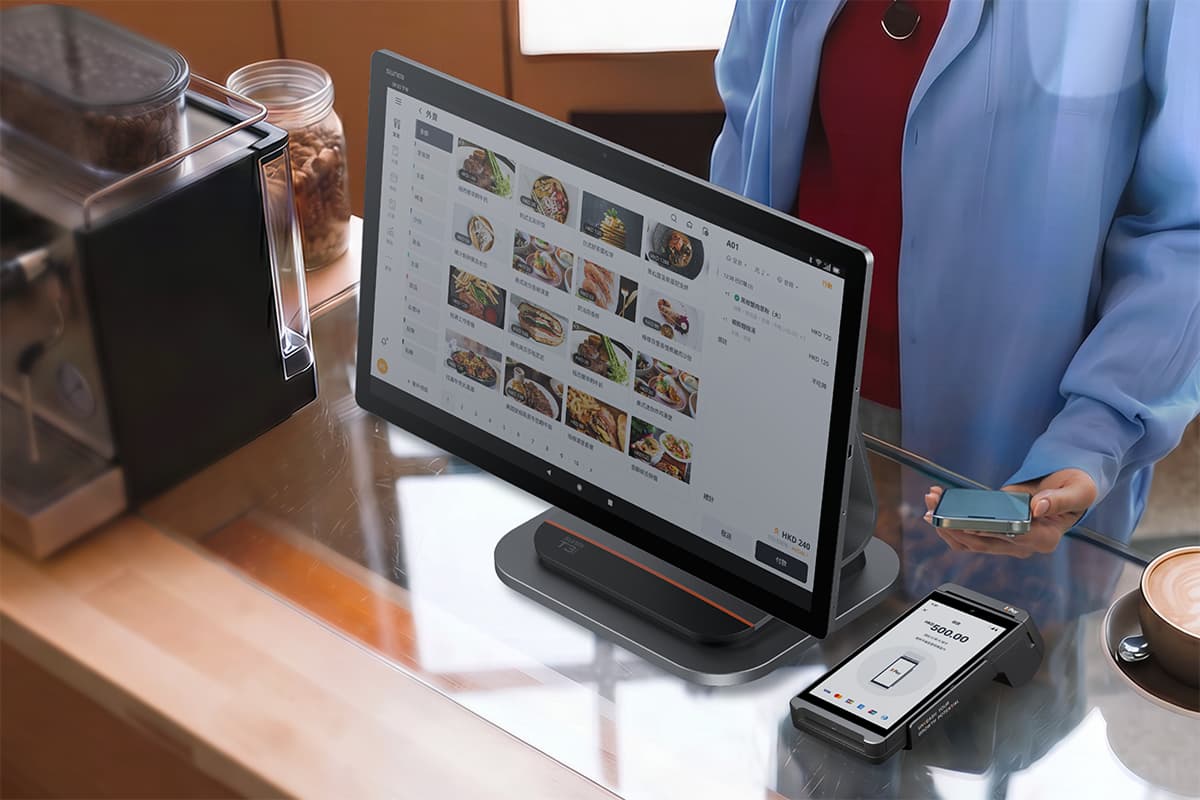
Having a payment terminal like KPay Terminal Pro can help to ensure that the checkout process is as smooth as possible.
KPay Terminal Pro
Accepts 12 major payment methods seamlessly on one portable device
No subscription fees, annual fees or terminal rental fees
Same-day settlement* gives you faster access to your takings.
Secure transactions and data points with industry-leading security standards, including PCI DSS, AICPA Soc 1 & 2, and ISO 27001.
24/7 customer support, every day of the year to ensure merchants get up and running quickly should any issues occur.
Access real-time sales reporting, peak hour analysis, and transaction reconciliation with KPay's Merchant App
With KPay Terminal Pro you can meet your customers' needs for speed, versatility of payment methods, and ensure secure transactions — all with one device.
Use post-purchase follow-up to reduce churn
The period immediately after a purchase is one of the best moments for building repeat behaviour while costing almost nothing. A receipt with a return incentive, a QR code linking to a short feedback form, or a simple re-engagement message sent a week later all create a reason to come back.
These initiatives are often within the technology that most merchants already have. The main constraint is usually a lack of habit rather than infrastructure.
The link between payment experience and customer lifetime value
Payment infrastructure is rarely framed as a CLV investment, but it should be.
A customer who can pay smoothly in-store via a reliable terminal, and just as smoothly online through a payment gateway or payment link, has fewer reasons to go to a competitor. The consistency of that experience across channels and payment methods builds familiarity and trust in small, invisible increments.
For merchants managing both physical and online sales, fragmented payment infrastructure creates fragmented customer experiences. Different payment options across different platforms, inconsistent checkout flows, or a terminal that doesn't support the payment method a customer prefers — each of these is a small friction that accumulates over time.
KPay's payment solutions work across in-store, online, and social/conversational commerce, with KPay Payment Gateway handling recurring billing. For merchants thinking about CLV, that coverage matters because it removes payment-related reasons for a customer to stop buying from you.
Common mistakes merchants make when thinking about CLV
Treating all customers the same when allocating marketing spend
If 20% of your customers are generating 60% of your revenue, a campaign that targets your full customer list may not be the best use of your resources. Segmenting by purchase history and focusing retention spend on your highest-value cohort is not complicated as it just requires knowing who that cohort is.
Measuring success only by new customer numbers
Acquisition metrics are easy to report and feel good in a team meeting. Retention rate is harder to measure but more directly connected to long-term revenue. A business that acquires 50 new customers a month but loses 40 is running in place. One that acquires 30 and retains 28 is compounding.
Most of the changes that matter the most, such as introducing a subscription option, improving checkout speed, and tightening post-purchase follow-up, are available to SME merchants right now. The gap between knowing CLV matters and acting on it is usually not about resources. It's about framing the problem clearly enough to act on it.
Start with the number, then make better decisions
Customer lifetime value isn't a metric reserved for businesses with analytics teams and dedicated data infrastructure. It's a way of reframing decisions you're already making about discounts, loyalty, payment options, and how you invest in customer experience.
Once you know what a loyal customer is actually worth, the maths on subscriptions, payment flexibility, and checkout quality can start to look very different.
To find out how KPay's payment solutions can help you grow your most valuable customer relationships, contact our team.