Your loyalty programme is running. Customers are picking up stamp cards, scanning QR codes, and earning points. Yet, revenue per customer isn't climbing the way you expected, and a portion of your customer base quietly disappears after the second or third visit.
The question worth asking isn't whether loyalty programmes work. It's whether everything around the programme, such as the checkout experience, the payment options, the ease of redemption, or whether any of it works online, is strong enough to earn the loyalty it promises.
Most guides to customer loyalty focus on one half of the equation: the emotional side. This article covers both, because loyalty is built in the moments customers feel genuinely valued, and in the moments they almost didn't come back.
What customer loyalty actually means
Customer loyalty is real, and the emotional aspect of it matters. Customers return to businesses they trust. This means places where the product is consistently good, the staff remembers them, and they feel like they belong. That sense of connection is worth cultivating deliberately.
But loyalty as a feeling doesn't always translate automatically into loyalty as a behaviour. A customer can genuinely like your café and still try the new one that opened two doors down. They can appreciate your retail store but switch to a competitor's online shop when your checkout takes too long. The gap between how a customer feels about your brand and what they actually do is often where businesses lose retention without realising it.
This is the distinction worth holding:
- Attitudinal loyalty refers to the emotional connection: trust, affinity, the willingness to recommend
- Behavioural loyalty refers to what customers actually do: how often they return, how much they spend, whether they refer others
Building attitudinal loyalty earns the first few visits. Making the entire experience, including payment, frictionless is what turns early visits into habitual behaviour. Both sides of loyalty require intentional effort.
Why do traditional loyalty programmes fall short?
Stamp cards and basic points systems aren't useless. They give customers a reason to return and show that you value repeat business. The problem is that they're often treated as the only loyalty strategy, rather than one layer of a broader retention approach.
Here are a few patterns worth examining:
Redemption friction
Many programmes make earning easy and redeeming harder than it needs to be. If customers have to remember to bring around a loyalty card, feel like rewards require too many accumulated visits, or ask staff to manually process a reward, some customers will inevitably choose not to partake in the loyalty programme. This is not because they dislike the brand, but because the effort required to redeem the reward doesn't hold up.
Disconnected from the payment moment
Rewards are earned during a transaction but often managed separately from it. That disconnection means customers aren't reminded of their loyalty progress at the point of sale, which is when it would actually be most motivating.
Offline-only mechanics
Many loyalty programmes exist only at the in-person point of sale. For businesses that also sell online, or whose customers increasingly shop across channels, an in-store-only programme means that there are potentially many purchases that fall outside the loyalty programme entirely.
In Australia's retail environment, where consumer expectations around digital payments are high and online shopping continues to grow, these friction points have a measurable effect on whether customers return.
The loyalty drivers most businesses overlook
The aspects of customer loyalty that receive the least attention are often operational, and sit closest to the moment of payment.
The checkout experience as a trust signal
When a customer reaches the till and their preferred payment method isn't available, something small but significant happens. They feel the business hasn't thought about them — or hasn't kept up. In Australia, where digital wallets like Apple Pay and Google Pay have become mainstream, being unable to accept any major payment methods builds up friction over time.
Accepting the payment methods your customers actually use isn't just for convenience, but also gives your customers the trust they need to keep returning.
Payment speed and reliability
Slow terminals, failed transactions, and confusing QR payment flows create frustration that most customers won't mention and won't forget. A smooth, reliable payment experience, whether in-store or online, shows that you've planned your business operations well. For customers, having a smooth experience repeatedly builds the kind of quiet confidence in a brand that eventually encourages repeated purchases.
Subscription payments as a loyalty mechanic
For businesses with recurring services, such as wellness memberships, monthly F&B packages, and retainer-based professional services, subscription billing is a fundamentally different approach to loyalty. Rather than incentivising customers to choose to return, it removes the decision entirely. Payment is automated and attendance becomes routine.
This model doesn't suit every business, but for those where it fits, subscription structures can anchor retention more reliably than any points system. This is because loyalty mechanics get built into the commercial model itself.
Flexible payment options and instalment access
At higher price points, such as luxury retail purchases, service packages, or seasonal spend, being able to pay via instalments removes a common reason customers delay or abandon a purchase. Instalment plans give merchants a way to reduce purchase hesitation without the need for discounts, while making larger transactions feel more accessible. For repeat customers considering a higher-value purchase, this kind of flexibility can be the difference between a customer that makes payment and a customer that decides to wait.
Extending loyalty online
If part of your business operates online, your loyalty programme should work there too. A customer who earns points in your store and can't use them when ordering through your website has encountered a gap in the experience that feels like your problem, not theirs.
Payment gateways and ecommerce plugins allow merchants to offer a consistent payment and loyalty-earning experience across channels. Online payment infrastructure isn't just a sales channel — it's how loyalty programmes can scale beyond your physical store.
How to build customer loyalty: a practical framework
Step 1: Know your baseline retention rate before adding a programme
Most merchants don't have a clear picture of their repeat purchase rate before they invest in infrastructure to encourage loyalty. Without that baseline, it's difficult to know whether a new programme is working or whether existing customers were already loyal for other reasons. You can start by establishing what percentage of customers return within 30, 60, and 90 days.
Step 2: Remove friction before adding reward incentives
A loyalty programme layered on top of a frustrating checkout experience doesn't solve the retention problem. Before introducing points or stamps, consider auditing the payment experience: Are all common payment methods accepted? Is the checkout flow fast and reliable? Does the online experience match the in-store one? Removing friction first means the programme is reinforcing a good experience, not compensating for a poor one.
Step 3: Design rewards that connect to how customers actually pay
The rewards that work best are the ones customers feel right at the moment they pay, not ones they have to chase down later. Whether it's cashback or bonus credits earned at checkout, milestone rewards triggered at the point of sale, or digital vouchers delivered instantly after payment, customers typically feel most encouraged to return when loyalty programmes are presented at these right moments. Programmes that require customers to track their own progress or visit a separate redemption process introduce exactly the kind of friction that weakens retention.
Step 4: Consider whether subscription fits your business model
If your business has a predictable service cadence, such as a gym, a regular lunch delivery, a beauty treatment schedule, or a professional services retainer, a subscription payment model is worth evaluating seriously. When customers are on a subscription, each visit or delivery becomes the default rather than a choice. Retention becomes structural. Combined with a good service experience, subscription billing tends to produce the highest customer lifetime value of any loyalty format.
Step 5: Make loyalty accessible online
If your product or service can be purchased online, a portion of your loyalty activity should exist online too. Payment gateways and eCommerce-integrated plugins make it possible to extend the same earning and redemption experience to customers who order remotely, buy through a website, or transact outside business hours. Online availability also makes loyalty programmes more accessible to new customer segments who may never visit a physical location.
How KPay supports your loyalty infrastructure
Loyalty programmes depend on the payment infrastructure beneath them. A programme that works in-store but not online, or that accepts only some of the payment methods your customers use, has gaps that limit its effectiveness, regardless of how well-designed the reward mechanics are.
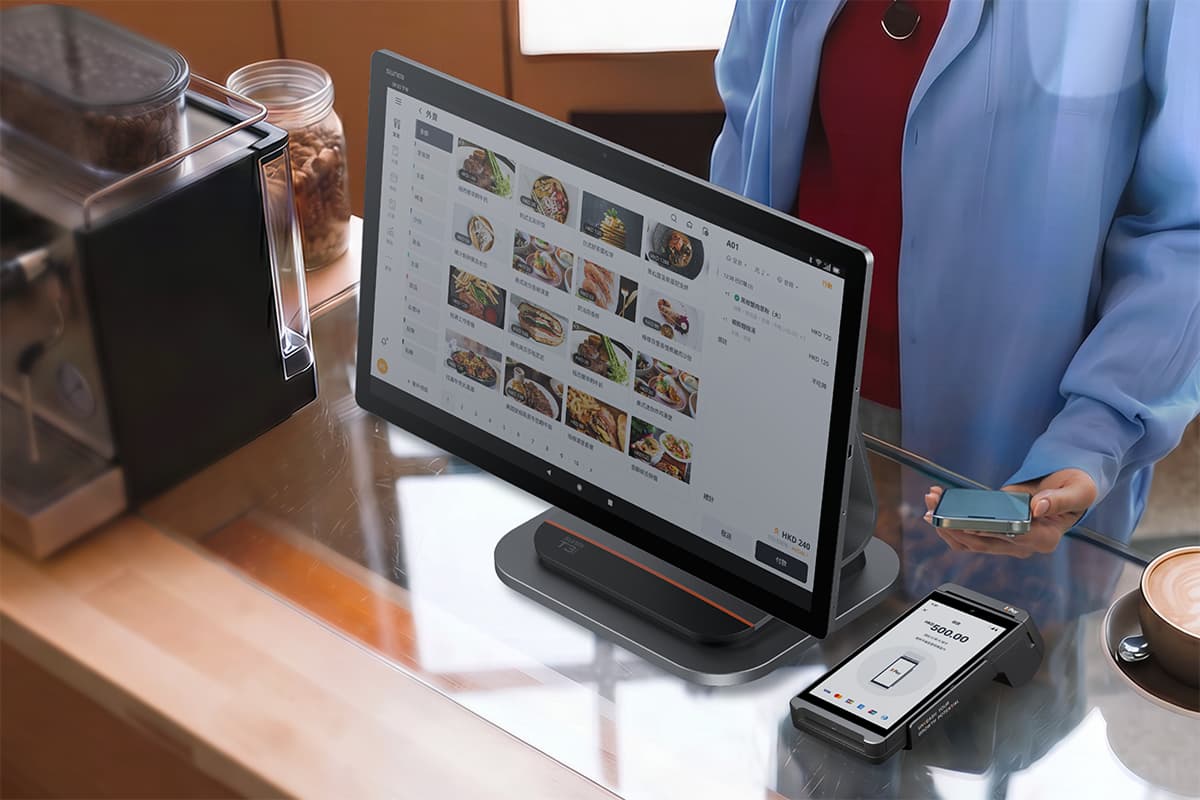
KPay supports a broad range of local and international payment methods in-store and online, including Visa, Mastercard, Apple Pay, and Google Pay. Merchants can accept payments through in-person payment solutions like KPay Terminal Pro, and online payment solutions like KPay Payment Gateway, giving customers a consistent experience whether in-person or online.
KPay Terminal Pro
KPay Terminal Pro helps to make your checkouts more seamless:
- Accepts 12 major payment methods seamlessly on one portable device
- No subscription fees, annual fees or terminal rental fees
- Same-day settlement* gives you faster access to your takings.
- Secure transactions and data points with industry-leading security standards, including PCI DSS, AICPA Soc 1 & 2, and ISO 27001.
- 24/7 customer support, every day of the year to ensure merchants get up and running quickly should any issues occur.
- Access real-time sales reporting, peak hour analysis, and transaction reconciliation with KPay's Merchant App
With KPay Terminal Pro, you can reduce counter clutter and accept multiple payment methods, letting you focus on other important aspects of the business.
KPay Payment Gateway
KPay Payment Gateway gives online merchants a fast, secure, and flexible payment experience — removing the complexity often faced during integration and reducing the number of failed transactions. Here is how KPay Payment Gateway can help businesses to focus on converting customers instead of fixing payment problems:
- All major payment methods, one integration: After connecting the payment gateway to your website using our plug-in or API, you can start accepting payments via credit cards, debit cards, and a growing range of digital wallets and local payment methods.
- Enterprise-grade security: KPay is ISO 27001 certified and PCI DSS Level 1 compliant, partners with HSBC, and holds operating licences in Hong Kong, Australia and Singapore.
For businesses exploring subscription models, KPay Pay Gateway also enables recurring billing workflows that support membership, service retainer, and package-based business models.
The result is a payment setup that doesn't just process transactions as it provides a consistent, frictionless experience that makes returning feel easy.
Customer loyalty metrics worth tracking
Moving beyond stamp card redemption rates, these are the numbers that give a clearer picture of whether loyalty is actually building:
- Repeat purchase rate: The percentage of customers who return within a defined period
- Customer lifetime value (CLV): Total revenue generated by a customer over the full relationship
- Net Promoter Score (NPS): A measure of how likely customers are to recommend your business
- Churn rate: The percentage of customers who don't return after an initial visit or purchase
- Average order value over time: Whether loyal customers spend more per transaction as the relationship deepens
Tracking these alongside programme participation rates gives a more complete view of whether loyalty efforts are translating into business outcomes.
Building loyalty that lasts
The businesses that build durable loyalty aren't choosing between a great product and a great experience as they're making sure one never undermines the other.
These businesses invest in both the programme and the experience it runs on, which involves accepting the payment methods customers actually use, removing checkout friction in-store and online, exploring subscription models where they fit, and ensuring that loyalty mechanics are accessible wherever a customer transacts.
The stamp card is a starting point. What keeps customers coming back is everything that makes returning feel effortless.